
VELÉHRA D, SANTUARIO di. — In the diocese of Olomouc (q.v.) in Czechoslovakia, a place of pilgrimage and the site of the International Unionist Congresses.
In the 9th century, according to ancient tradition confirmed by recent excavations, the capital of Great Moravia and the seat of the archbishop St. Methodius (q.V. CIRILLO (COSTANTINO) E METODIO, SANTI) stood near the present-day village of V., and was destroyed (c. 900) by pagan Hungarians. In 1205 the mar-
In the 9th century, near the site of the present-day village of V., according to ancient tradition confirmed by recent excavations, stood the capital of Great Moravia and the seat of the archbishop St. Methodius (q.V. CIRILLO (COSTANTINO) E METODIO, SANTI), which was destroyed (c. 900) by pagan Hungarians. In 1205 the mar...
VELEHRAD, SANCTUARY OF. — In the diocese of Olomouc (q.v.) in Czechoslovakia, a place of pilgrimage and the site of the International Unionist Congresses.
In the 9th century, near the site of the present-day village of V., according to ancient tradition confirmed by recent excavations, stood the capital of Great Moravia and the seat of the archbishop St. Methodius (q.V. CIRILLO (COSTANTINO) E METODIO, SANTI), which was destroyed (c. 900) by pagan Hungarians. In 1205 the mar...
VELEHRAD, SANCTUARY OF. — In the diocese of Olomouc (q.v.) in Czechoslovakia, a place of pilgrimage and the site of the International Unionist Congresses.
In the 9th century, near the site of the present-day village of V., according to ancient tradition confirmed by recent excavations, stood the capital of Great Moravia and the seat of the archbishop St. Methodius (q.V. CIRILLO (COSTANTINO) E METODIO, SANTI), which was destroyed (c. 900) by pagan Hungarians. In 1205 the mar...
VELEHRAD, SANCTUARY OF. — In the diocese of Olomouc (q.v.) in Czechoslovakia, a place of pilgrimage and the site of the International Unionist Congresses.
In the 9th century, near the site of the present-day village of V., according to ancient tradition confirmed by recent excavations, stood the capital of Great Moravia and the seat of the archbishop St. Methodius (q.V. CIRILLO (COSTANTINO) E METODIO, SANTI), which was destroyed (c. 900) by pagan Hungarians. In 1205 the mar...
VELEHRAD, SANCTUARY OF. — In the diocese of Olomouc (q.v.) in Czechoslovakia, a place of pilgrimage and the site of the International Unionist Congresses.
VELÉHRA D, SANTUARIO di. - In the diocese of Olomouc (q.v.) in Czechoslovakia, a place of pilgrimage and site of the International Unionist Congresses.
In the 9th century, according to ancient tradition confirmed by recent excavations, the capital of Great Moravia and the seat of St Methodius (q.V. CIRILLO (COSTANTINO) E METODIO, SANTI), archbishop, stood near the present-day village of V.; it was destroyed (c. 900) by pagan Hungarians. In 1205 the mar
In the 9th century, in the vicinity of the present-day village of V., according to ancient tradition confirmed by recent excavations, stood the capital of Great Moravia and the seat of St Methodius (q.V. CIRILLO (COSTANTINO) E METODIO, SANTI), archbishop, which was destroyed (c. 900) by pagan Hungarians. In 1205 the mar-
VELÉHRA D, SANTUARIO di. - In the diocese of Olomouc (q.v.) in Czechoslovakia, a place of pilgrimage and the venue of the International Unionist Congresses.
In the 9th century, in the vicinity of the present-day village of V., according to ancient tradition confirmed by recent excavations, stood the capital of Great Moravia and the seat of St Methodius (q.V. CIRILLO (COSTANTINO) E METODIO, SANTI), archbishop, which was destroyed (c. 900) by pagan Hungarians. In 1205 the mar-
VELÉHRA D, SANTUARIO di. - In the diocese of Olomouc (q.v.) in Czechoslovakia, a place of pilgrimage and the venue of the International Unionist Congresses.
In the 9th century, in the vicinity of the present-day village of V., according to ancient tradition confirmed by recent excavations, stood the capital of Great Moravia and the seat of St Methodius (q.V. CIRILLO (COSTANTINO) E METODIO, SANTI), archbishop, which was destroyed (c. 900) by pagan Hungarians. In 1205 the mar-
VELÉHRA D, SANTUARIO di. - In the diocese of Olomouc (q.v.) in Czechoslovakia, a place of pilgrimage and the venue of the International Unionist Congresses.
In the 9th century, in the vicinity of the present-day village of V., according to ancient tradition confirmed by recent excavations, stood the capital of Great Moravia and the seat of St Methodius (q.V. CIRILLO (COSTANTINO) E METODIO, SANTI), archbishop, which was destroyed (c. 900) by pagan Hungarians. In 1205 the mar-
VELÉHRA D, SANTUARIO di. - In the diocese of Olomouc (q.v.) in Czechoslovakia, a place of pilgrimage and the venue of the International Unionist Congresses.
VELÉHRA D, SANTUARIO di. - In the diocese of Olomouc (q.v.) in Czechoslovakia, a place of pilgrimage and the site of the International Unionist Congresses.
In the 9th century, according to ancient tradition confirmed by recent excavations, the capital of Great Moravia and the seat of the archbishop St Methodius (q.V. CIRILLO (COSTANTINO) E METODIO, SANTI) stood near the present-day village of V., and was destroyed (c. 900) by pagan Hungarians. In 1205 the mar
In the 9th century, in the vicinity of the present-day village of V., according to ancient tradition confirmed by recent excavations, there stood the capital of Great Moravia and the seat of the archbishop St Methodius (v. CIRILLO (COSTANTINO) E METODIO, SANTI), which was destroyed (c. 900) by pagan Hungarians. In 1205 the mar-
VELÉHRA D, SANTUARIO di. - In the diocese of Olomouc (v.) in Czechoslovakia, a place of pilgrimage and the site of the International Unionist Congresses.
In the 9th century, in the vicinity of the present-day village of V., according to ancient tradition confirmed by recent excavations, there stood the capital of Great Moravia and the seat of the archbishop St Methodius (v. CIRILLO (COSTANTINO) E METODIO, SANTI), which was destroyed (c. 900) by pagan Hungarians. In 1205 the mar-
VELÉHRA D, SANTUARIO di. - In the diocese of Olomouc (v.) in Czechoslovakia, a place of pilgrimage and the site of the International Unionist Congresses.
In the 9th century, in the vicinity of the present-day village of V., according to ancient tradition confirmed by recent excavations, there stood the capital of Great Moravia and the seat of the archbishop St Methodius (v. CIRILLO (COSTANTINO) E METODIO, SANTI), which was destroyed (c. 900) by pagan Hungarians. In 1205 the mar-
VELÉHRA D, SANTUARIO di. - In the diocese of Olomouc (v.) in Czechoslovakia, a place of pilgrimage and the site of the International Unionist Congresses.
In the 9th century, in the vicinity of the present-day village of V., according to ancient tradition confirmed by recent excavations, there stood the capital of Great Moravia and the seat of the archbishop St Methodius (v. CIRILLO (COSTANTINO) E METODIO, SANTI), which was destroyed (c. 900) by pagan Hungarians. In 1205 the mar-
VELÉHRA D, SANTUARIO di. - In the diocese of Olomouc (v.) in Czechoslovakia, a place of pilgrimage and the site of the International Unionist Congresses.
VELÉHRA D, SANTUARIO di. – In the diocese of Olomouc (q.v.) in Czechoslovakia, a place of pilgrimage and site of the International Unionist Congresses.
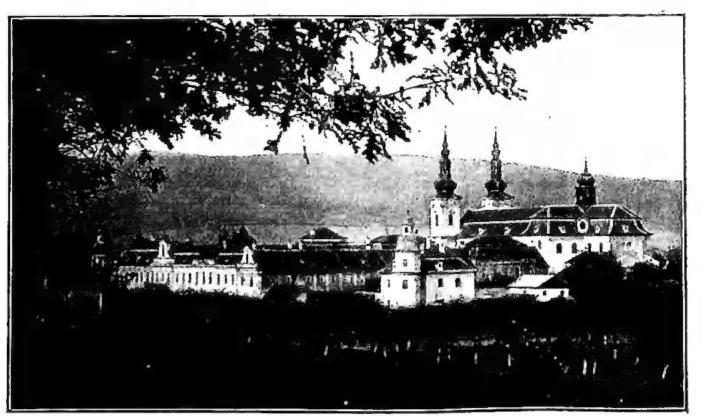
In the 9th century, according to ancient tradition confirmed by recent excavations, the capital of Great Moravia and the seat of St Methodius (q.V. CIRILLO (COSTANTINO) E METODIO, SANTI), archbishop, stood near the present-day village of V.; it was destroyed (c. 900) by pagan Hungarians. In 1205 Margrave Vladislav Jindřich of Moravia, a Přemyslid, founded a Cistercian monastery near V., which soon became an important religious and cultural centre. In 1421 a band of Hussites set fire to the monastery, burning alive the abbot and some monks. In the 15th–16th centuries V. slowly revived, and in the 17th century it was reformed, resuming the traditions of the Cyrillo-Methodian cult. In 1789, however, the Austrian emperor Joseph II suppressed the monastery, confiscated its property, and the rich archives and library were lost. The Cyrillo-Methodian jubilees of 1863 and 1885 rekindled interest in V., which, especially through the efforts of the priest (later Archbishop of Olomouc) A. Stojan (q.v.), once again became a destination for numerous pilgrimages.
In 1890 the care of the sanctuary of V. was entrusted to the Jesuits, who in 1916 opened the Apostolic School (Pontifical from 1919) for the education of missionaries among Eastern dissidents. From 1907 to 1936 seven International Unionist Congresses were held at V., organized by the Academia Velehradensis, which also has its seat there. The magnificent sanctuary of V. (a basilica since 1928) was restored (1935–36) with contributions from the entire nation.
By order of the communist government the Jesuits were deported in 1950, resulting in the paralysis of all activities of V.
Bnl.: R. Hurt, Dějiny cisterciáckého kláštera na Velehradě, Olomouc 1934; Fr. Cinek, Velehrad víry, ivi 1936.
Giuseppe Olš
VÉLEZ, Rafael. - Spanish Capuchin prelate and theologian, b. at Vélez (Malaga) on 15 Oct 1777, d. in the monastery of Herbón on 3 Aug 1850.
Lecturer in philosophy and theology at Ecija and Cadiz, where the success of the Cortes provided him with the subject of his first work: El preservativo contra la irreligión ó los planes de la filosofía contra la religión y el Estado (Cadiz 1812), a picture of the revolutionary plan in Europe and especially in Spain. On 30 Sept 1816 he was elected bishop of Ceuta and was consecrated on 13 July 1817.
In 1818 he published La apología del altar y del trono, the apologetic work of greatest resonance in Spain in the mid-19th century. The royalists received it with enthusiasm, while the constitutionalists and liberal extremists declared war on the work and its author, who was forced to go into exile.
After the liberal government was overthrown following the decisive intervention at the Congress of Verona, V. was recalled and made a Knight Grand Cross of the Order of Charles III. In 1824 he was promoted to the see of Burgos and shortly afterwards to that of Santiago. After the death of Ferdinand VII, an attempt was made to re-establish the constitutional regime. V. then opposed the anti-clerical laws; on 21 Apr 1835 he was exiled to Minorca and was able to return to his diocese only on 26 June 1844. He devoted all his income to the poor; he founded a seminary at Santiago (1829), a hospice for the incurable, a hospital for cholera patients, the Casa dei Venerabili for retired priests and for spiritual exercises, and restored ecclesiastical discipline which had been undermined by the revolution.
Bnl.: Pruebas contra la conducta política del Sr. R. de V. Obispo de Ceuta, alegados... por la Comisión... sobre la Pastoral del Obispo 5 enero 1822, Algeciras 1822; C. Bouzas J., Fr. R. V. y el Seminario de Santiago, Santiago 1920; id., in Archivio Ibero-Amer., 21 (1924), p. 220 SGG. (opere); M. Pazos, El Episcopado gallego, I, Madrid 1936, pp. 381-86; J. B. de Ardalés, La divina pastora, I, Sevilla 1949, pp. 638-54 (biography); Sebastian de Ubrique, Examen de la «Apología del Altar y del Trono», in Adalid Sévérico (Sevilla), 1950, pp. 12-14; Lexicon Capucciorum, Roma 1950, coll. 1786-87.