
DOMICILE AND QUASI-DOMICILE. -
I. D
Domicile is the place where one of the faithful has his stable residence, acquired according to the norms of the CIC and giving rise to a juridical bond with attendant legal effects.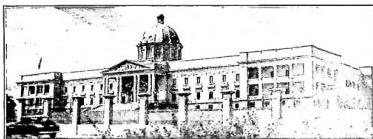
It may therefore be said that domicile results from the concurrence of two elements: residence and stability. But when residence has in fact continued for ten years, stability is presumed, whatever the intention of the resident; whereas, if there has not been such ten-year residence, stability depends upon the animus ibi manendi perpetuo. This intention or will, however, need not be such as to exclude forever the prospect of a possible move, provided that at the present moment there is no expectation of a certain change of residence.
If residence is stably established in a parish or quasi-parish, there is parochial domicile; if, on the other hand, it is established in a diocese, apostolic prefecture, or apostolic vicariate, but not constantly in the same parish or quasi-parish, there is diocesan domicile (can. 92 § 3).
This specification derives its origin from the material element of domicile; but especially necessary is the introduction of the category of diocesan domicile, which appears more than justified by the circumstances of many of the faithful—mostly workers—who, for reasons of employment and convenience, have no fixed abode within the boundaries of a parish, since these are too restricted for their needs. The same applies to the faithful person residing in an apostolic prefecture or vicariate not yet divided into quasi-parishes.
(courtesy of mons. d. P. Frotte)
DOMINICAN REPUBLIC - Government Palace - Trujillo.
[Non-Text]
Parochial domicile and diocesan domicile are not two concurrent domiciles that can coexist simultaneously, but exclude one another.
Domicile constituted as described above by one who is of age and of sound mind is called voluntary domicile. Legal or necessary domicile, on the other hand, is that which the law itself assigns to certain categories of persons subject to another’s authority.
The following have legal domicile (can. 93 § 1): 1) a wife not legitimately separated, who has the same domicile as her husband; if, however, she is legitimately separated, she may acquire a domicile of her own; 2) a minor, who has the domicile of the person exercising authority over him; 3) a person of unsound mind, who assumes the domicile of the curator or guardian.
II. Q
D. — In imitation of domicile, the CIC also outlines the institution of quasi-domicile: a distinctly canonical institution, gradually elaborated by doctrine. Canon 92 § 2 likewise presents it as consisting of the same fundamental elements. The difference lies in the period intended or actually spent in residence: residence accompanied by the intention of remaining for more than half the year, or actual residence for most of the year (that is, for more than 182 or 183 days).III. COMMON PRINCIPLES
Q.-d. may coexist with d.: the coexistence of voluntary d. with voluntary or necessary q.-d., or of necessary d. with voluntary q.-d., is possible. Likewise, the coexistence of necessary d. with necessary q.-d. is not impossible, although some authors categorically deny the existence of the latter; two voluntary q.-d. may also coexist. Moreover, in canon law the possibility of having several d. simultaneously is undisputed, as in the case of someone who, during the year, resides in four different places, respectively for four periods of three months each, with the animus ibi perpetuo manendi.Both d. and q.-d. have legal significance in establishing a bond between the person residing and the ecclesiastical territorial jurisdiction to which the place belongs, and between the person residing and the ecclesiastical superior who heads the jurisdiction. Thus, one speaks of the proper Ordinary or proper parish priest of someone, respectively the Ordinary of the diocese or the parish priest of the parish in which that person has either d. or q.-d. (can. 94; therefore, the same person may have several proper Ordinaries or several proper parish priests). Every member of the faithful is called incola in the place where he has d.; advena where he has q.-d.; peregrinus if he is outside his d. and q.-d.; vagus if he has neither d. nor q.-d. anywhere (cf. can. 91).
Voluntary d. and q.-d. are lost when diocesus a loco and animus non revertendi occur simultaneously, or when necessary d. is acquired (can. 95).
The loss, however, of legal d. and q.-d. occurs through a change in the juridical condition on which they originally depended.