LEIB, KILIAN

LEIB, KILIAN. - Augustinian canon, polemicist, and annalist, born at Ochsenfurt (Franconia) on 23 February 1471, died at Rebdorf on 16 July 1553. After completing his studies at Schweinfurt and Eichstätt, he entered the Rebdorf Institute in 1486, which was attached to the Windesheim Congregation. He deepened his knowledge of Sacred Scripture, the Fathers, and Oriental languages, becoming regarded by J. Eck (d. 1543) and J. Cochläus (d. 1552) as an authority on biblical matters.

Prior at Schamhaupten in 1499 and at Rebdorf from 1503, he directed the Institute for half a century amid the difficult circumstances created by the Peasants' Revolt, famine, and plague. He opposed the spread of Lutheran innovations in Eichstätt.

His most notable work is the *Annales* (Part 1 [1502–23]), edited by J. Ehr. F. von Aretin, in *Beiträge zur Geschichte und Literatur*, VII, Munich 1806, p. 535.

Article illustration
(photo Aadersen)
LeCros, Pierre – Statues of St. Thomas (c. 1710) – Rome, Basilica of St. John Lateran.

---

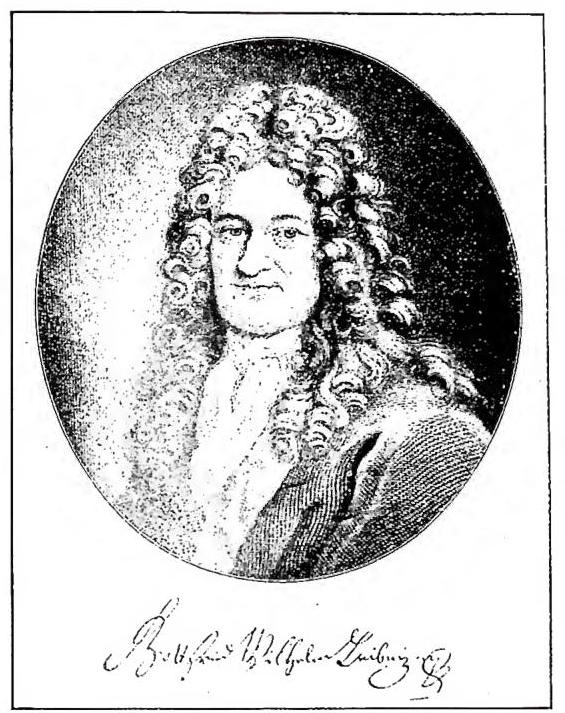
LEIBNIZ, GOTTFRIED WILHELM. - German philosopher, mathematician, jurist, and theologian, b. Leipzig 1 July 1646, d. Hanover 14 Nov. 1716. The extraordinary variety of his interests and the range of his expertise were acquired with remarkable diligence. At twenty he took a doctorate in law. His interest in legal studies led him to write several works on the subject, culminating in the *Nova methodus discendae docendaeque iurisprudentiae* (1667), in which he sought to reorganize the field, inspired by his studies in logic. His essential aim was a logical organization of law, built on fundamental definitions and deductive concatenation, to be pursued through the analysis of legal language (it is no surprise that Leibniz, immediately introduced into the highest circles of German culture, was entrusted by a prince with the task of harmonizing Roman law with contemporary legal practice).

Article illustration

Law, however, was for Leibniz primarily a field for applying the “new logic” he was designing, to which he devoted even then a treatise, *De arte combinatoria* (1666). Logic remained permanently one of his central concerns, the subject of countless writings. A few years later, during his stay in Paris (1672–76), he turned to mathematics—with such intensity that within a few years he invented the infinitesimal calculus!—and declared that he had done so solely to perfect his art of thinking. This gave rise to a mathematical logic—Leibniz may be considered its progenitor—in which great weight is given to Aristotelian logic (its themes are extensively taken up and developed) while aiming at its integration into a kind of universal grammar (Leibniz also dreamed of a logically constructed universal language), an inventory of all elementary ideas whose combinations would enable the solution of every problem, reducing thought to a kind of calculus. The analytical character of Leibnizian logic deserves emphasis, namely its intent to resolve all notions into their simple components through definition. To this conception belongs the famous principle of the identity of subject and predicate (*praedicatum inest subjecto*). Many interpreters of Leibniz’s thought have seen in his logic, and especially in this principle, the foundation of his metaphysical conception (which would find its full expression in the doctrine of monads). Since other interpreters understand the structure of Leibniz’s thought differently, centering on other motifs, it must be noted that, as matters now stand, while the problem appears ever more difficult to resolve—especially in light of the fragmentary and reticent character of Leibniz’s own writings—there is growing methodological support for seeing in his system a convergence of multiple motifs into an original intuition of reality.

Regarding logic, its strictly analytical character, while inspiring Leibniz’s conception of the monad (as subject or substance containing within itself the infinite series of its predicates), also precluded any claim to constructive deductivism. It is more interesting to observe how this logical analyticism opened Leibniz’s path to the aforementioned convergence.

Already in his academic dissertation (1663), *Disputatio metaphysica de principio individui*, Leibniz engaged with this characteristic theme of his highest speculation. Soon after, he tackled theological problems on one side (*Confessio naturae contra atheistas*; *Defensio Trinitatis*) and physical problems on the other (*Hypothesis physica nova* [1671], including a *Theoria motus concreti* and a *Theoria motus abstracti*). This last essay is particularly important for recognizing the evolution of Leibniz’s thought, and it reveals the perspective from which he would later critique prevailing mechanism. From this critique emerged dynamism and, as a further development, monadology. If among the many lines of Leibniz’s thought one may be singled out as principal—though not one that resolves or generates the others by itself—it is that of dynamics. “The notion of force, whose explication I intend for a particular science, dynamics, sheds much light on the understanding of the true notion of substance” (*De primae philosophiae emendatione et de notione substantiae*, ed. Gerhardt, IV, p. 469). Leibniz carefully distinguishes his concept of force from the scholastic notion of potency: (*different vis activa a potentia nuda vulgo scholis cognitiva*), since “the active power of the scholastics, or faculty, is nothing but a proximate possibility of acting, which nonetheless requires external excitation, as it were a stimulus, to pass into act. Whereas active force in a way contains the act or entelechy and is something intermediate between the faculty to act and action itself, involving conatus (*inter facultatem agendi actionemque ipsam media est, et conatum involvit*) and thus passing from itself into operation, requiring no aids but only the notion of impediments” (*ibid.*). The opposition to scholasticism here, as elsewhere, is not historical or critical in intent (Leibniz, moreover, is among the great moderns most favorably disposed toward medieval philosophy and best informed on the subject), but serves only to illustrate his own viewpoint.

The dominant mechanism had taken various forms or expressions, but all agreed in assigning matter and motion as the explanatory principles of physical phenomena. Leibniz would attack mechanism above all in its Cartesian formulation: intending to demonstrate, even with mathematical considerations, that motion presupposes force, and that extension cannot be known as substance. Extension, in fact, presupposes the reality that is extended: it is, in itself, constituted by parts external to one another, without end (one will never succeed in reaching the limit of divisibility of matter as extended). If it is said that extension is formed of extended parts, it still remains to explain analytically the constitution of such parts; if, instead, of unextended parts, then it is not clear how a sum of unextended parts could homogeneously result in extension. From this Leibniz infers, supported by many other considerations, that extension is not substance. It should be noted here that, even according to Leibniz, the reality underlying the extended, which is force as a spontaneous principle of action, and ultimately the monad, is nonextended: how then does it not fall under the objection that the nonextended cannot give rise to the extended?

Here intervenes, in its speculative function, the concept of phenomenon, as opposed to substance or “thing-in-itself.” This concept had already been provided to Leibniz by the epistemological current, which, for example, recognized the phenomenality of the so-called secondary or sensible qualities, such as color, taste, etc. Leibniz’s novelty consists precisely in degrading extension itself to the level of phenomenon, analytically elevating another determination to the rank of thing-in-itself. Now, between thing-in-itself and phenomenon, although there obtains a relationship of dependence and, ultimately, of explication, and although the phenomenon expresses the substance, there is nonetheless no homogeneity: that is, Leibniz’s force or the monad as metaphysical point is not, with respect to the extended, in the same position as are physical parts, whether extended or unextended; force or the monad are evidently not parts of extension. How extension results from them Leibniz does not feel obliged to explain determinately, inasmuch as he can rest content with the *quia* of the phenomenality of extension itself. In this way the distinction between phenomenon and substance comes to assume the importance of a boundary distinction, a fundamental framework of Leibnizian theorizing. In the philosopher’s writings this distinction is not extensively thematized; but its preponderant functionality emerges from an elementary structural analysis of the doctrine. When Kant would enter into its explicit and extensive thematization, he would in no way break the continuity of this philosophical tradition.

Leibniz’s commitment instead intensified in the determination of substance and the system of substances. The results of his systematic elaboration, which may be considered acquired in their fundamental lines around 1685, are expounded in numerous writings extending up to the year of his death. Some variation, some deepening is found even in this period of maturity and old age, but it is not of great prominence.

Among the aforementioned systematic writings may be recalled: *De primae philosophiae emendatione et de notione substantiae* (1684); *Discours de métaphysique* (1686); *Système nouveau de la nature et de la communication des substances* (1695); *Principes de la nature et de la Grâce* (1714); *Monadologie* (1714). To these may be added the two works of greater scope, the *Nouveaux essais sur l’entendement humain* (1704, but published posthumously in 1765), which is a critical examination of Locke’s essay, and the *Essai de théodicée sur la bonté de Dieu, la liberté de l’homme et l’origine du mal* (1710), where the polemic is against Bayle. With this, one has a reduced overview of Leibniz’s philosophical production. His immense epistolary correspondence—with almost all the learned men of his time—is largely philosophical.

His enormous scientific and literary activity unfolded amidst a heap of political-diplomatic occupations. He went to Paris for reasons of this kind, charged by a German prince to persuade Louis XIV to undertake an expedition to Egypt, by which he would be diverted from attacking Holland. Returning to Germany, Leibniz found a position as librarian and historiographer to the dukes of Hanover, and in this office he remained for life. It was not a sincere calling, for he had to spend much of his time reconstructing the history of the house of his lords. Naturally, even in this mercenary activity Leibniz left his personal imprint, and, contemporaneously with Muratori, with whom he was also in correspondence, he set historical studies on the path of valuing documents. To complete the picture of this phenomenal productivity, it must be recalled that Leibniz concerned himself greatly with religious problems, and that, inspired by his harmonious universalism, he sought the reunion of all Christian churches (correspondence with Bossuet), and, once the possibility of agreement with the Catholic Church had failed, he aimed at the union of all Protestant sects. These too were threads that he pulled toward the unity of his system. Against the Cartesians, who, in the face of interest in physico-mathematical science, disdained all other knowledge as negligible erudition, Leibniz was wont to preach that everywhere there is something to be valued. The structure of his philosophical system was particularly suited to absorb this cultural multiplicity.

Leibniz’s monadological system. — While the concept of force gained credence—as has been seen—in the face of simple mechanism, for its theoretical functionality (inasmuch as it translated into equations that could give a more ample and coherent explanation of phenomena); this functionality, amounting in the end to a network of relations, did not in itself legitimate equating force with thing-in-itself. Scientific criticism of experience, therefore, while it demolished the Cartesian identification of extension with substance, was not then able to substitute that identification with another; it was not, that is, able with its own means to touch the depths of being. To meet this need there intervenes in the Leibnizian system a consideration of another order: namely, the elevation of the other Cartesian kind of substance—the *res cogitans*—to the paradigm of all being. Undoubtedly force belongs to thing-in-itself, but it cannot adequately define essence. Undoubtedly “the primitive active force, which Aristotle calls the first entelechy (ἐντελέχεια ἡ πρώτη) and which in common language is the form of substance, is the natural principle that, together with matter or passive force, constitutes corporeal substance; which is in itself a unity, that is, not a simple aggregate of more substances.” “This entelechy—Leibniz adds—is a soul, or something analogous to a soul” (fragment from 1702). The determination of force thus passes into that of soul or monad.

In inner experience, and thus in the consciousness of our personality, we directly attain substance, and this experience offers us the only model by which we can understand the *in-itself* of entities other than ourselves (*C’est partout comme ici*). Once materialism is dissolved, one cannot even imagine a substance that is anything other than a center of representation and appetition. These—representation and appetition—are the two essential characters of the monad.

The monad is the simple substance, i.e., without parts. The world, in itself, is an infinity of monads. Infinity is one of the concepts that most attracts, in mathematics and in metaphysics, the meditation of L.; it is so both under the aspect of the infinitely great and under that of the infinitely small. He was for actual infinity. Every machine constructed by human industry, he said, is composed of parts ordered to an end: so it is also in natural entities; except that whereas in artificial machines the parts are finite in number, in nature each part results from other infinite parts, each of which is in turn constituted by other infinite parts, and so on, without limit. Now this conception is supported, on the one hand, by the principle of the best (v. below); but on the other, it finds its incentive in the concept of the infinite divisibility of matter, in that the order of the monads (the metaphysical points) must also correspond (and express), according to L., in some way to this infinity, since it is through it that one arrives at the monad. L. cannot be satisfied with a mere potential infinity (extension can be divided beyond any limit), because he intends to speak of substance and of the thing in itself as it is in act, whereas potential infinity (or indefinite, i.e., greater than any given finite) does not concern the thing in itself but our way of considering II. The in itself is either infinite or finite, without middle term (it is from this way of considering things that one can understand Kant’s antinomies regarding this concept of the infinite). The monads, although conceived and defined by analogy with the conscious ego, and thus all being of spiritual and psychic essence (panpsychism), differ in perfection; and thereby constitute a hierarchy. From the less perfect monads one passes to the more perfect through a gradation of infinitesimals: the hierarchy, that is, knows no discontinuity (except in the passage to the absolute monad or God, but this discontinuity was not felt by L.). The principle of continuity (natura non facit saltus; non datur hiatus; non datur vacuum formarum) is one of those that L. considered with particular satisfaction as his own: it is not a first principle, but comes immediately after the first principles. These are two: the principle of contradiction and that of the best or sufficient reason.

For L., the principle of contradiction is the principle of truths of reason, i.e., of those truths whose negation implies contradiction. They are established a priori, in that they are identical or tautological (A is A), or in that they are reduced to identities by means of the definition of terms (e.g., the proposition “the whole is greater than the part” is reduced to a tautology if, instead of the terms whole, part, and greater, one substitutes their definitions). The principle of reason, instead, is the principle of truths of fact or contingent truths, which are known through experience: such as, for example, that Caesar crossed the Rubicon. The negation of such truths does not imply contradiction; on the other hand, they too affirm an identity (because it is in the identity of subject and predicate that the very form of truth in general consists, according to L., as has already been mentioned). L. explains that if one possessed the complete notion of Caesar, one would see in it contained the note of the crossing of the Rubicon: our limited knowledge allows us only to learn these implications a posteriori. Is it then to be said that the distinction between the two supreme principles exists only from the point of view of finite intellect? This does not seem to be L.’s thought, for whom the difference between necessary truths and contingent ones is objective. The distinction between the order of non-contradiction and the order of the best exists, so to speak, from the divine point of view itself: for whereas, for example, God cannot but be what He is, He could, de potentia absoluta, not create the world: He creates it, and creates it as it is, only because it is better. It is worth making here an observation of structure, which allows one to penetrate critically into the organism of Leibnizian thought: the principle of contradiction is at once the principium cognoscendi and the principium essendi of truths of reason; by contrast, truths of fact find their principium cognoscendi in experience, and thus the principle of reason is, with regard to them, only the ratio propter quid. It does not follow that our knowledge is constructed only by means of the principle of contradiction and experience, both because some scientific truths, such as, for example, Archimedes’ laws of the equilibrium of bodies, can be founded, i.e., known, by means of the principle of sufficient reason; and because there are speculative principles, such as, for instance, the aforementioned principle of continuity, which can be founded only on the principle of reason. Which, therefore, returns to concur with the principle of non-contradiction in the role of foundation of knowledge.

As has been said, it is on the basis of the principle of continuity that L. establishes the hierarchy of monads. There are monads that, under the aspect of representative power, have only perception, and monads that also have apperception. Perception is an unconscious representation; apperception has, in addition, consciousness: apperception not only has representations, but is conscious of having them. The monad that perceives is properly called soul. In it perception is accompanied by memory. The reasons on which L. bases his thesis of unconscious representations (which he attributes even to man) are partly psychological (e.g., one remembers having had a sensation to which, at the time, one had not paid attention) but above all metaphysical (since the monad is essentially such that, if it were without perception, it would be as if annihilated; therefore the soul always thinks, even in sleep). The principle of continuity also supports this conception; it “permits one to establish that even evident perceptions derive by degrees from those that are too small to be observed. To judge otherwise means not to know sufficiently the immense subtlety of things, which always and everywhere implies an actual infinity” (Nouv. Essais, Preface). The very speaking, however, of unconscious perceptions, with regard to the lower monads, shows that the philosopher arrived at their existence only by negative reasoning, namely that extension cannot be conceived as substance. Yet this critique of experience is converted in L. into a positive doctrine, which seems to have much of the arbitrary or dogmatic, and above all of the theoretically ambiguous. L., in fact, admits that the monad, simple substance, enters into the constitution of composite substances. Such are animals. Every animal has a soul, which is the central monad, and a body, which is constituted of infinite aggregated and subordinated monads (what L. calls secondary matter, whereas primary matter is the ontological limit inherent in each single monad, in that it is finite). How this subordination of the body to the soul is realized L. tried to explain with the not easy theory of the vinculum substantiale. It suffices to mention that with this theory L. believed he had absorbed the corresponding Aristotelian conception of matter and form (v. TELEMORPHISM) with the sole difference that the Aristotelians do not recognize the monad (which here exercises the function of form). This doctrine of the monads—which L. then develops in many particulars—presents, as has been said, a certain theoretical ambiguity: L., in fact, after having placed himself on a meta-phenomenal plane, returns, as is clear, to the phenomenon, draws from it, and discourses abundantly inspired by its suggestions. It is a doctrine of substance and of the in itself, this of L.’s, that seems to want to force its way through the thickness of the phenomenon, considered as a solid fundamentum.

The monad has neither doors nor windows (Monadology, § 7): this means that it draws its representations from itself, from its own depths; it means that knowledge is not determined by an action (influxus physicus) of the object. Between such an action and knowledge there is indeed no analogy. This physical action belongs, like extension, to the phenomenal order. If, therefore, the monad represents, more or less perfectly, reality—which is constituted by monads—this means that there exists between the monads a pre-established harmony. “Since I was thus compelled to admit the impossibility that the soul or any other real substance could receive any impulse from without, ... I was insensibly led to an idea which ... presents very great advantages ... One must say, namely, that God has from the beginning created the soul ... in such a way that everything in it springs from its own depths, with perfect spontaneity in relation to itself, and yet with perfect conformity to external things.” (New System of Nature and the Communication of Substances, § 14). This harmony presupposes a harmonizer, who is God, the Monad of Monads. Leibniz also demonstrates God by other means: he admits the noted Cartesian proofs—as well as that “a contingentia mundi”—but with characteristic refinements. He says, one can deduce the existence of God from His idea, provided one first demonstrates that this idea is possible, i.e., does not imply contradiction. This is what he undertakes to do. The spirit of this proof is given by the principle that the possible tends by itself to be real, and is real tout court, if nothing (i.e., a contrary possible) hinders II. In God, such a hindrance is inconceivable; therefore God is real. And, by the principle of the best, God will create the entire sum of composible being, i.e., the best among all abstractly possible worlds (Leibnizian optimism). “... That cause which brings it about that something exists, i.e., that possibility exists in existence, also brings it about that every possible has a tendency toward existence; for one cannot in general find a reason for restricting the existence of possibles. Thus one can say that every possible is a beginning of existence, inasmuch as it is founded upon a necessary being actually existing, without which there would be no way by which it could come to be and be realized. But from this it does not follow that all possibles exist: this would happen only if all possibles were composible. There thus exists the greatest perfection; and it consists solely in the quantity of reality.” (Fragment of unknown date; ed. Gerhard, VII, pp. 289-90). This principle of “possibility-existence,” as one sees, occupies a peculiar theoretical position. It governs theology and, through the principle of the best, extends into cosmology, and thus nourishes a theory that meets with the critique of experience. It presents an affinity with the principle of classical metaphysics that merits further investigation.

III. THE HISTORICAL LIMIT OF LEIBNIZIANISM. Leibniz’s system is, above all, an analyticism, an analytics of knowledge that resolves every given into its principles. In this resolution, however, one does not arrive at absolutely founded principles, but stops at sorts of postulates. The demand for foundation will soon be taken up again by Wolff; but rather than being satisfied, it will reveal the fundamental limit of this direction of thought, namely, that simple analysis indeed serves to illustrate logical structures but ultimately presupposes them. Thereby the very concept of foundation is pressed to ascend to a higher speculative plane.

Subsequent modern philosophy will clearly denounce this limit of Leibnizian philosophy and the dogmatism connected with II. Nevertheless, in Kantianism itself many and fundamental are the Leibnizian suggestions. Nor will Leibniz cease to exert an influence even further, not so much by force of his system as by certain aspects of it, by some of his ingenious intuitions. And this is particularly notable in nineteenth-century French philosophy.

BIBL.: The history of editions is given in the work of E. Ravier, *Bibliographie des oeuvres de L.*, Paris 1937. Leibniz left unpublished the greater part of his writings, which are preserved in the Library of Hanover. Researchers have published a good portion of them on several occasions, but much remains. Some of the principal editions are cited here: *Opera omnia*, ed. L. Dutens, 6 vols., Geneva 1768; *Opera philosophica... omnia*, ed. J. E. Erdmann, 2 vols., Berlin 1840; *Oeuvres de L. publiées pour la première fois d'après les manuscrits originaux*, ed. A. Fouché de Careil, 7 vols., Paris 1857-75 (containing especially writings on the unification of Christian Churches); *Opuscules et fragments inédits de L.*, ed. L. Couturat, 11 vols., 1909; *Die philosophischen Schriften*, ed. C. I. Gerhard, 7 vols., 2 vols., Leipzig 1931; *Sämmtliche Schriften und Briefe*, ed. by the Prussian Academy of Sciences, planned in 40 vols. (intended to be the complete edition); only 6 vols. appeared (Darmstadt and Leipzig 1923-38). On Leibniz, some monographs from the last century still retain some value: F. F. Maine de Biran, *Exposition de la doctrine philosophique*, ed. Paris 1819; L. Feuerbach, *Darstellung, Entwicklung und Kritik der leibniz*, Ansbach 1837; Ch. Secrétan, *La philosophie de L.*, Louvain 1840; A. Nourisson, *La philosophie de L.*, Paris 1860; A. Hannequin, *Quae fuerit prior L. philosophiae*, 1817-18. In this century: B. Russell, *A Critical Exposition of the Philosophy of L.*, Cambridge 1900, supports the logicist interpretation of Leibniz, also shared by L. Couturat, *La logique de L.*, Paris 1901. An epistemological interpretation in E. Cassirer, *L.’s System in seinen wissenschaft. Grundlagen*, Marburg 1902. A religious interpretation: J. Baruzi, *L. et l’organisation religieuse de la terre*, Paris 1907; id., *L. avec des nombreux textes inédits*, 2 vols., Paris 1907; W. Kabitz, *Die Philosophie der Leidenschaft*, 1909 (fundamental for the formation of Leibniz’s thought); L. Daville, *L. historien*, Paris 1909; K. Fischer, *L.* (Gesch. der neuern Philosophie), 3, 5th ed. with additions by W. Kabitz, Heidelberg 1920; E. Carlotti, *Il sistema di L.*, Messina 1923 (supports the religious interpretation); F. Olgiati, *Il significato storico di L.* (focuses the interpretation on the sense of history and the concept), Milan 1930; G. E. Barce, *La spiritualità dell’essere e L.*, Padua 1933 (idealistic interpretation); M. Guéroult, *Dynamique et métaphysique leibnitienne*, Paris 1934. — A good bibliography by C. Ferro, in *R

iv. di filosofia*, 1934

(19/47), pp. 337-38. Gustavo Bontadini

IV. LEIBNIZ AND MATHEMATICS

Leibniz’s activity has been much discussed, as it seems that he claimed results found by others. To him is owed the combinatorial art, which studies the various ways of grouping objects and offers results still widely applied in mathematics; to him the sufficiently convenient series expansion of

\[ \frac{1}{2} + \frac{1}{3} + \frac{1}{4} + \cdots \]

He opened the way to geometric calculus, developed about two centuries later by Hamilton and then by Grassmann; he expounded the elements of infinitesimal calculus, making use of the ideas of Mengoli and Newton; he gave the formula that bears his name and which provides the derivative of a product of two functions, and he studied the problem of the brachistochrone (the path of fastest descent of a heavy body from one position to another not on the same vertical, traversed in minimal time). Recognizing the importance of base 2 in numeration, he also devised a calculating machine, though it does not appear to have been applied. Pietro Teofilato