ROBERTO of the Palatinate, King of the Romans. — Born in 1352 to Roberto II, Count Palatine of the Rhine and Prince Elector, he succeeded him in 1398.
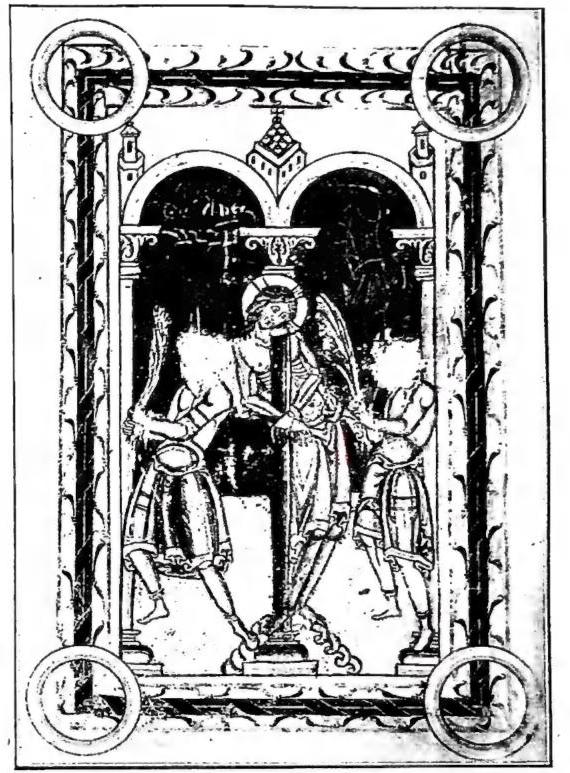
ROBERTO, Abbot of MOLESME, Saint — The flagellation, a miniature from the Psalter belonging to St. R., as evidenced by a 12th-century annotation. It is a Psalter from Saint-Vaast of Arras, adapted for Cistercian use (late 11th century) — Dijon, Municipal Library, ms. 30, f. 8°.
He allied himself with the archbishops of Mainz, Cologne, and Trier against King Wenceslas, participated in his deposition, and was himself chosen to succeed him on 21 August 1400, pledging to reclaim the Lombard lands inflamed by Wenceslas for Gian Galeazzo Visconti. Descending into Italy with financial and diplomatic support from Florence, he was defeated at Brescia on 24 October 1401 and abandoned the campaign the following spring, renouncing the struggle in Lombardy and the imperial coronation. During the expedition, he lacked the support of the Roman pope, Boniface IX, despite R. and the Rhenish archbishops recognizing him over his rival in Avignon. However, Boniface feared that by antagonizing Wenceslas and the Visconti, he might lose obedience in Bohemia and especially political security in Italy, nor did R. provide the Pope with the assurances requested, so as not to foreclose the possibility of an agreement with France. The death of Gian Galeazzo facilitated the understanding between R. and Boniface and secured papal approval for the former in 1403. R. remained loyal to the Roman popes in the following years and at the Council of Pisa, while in Germany many of his adversaries abandoned Roman obedience. He died on 8 May 1410.
