
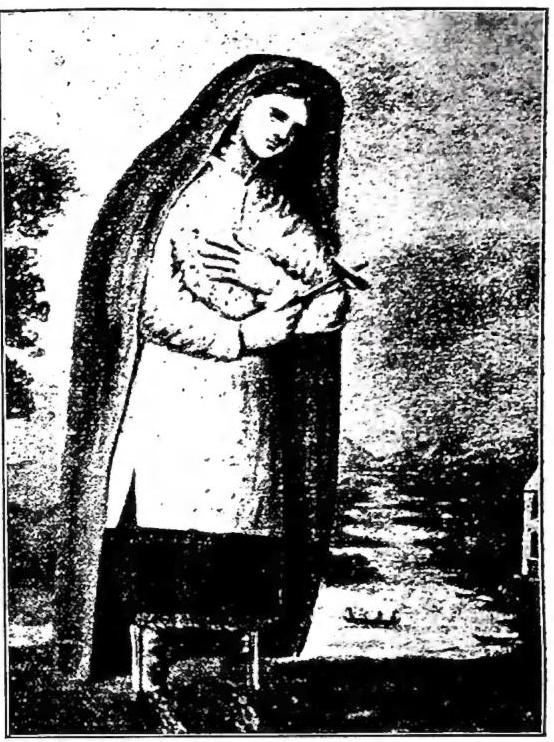
Oil painting by Fr. Claude Chauchétière, S.J., 1687.
(v.) if God is not conceived as a person (v.) but as
the subsisting reality of all things; it is polytheism (v.) if
divinity is attributed to the multiplicity of forces or forms
in reality, whether of the human world or of the infra-mundane;
it is monotheletism (v.) if God is conceived as the transcendent First Principle
on which both the world of nature and that of human history depend.
With a narrower meaning, t., in opposition to polytheism, pantheism and
deism (v.), is the conception of God as the supreme, unique, personal Being,
efficient and provident Cause of the world. The first advance of philosophy
beyond mythology consisted in affirming the unity of the First Principle
and in rejecting polytheism. More difficult was the path from monotheism
to the conception of a personal and provident Creator God, which was
clarified only through Revelation (v. ATEISMO; DEISMO; DIO; TEOLOGIA
NATURALE).