
REPRODUCTION. - Reproduction, or the faculty of generating new organisms similar to themselves, is the most typical and fundamental characteristic of living beings. It allows the perpetuation of the species, despite the mortality of individual organisms.
I. ANIMAL REPRODUCTION
In animals, a great many modes of reproduction are known, but they can be reduced to two principal categories, profoundly different from one another: asexual (or agamic) reproduction and sexual reproduction. The former, less widely diffused, but frequent especially in protozoa and in a few groups of invertebrates, consists essentially in the separation of one or more parts of the body from a pre-existing individual, with the subsequent completion of those parts, which are transformed into as many offspring individuals. The latter, enormously more widespread, consists instead in the formation of the new organism from an initial cell (zygote), derived from the fusion of two special cells (gametes), one male (sperm) and the other female (egg).
An essential difference between the two types of reproductive activity lies in the fact that animals born by asexual reproduction remain endowed with a hereditary patrimony entirely identical to that of the progenitor, whereas on the contrary organisms originating by sexual reproduction prove to be provided with a hereditary patrimony that is a mixture of characters derived from the father and from the mother. This is of fundamental importance for the phenomena of individual variability and for the laws of the transmission of characters.
1. Asexual reproduction
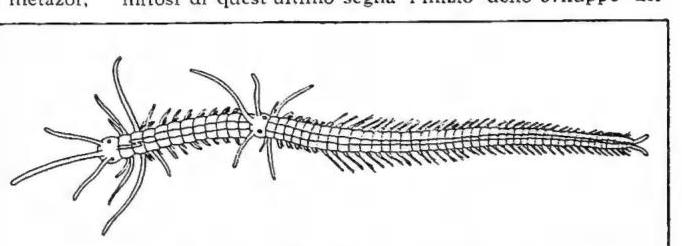
The phenomena of asexual reproduction take place in very different ways in the various groups of animals. In protozoa, the single cell constituting the whole organism frequently reproduces by simple fission, dividing into two cells identical to one another, which detach and grow to their original dimensions. At other times, instead, there is a multiple fission, in which the cell nucleus divides several times in succession, giving rise to many daughter nuclei, each of which surrounds itself with a small quantity of cytoplasm, thus generating as many independent individuals; generally the process is preceded by the genesis of a common protective envelope (cyst), which breaks open at the end of the reproductive activity. A third modality is budding, or the formation of one or more small cellular protuberances, each containing a nucleus derived by division of the pre-existing nucleus; each bud thus formed detaches from its progenitor, and then grows while leading an independent life. Analogous facts of simple or multiple fission and of budding are also found in many metazoa, and especially in coelenterates, flatworms, annelids, tunicates. Well known is the case of the freshwater hydra (Hydra sp.), which, besides reproducing sexually, is capable of proliferating at the sides of the body, by budding, one or more offspring destined to detach. In other coelenterates, through a similar process of asexual reproduction, from an individual born by sexual reproduction entire colonies of polyps take origin, sometimes presenting among themselves morphological differences linked to a complex division of labour for the benefit of the collective colonial life (siphonophores). Among flatworms, some strains of planarians have almost entirely lost the faculty of reproducing sexually and multiply almost exclusively by fission (Benazzi). Among annelids, cases are known of polychaetes and oligochaetes forming entire chains (stolons) of organisms destined to detach; sometimes, in polychaetes, only these individuals originating from fission (schizogomids) are capable of maturing the eggs and sperm indispensable for sexual reproduction (schizogamy, Malaquin).
In various animal groups there exists a regular alternation between generations reproducing by the agamic way and by the sexual way. The phenomenon, called metagenesis, has already been mentioned in speaking of those coelenterates in which colonies of asexually multiplying organisms take origin from an initial individual derived from a fertilized egg. In these cases generally the animals of the generation producing eggs and sperm have the appearance of a medusa and derive by budding from those of the asexual generation, which have the form of polyps. Metagenesis was discovered by Chamisso (1818) in certain tunicates (salps), which can exist in the state of isolated specimens (solitary salps) or in the form of chains constituted by several individuals joined together (aggregate salps). The solitary salps take origin sexually, through fertilization between eggs and sperm produced by the aggregate salps; the chains of the latter in turn are formed by the agamic way, from a proligerous stolon generated by the solitary salp, which is not capable of maturing male and female gametes.
A particular form of asexual reproduction is polyembryony, or the formation of two or more twin embryos from a single fertilized egg, which divides, during early phases of ontogenesis, into two or more distinct parts, with independent development. The phenomenon, occasional in the human species, is habitual in certain insects and in some mammals (armadillo).
2. Sexual reproduction
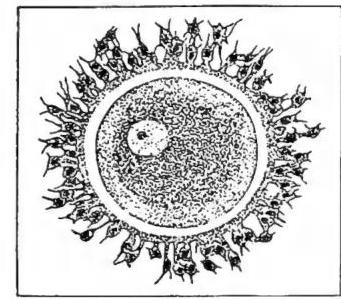
The first indispensable act of sexual reproduction is the preparation of the gametes. In protozoa, the single cell constituting the whole organism at given phases of the life cycle can acquire the value of a gamete. In metazoa, formed of many cells, the gametes derive instead from a particular stock of elements (germ cells) which in the gonads (ovaries, testes) undergo a complicated process of maturation, transforming into eggs or sperm. The most important phenomenon of the preparation of the gametes consists in the reduction to half of the number of chromosomes characteristic for each species of organisms. One usually expresses it by saying that the gametes are endowed with a haploid number of chromosomes, as opposed to the other cells which instead possess a diploid number. The meeting and fusion of two gametes of opposite sex to form the zygote is called fertilization. This can be external, in numerous aquatic animals (sea urchins, annelids, fishes, anuran amphibians, etc.) which discharge their gametes into the surrounding environment, or internal when on the contrary the male gametes are introduced within the female genital tracts, where the meeting with the egg takes place. The sperm, small and mobile because generally provided with a flagellum-shaped tail, reaches the egg and penetrates it; the surface of the egg then changes through the appearance of a fertilization membrane, hindering the entry of other sperm. The two haploid nuclei of the egg and of the sperm (called the female and male pronuclei) then fuse together forming a diploid nucleus (nucleus of the zygote); and a process of mitosis of the latter marks the beginning of the development of the nidation), which have the function of facilitating its penetration into the egg through a process of dissolution of the gelatinous membranes that surround it.
Considering the process of fertilization from a physiological point of view, one may admit that the mature egg not yet fertilized is a cell in a state of torpor which the entry of the sperm revives to new life, as is frequently shown by the resumption of respiratory activities and of exchanges of saline substances with the environment.
A form of sexual r., called parthenogenesis or virgin generation, is that in which the egg is capable of generating an organism even in the absence of the activating action of the sperm. The phenomenon, discovered in certain insects (aphids) by C. Bonnet in the 18th century, is today known, as a normal means of reproduction, also in many other invertebrates. Thus in the bee and in hymenopterans in general, females and males are born according to whether the egg is or is not fertilized, while in many other cases (phylloxera, cladocerans, rotifers) there is a more or less regular alternation between one or more parthenogenetic generations and a generation born from the fertilized egg (heterogony).
By various experimental means, physical or chemical, even eggs that in nature are capable of developing only if fertilized can be induced to parthenogenesis. Thus in the egg of the sea urchin the activating effect of the sperm can be replaced by various chemical actions (Loeb), and in frog eggs the same effect is obtained by pricking the virgin egg with a thin needle soaked in blood (Bataillon). Recently the experimental parthenogenetic development of eggs has been obtained even in the rabbit (Pincus, Olivo).
3. Oviparous and viviparous animals
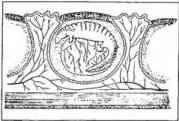
Those animals are called oviparous which deposit their own eggs in the external environment very early, when the development of the embryo has just begun or even before such development has begun. These eggs are for the most part surrounded by a gelatinous envelope if they develop in water, and are instead protected by resistant shells when they are deposited in a more or less dry environment. Among oviparous animals, some are distinguished which take no care of the eggs deposited and of the newborns that hatch from them, and others instead which lavish on the eggs and the newborns a series of attentions, generically called parental care. These consist in the construction of a nest, of the most varied shape in the various groups of animals, suited to providing a safe shelter for the eggs and the offspring; or also in keeping their own progeny near themselves; at other times even offering it a refuge on their own body. Thus the females of the anuran amphibian Pipa americana deposit the eggs on their own back, around each of which the skin forms a small little chamber, and in this the development of the embryo is accomplished. In the sea horse (Hypocampus), on the other hand, it is the male that harbors the eggs deposited by the female, incubating them within a special abdominal skin pouch. Oviparous animals are, besides many invertebrates, the majority of fishes and amphibians, many reptiles, all birds and, among mammals, only the monotremes (echidna, platypus).
In contrast to the oviparous, those animals are called viviparous the embryo. Recent studies (Hartmann, Moewus) have brought out that the attraction between gametes of opposite sex, with subsequent reaction of the fertilized egg, is essentially due to the production of substances called gamones. It has also been demonstrated (Rowlands and McClean) that sperm often secrete special enzymes (hyaluro-
animals whose eggs are not deposited early outside, but remain lodged for a varying time in a special cavity of the maternal genital apparatus, where the development of the embryo takes place entirely or for the most part.
In many cases the embryo, for the whole time during
(courtesy of E. Vannini)
ANIMAL REPRODUCTION - Embryo of the amphibian Pipa americana, lodged within the skin of the mother's back.
which is harbored within the mother, does not draw its nourishment from her, but obtains it exclusively from reserve substances that were stored in the egg from the very beginning in the form of yolk globules. In that case one speaks, more precisely, of ovoviviparous forms, of which examples are found, besides among invertebrates, in teleosts (gambusia), selachians, amphibians (Salamandra atra) and reptiles (viper). Among mammals, marsupials can perhaps be considered ovoviviparous, because the embryos do not contract close relations with the maternal organism and are delivered at a very backward stage. Sometimes, on the other hand, the embryos contract, very early, close connections with the walls of the maternal cavity (uterus) within which they are contained, and are nourished for a long time at the mother's expense by means of a special organ (placenta) that connects to her. In that case one speaks of true and proper viviparity, which is found in some invertebrates, in certain selachians, in a few reptiles, and in the great majority of mammals (the so-called placentals).
The ovoviviparous and viviparous forms too often exercise, after birth, parental care toward their offspring. We shall limit ourselves to recalling the function of lactation, characteristic of all mammals and especially prolonged in the forms with helpless young.
Bibliography7 works
Enrico Vannini
II. PLANT REPRODUCTION
Reproduction in the plant world is of such importance that it is taken as the basis of systematic classification for a large number of plant groups (classes, subclasses, orders, suborders). Indeed, it was on the basis of sexual reproduction that Linnaeus founded his "sexual system," which still holds the field today.
In plants, reproduction can be sexual or asexual. Sexual, or gamic, reproduction is more complex compared with asexual, or agamic, reproduction understood as vegetative multiplication, which can involve various parts of the same individual and can replace sexual reproduction when the latter is lacking for any reason whatsoever. The fundamental character of sexual reproduction is the formation and subsequent union of two gametes which contribute through a sexual act (amphimixis) to the formation of the zygote, which represents the first cell of a new being, deriving from two parents or from two cells that have united for this purpose. In plants, asexual reproduction is already more or less uniform and provides for the reproduction of parts already in existence which, by simple detachment from the producing individual, give rise to a new individual that is in no way constitutionally different from the one that produced it. On the contrary, sexual reproduction tends to generate individuals that vary in their chromosomal complement within the range of possible variation of the genome.
In order to have a complete picture of the sexuality of botanical species, it is well to review the variations among the lower and higher groups of the botanical scale. The lowest groups (bacteria or schizomycetes) lack sexuality, or it is not known. Only so-called "sporulation" exists, that is, the formation of endogenous spores in a cell which, upon rupture of the membrane, are released. In myxomycetes there exist identical gametes (isogametes, isogamy). In algae, sexuality is very evident, in particular because a sexual generation alternates with an asexual generation; these two phases conclude with the formation of the zygote, that is, the union of two haploid cells (gametes) into a single diploid one (zygote), and with chromatic reduction (meiosis) which restores the haploid chromosomal complement in the sexual cells. In some groups the two processes are distant, in the sense that a soma (haploid or diploid) is interposed between them, but sometimes, as soon as the zygote is formed, the first division it undergoes may be the reductional one, so that the sole representative of the diplophite is the zygote itself. Such groups are called haplobionts. If, on the other hand, as in the case of higher plants and animals, chromatic reduction immediately precedes the formation of the gametes and therefore that of the zygote, there is a diplobiont, inasmuch as the diplophite has absolute predominance over the haplophite, which is represented only by meiosis. In the intermediate case, when in the biological cycle of a being the haplophite has a long series of divisions, at the end of which the gametes are formed, and likewise the zygote undergoes a long series of divisions giving rise to a soma, one is said to be in the presence of a haplodiplobiont. In general, green algae are haplobionts, the gametophytic phase bearing gametes prevailing in them, though asexual reproduction by zoospores (free cells that vegetatively reproduce the filaments of the alga) is not absent (Ulothrix), and the sporophytic phase being reduced to the zygote alone, which undergoes meiosis (chromatic reduction) as soon as it is formed. Some brown algae are haplodiplobionts (Laminaria), the sporophytic phase prevailing in them and the gametophytic phase being reduced to a few divisions; others (Fucus) are diplobionts because the sporophytic phase prevails over the gametophytic phase reduced to the two reductional divisions. Red algae are likewise haplodiplobionts because the gametophytic phase goes beyond the two reductional divisions and the sporophyte is represented by the sporogenous filaments. Reproduction by agamic spores (zoospores) is very frequent in algae and represents, alongside sexual reproduction, a form of purely vegetative multiplication. The alternation of generations in fungi is based on the production of spores that give rise to haploid fungal filaments. The zygote in some cases (lower ascomycetes) is the sole representative of the sporophytic generation. In higher ascomycetes the gamia of the cytoplasm (plasmogamy) precedes the fusion of the two nuclei (karyogamy). The dicaryotic ascogenous filament is regarded as part of the sporophyte.
Basidiomycetes show the two phases in equilibrium, and are therefore considered haplodiplobionts. The reproduction of lichens, biological forms deriving from a mutualistic parasitism between green algae and fungi, is for the most part vegetative, and sexuality is entrusted, as is also classification (ascolichens and basidiolichens), to the fungus, which shows the same reproductive organs as fungi.
Bryophytes entrust the faculty of reproduction and multiplication to organs as well as to vegetative parts. In their biological cycle the gametophytic phase prevails. A spore produces the protonema on which arises a small plant that bears at the vegetative apex the archegonia (female organs bearing the oosphere) and the antheridia (male organs bearing antherozoids). The motile antherozoid fertilizes the immobile oosphere, which in place forms the zygote that produces the sporophyte. The soma is therefore represented by the gametophyte.
In pteridophytes the sporophyte prevails over the gametophyte reduced to a prothallus. The fertilized oosphere develops in place (zygote) and produces the sporophyte that represents the soma. In higher ferns the prothalli, undifferentiated in lower ferns, bear only archegonia (female prothalli) or only antheridia (male prothalli) which produce macrospores and microspores respectively. Such ferns are called heterosporous.
Phanerogams still present an alternation of generations, but the gametophytic phase is borne by the sporophyte and is sheltered in the ovule, which in gymnosperms is borne by the open carpel and in angiosperms by the closed carpel or ovary. In gymnosperms the spore that derives by meiosis from a cell of the nucellus produces a prothallus (endosperm) on which a rudimentary archegonium bears the oosphere that is fertilized by the sperm nucleus borne by the pollen (motile male gametophyte). The zygote produces the embryo, which develops in place and at the expense of the endosperm and transforms the ovule into a seed.
In the nucellus of the ovule of angiosperms, of a tetrad of megaspores three degenerate and only one megaspore germinates, giving the gametophyte that bears the oosphere. At the same time the pollen produced in the stamens bears the sperm nucleus that fertilizes the oosphere. The flower is the seat of gamia, but the flower may have the two sexes united (hermaphroditic or monoecious monoecious flower), or two distinct flowers may bear one the gynoecium and the other the androecium (monoecious diclinous plant), or two distinct individuals may bear separate male flowers and female flowers (dioecious species).
Dioecy and monoecy are forms that in no way disturb sexuality, which is favored by external factors such as wind, animals, water, etc. (anemophilous, entomophilous, hydrophilous pollination, etc.). Nature seeks to avoid self-fertilization, that is, the fertilization of the pollen with the ovule of the same flower.
Besides sexual reproduction there also exists vegetative multiplication, whereby a part of the soma detaching from an individual generates another individual entirely similar to the one that produced it. Thus a branch of an olive tree can give back a plant entirely similar to the one that produced it.
In botanical species, in addition to the forms of sexual reproduction and the vegetative one, other forms exist: parthenogenesis, which consists in the development of the oosphere in the absence of the male gamete; apospory (suppression of spore formation), in the case where a cell of the nucellus (diploid) develops and, invading the space destined for the gametophyte, which aborts, gives rise to a diploid embryo sac that degenerates; apogamy, that is, the development of a cell of the gametophyte different from the oosphere and therefore haploid, etc.
Sexual reproduction allows the exchange of genes and therefore variability, within the limits of the species, among the individuals belonging to it; it also allows the formation of interspecific and sometimes even intergeneric hybrids, the latter for the most part infertile. On the contrary, vegetative multiplication allows only the vegetative development of the soma.