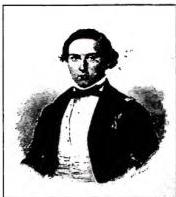
LUIGI II, RE D'UNGHERIA E DI BOEMIA

**LUIGI II, King of HUNGARY and BOHEMIA.** — Born on 1 July 1506, died on 29 Aug. 1526. He reigned from 1516, succeeding his father, Vladislaus II Jagiellon. The young king was brought up amid festivities and pleasures rather than in the study of statecraft. Under the rule of a royal council, Hungary fell into anarchy, while the Turks, against whom the Hungarians had resisted for more than a century, intensified their attacks upon the country. The king, inactive even later, was unable to improve the situation. The disorganized and divided land thus became an easy prey for the Turks. In the battle of Mohács (1526), not only did the king die, but the strong medieval power of Hungary was also destroyed.

BIBL.: I. Lukinich, *Mohácsi Emlékkönyv* (Memorie di Mohács), Budapest 1926; B. Hóman-Gy. Szekfű, *Magyar Történet* (Storia dell'Ungheria), II, 3rd ed., ibid. 1936, pp. 564-611.

**Luigi Beltrán (Bertrand), St.** — A Dominican, born at Valencia on 10 Jan. 1526, died there on 9 Oct. 1581. He entered the religious life in his native city on 26 Aug. 1544, was ordained priest on 23 Oct. 1547, and served as master of novices (of whom he is now the patron) in Valencia (1545-51). During the plague, he was vicar at Albaida (1551-60), then again master of novices (1560-62).

Hearing of the wretched conditions of the Indians, exploited by the Spanish conquerors, he desired to become a missionary. He realized his apostolic wish by reaching New Granada (Colombia) in 1562, of which he became the apostle. For seven years he labored in Colombia and extended his mission to the Lesser Antilles, devoting himself to the defense and conversion of the natives. He baptized many thousands of Indians. But after seven years of preaching rich in miracles, unable to endure further the abuses of Spanish rule, he returned to Spain (18 Oct. 1569), became prior at S. Onofrio (1570-73), then again master of novices (1574-75), and finally prior at Valencia (1575-78). He was greatly devoted to penance, sought out suffering for his body, preached with great zeal, and performed miracles in his lifetime. He was beatified by Paul V (29 July 1608) and canonized by Clement X (12 Apr. 1671). His feast is celebrated on 10 Oct.

BIBL.: V. J. Antist, *Verdadera relación de la vida y muerte...*, 1583 (Valencia 1593, ibid. 1884; Ital. trans., *Bullarium O. P.*, V, Rome 1733, pp. 660-61, 666-67; V. I, 1713, pp. 8, 229, 274-81, 297-98, 367, 393; VII, 1713, pp. 486, 496-97); A. Touron, *Histoire des hommes illustres de l'Ordre de St Dominique*, IV, Paris 1747, pp. 485-526; *Acta SS. Octobris*, V, ibid. 1868, pp. 292-488; I. Taurisano, *Catalogus hagiographicus O. P.*, Rome 1918, pp. 56-57; A. De Zammora, *Historia de la provincia de S. Antonino*, Caracas 1930, pp. 188-214; G. D. Rambaud, *Grandes figures de Préchours*, I, 2nd ed., Paris 1930, pp. 141-73; G. Carrasco, *Los quince primeros*, Tucumán 1940, pp. 457-95.