
PERITO. – The p. has been defined as a delegate of the judge for ascertaining and evaluating the facts, which the judge will then reassess on his own.
When the S. Rota extended its jurisdiction also to the civil forum, it made use of arbitres in pecuniary matters; their decision was also the decision of the case, and the dispute was thereby considered settled. In time, the arbitres became rather «qualified witnesses» chosen by the judge to enlighten him on a particular subject or art in which they were specialists. Thus the p. became a true «assistant» of the judge, by whom he was chosen and to whom he had to give an account; at the same time, he was clearly distinguished from witnesses and was greatly superior to them, precisely because he was selected for the purpose of examining the fact asserted by the witness, subsequently reporting on it to the judge and delivering, with regard to the technical aspect of the matter, a genuine reasoned judgment. Thus, through the development of the S. Rota, the present figure of the p. gradually came into being; although it is not precisely defined, it is accepted in almost all modern codes.
The judge must choose the p. from among persons competent in a particular profession or art and absolutely worthy of esteem. The name of the p. must immediately be notified to the interested parties, so as to give them the opportunity to raise any objections. It always belongs to the judge to declare, by decree, whether or not the mandate of the p. should be revoked and another appointed (can. 1796). The interested parties may attend the p.’s oath and be present while he carries out his mandate, unless propriety, modesty, or some other consideration forbids it (can. 1797).
The p. will swear an oath both when he is about to accept the mandate (iuramentum de munere fideliter explendo) and afterward (iuramentum de munere fideliter impleto); at times the oath de secreto servando is also added. The p. may submit his reasoned report in writing, or, by way of exception, orally; in the latter case, however, the report must immediately be entered in the record and signed by the p. and the notary (can. 1801 § 1). After delivering the written report, the p. is summoned to the tribunal to acknowledge and confirm it under oath and, if necessary, to provide further explanations. When two p. are appointed simultaneously for one matter, they ordinarily act independently of one another, and each must draw up his own report. An exception to this practice may be made in a trial concerning relative impotence, in which a medical examination of both the man and the woman is necessary.
Of the two p., one will then examine the man and the other the woman, according to their respective specializations; afterward they will consult together in order to compare their findings and draw up the expert report. If the opinions of the two were not concordant, this could be noted in the drafting of the report, without it being necessary to specify which of the two p. was responsible for each opinion. The conclusions of the p. are of great value for the purposes of the judgment; nevertheless, by virtue of the principle of the judge’s free conviction, he is not bound by the conclusions of the p., and his judgment is perfectly original and autonomous, all the more so because, in reaching the final decision, he must take account of the entire complex of circumstances, sometimes unknown to the p. Every expert report must remain in the acts, as one part of the proceedings;
(courtesy of Fr. U. Vigilio)
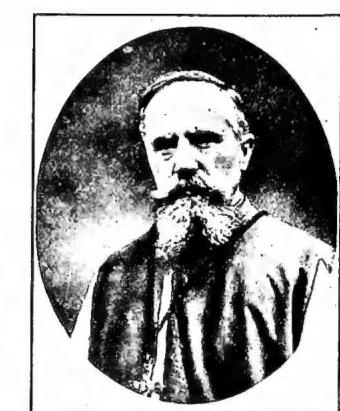
PERLO, FILIPPO — Portrait.
In exceptional cases, it might not be admitted or might be annulled.
It is not uncommon for an expert to prepare a written report, not pursuant to a formal mandate from the judge, but merely on assignment from an interested party or a lawyer. This initiative, generally undertaken at the beginning of a trial, is intended to present the case itself in a favorable light, making it appear to have a valid foundation rather than merely a fumus boni iuris. In such a case, the expert opinion is called extrajudicial and may be regarded as a technical defense. In these cases the expert assumes the true role of a witness and, as such, is summoned before the court to acknowledge his own report.
Particular instructions for expert examinations, both in cases of non-consummation and in those of nullity, are found in two documents issued by the Sacred Congregation of the Sacraments: Regulae servandae in processibus super matrimonio rato et non consummato of 7 May 1923, arts. 84–95; and Instructio servanda a tribunalibus dioecesanis in pertractandis causis de nullitate matrimoniorum of 15 Aug. 1936, arts. 139–54.
On 12 June 1942, the Supreme Congregation of the Holy Office issued a decree, De quibusdam cantelis adhibendis in causis matrimonialibus impotentiae et inconsummationis, by which it renewed the recommendation that women be examined by female physicians, and only upon explicit request, by male physicians. Moreover, no woman may be compelled to undergo a medical examination, even when an expert examination might appear strictly necessary for the resolution of the case.
BIBLI: F. Roberti, CIC Schemata, I. IV, De Processibus, Città del Vaticano 1940, ff. 295–305; M. Lega-V. ARTOTIRITI, Commentarius in Iudicia Ecclesiastica, II, Roma 1939, pp. 744–771; Wernz-Vidal, VI, 1, pp. 429–42. For expert examinations in canonization cases, V. il Codex pro Postulatoribus, 4ª ed., Roma 1929, pp. 58–59, 210, 227. Pietro Santini