Machine translation of the 1948–1954 Italian original. The original text is authoritative.
APSÀRAS. - This name means “she who moves in the water” and denotes an Indian water divinity, akin to the Greek Nereid. Already in the Rgueda, X, 123, 5, the A. is associated with the Gandharva, a spirit of the air to whom she smiles and who loves her. Even when the A., having abandoned their naturalistic substratum, become celestial nymphs and personify the feminine power of seduction, they love to frequent the shores of lakes and rivers in remembrance of their origin. The Atharvaveda calls them
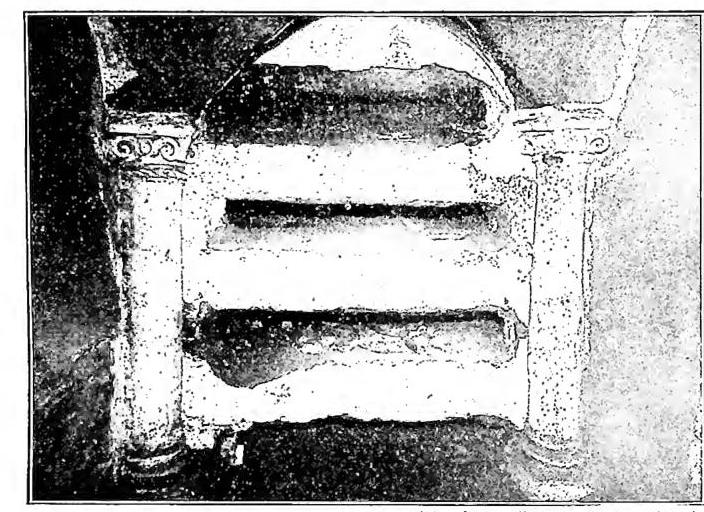
(photo Pont. Umm. d'Arc. Secre) APRONIANO, cemetery of - Cubiculum with columns and stucco capitals - Rome.wives of the Gandharvas, who reappear in epic mythology as celestial musicians. They play the viṇā, a kind of lute, while the A. dance and sing. As in Greece, so too in India the founders of famous dynasties claim a semi-divine origin from a mortal hero and a celestial nymph. The episode of Purūravas and Urvaśī, the Melusina of India, is the subject of a Vedic hymn (Rv, X, 95) before becoming that of Kālidāsa’s famous drama, Vikramorvaśīya. According to the Rāmāyaṇa, the A. were born from the churning of the ocean together with S'ri, the Indian Venus, and with the amṛta (v.).
BIBL.: H. Oldenberg, Die Religion des Veda, Berlin 1894, pp. 250–54; V. Fausböll, Indian Mythology, London 1903, pp. 123–26. Ferdinando Belloni Filippi
Cite this article
“APSÀRAS.” Enciclopedia Cattolica, vol. I (1948), p. 1016. Azione Romana digital edition, https://azioneromana.com/article/apsaras.