
PREZZO. – I. NOTION
P. is the value of a unit of merchandise or service, expressed in money. In free and voluntary exchanges, the p. generally increases as demand increases, and decreases as supply grows. Exchange is always preceded and determined by a comparison of p.: the buyer chooses the p. of the best offer and the seller that of the best demand. When the two p. coincide, or can be brought to coincide, the exchange takes place. The comparison of p. is therefore of great importance: just as with fractions reduced to a common denominator, it is reduced to the simple comparison of the numerators, or monetary quantities, when the p. refer to uniform contractual conditions (payment, delivery, waste, tare, transport, insurance, guarantees, disputes, etc.). Such a favorable situation, which makes p. intelligible and comparable even to those who are less prepared and astute, is achieved in commercial practice through standard contracts, forfaits, and contractual standardizations already widely used in certain branches of the large-scale trade in raw materials and in public services: to a limited extent in domestic trade in semi-finished products and manufactured goods, and in securities.
II. FLUCTUATIONS IN P
The continual fluctuations in p. determine—and are in turn determined by—changes in the direction and importance of the monetary currents that circulate products in the opposite direction. The control of these monetary currents would therefore be equivalent to control of p., that is, to the economic governance of the world.
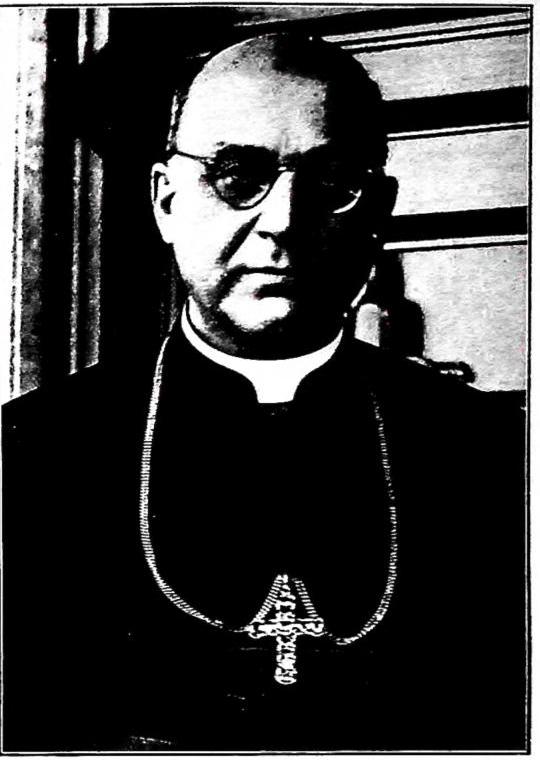
(photo by Felici)
PREYSING, KONRAD VON – PORTRAIT.
p.) and of the same maximum enterprise (through the abolition or forfaiting of risks).
III. GENERAL AVERAGE OF PRICES
Demand being represented by a monetary volume (quantity of money multiplied by its velocity of circulation), and supply by a volume of exchange (quantity of production multiplied by the number of transactions in the passage from producer to final consumer), their ratio, or the general average of prices, and with it money, will oscillate around stability as the two volumes tend toward equality. Of the four factors at work, the one most easily and effectively governable, with a high degree of automatism, is the velocity of circulation of money: through the regulation of the incentives that determine the conclusion of exchange contracts in general, and capitalization contracts in particular. If savings insurance and contractual unification in the field of capitalization were implemented on a broad scale, these incentives would be reduced to fluctuations in risk-free income: when rising, drawing capital toward socially most useful investments; and when falling, diverting the currents of savings, once saturation had been reached, toward other regions and other needs.
Measures such as capital insurance, contractual unification, and the organizational and functional improvement of markets (price formation, commercial information, legal and arbitral assistance, guarantees, credit), by facilitating and multiplying transactions, in which the velocity of circulation of money becomes concrete, tend to stabilize fair prices and the value of money; they also help to calm economic life by progressively freeing it from psychological and political influences that do not directly concern economic facts but invariably result in alterations of prices.
IV. JUST PRICE
The entire social problem revolves around the concept of the just price through a more exact measurement of value: the economic aspect of the great Christian precept, «love your neighbor as yourself». That «as» establishes, in fact, that there must be equivalence between the useful effect of the work that each person devotes to the well-being of others and the well-being that each person claims in return for himself. Once the just price had been realized, the only way to increase one’s monetary income would remain that of procuring the greatest possible well-being for one’s neighbor. Who, however, will judge the real usefulness of the work, if not that neighbor who is to enjoy its benefits? The identification of “neighbor” with “market,” and of the just price with the market price, is therefore easy. The latter will come closer to the just price to the extent that the conditions making the market perfect (that is, unique, accessible, free, responsive, expressive) are fulfilled as fully as possible, prices are intelligible and comparable, and transactions are easy and guaranteed, on the indispensable foundation of honesty and moral correctness among those participating in the exchange.
V. COMPRIMIBILITÀ DEI P
The constituent elements of p. (cost of production or reproduction, cost of buying and selling, general expenses, interest on capital including the risk premium, profit) display varying degrees of compressibility. Competition bears principally upon profit, which can be preserved only by reducing the rate of interest through an abundance of capital, the savings (v.), general expenses and the cost of buying and selling through bureaucratic simplifications and rationalization in the technique of exchange and in commercial organization; and finally the cost of production, by adopting more perfect and higher-yielding machines and production processes. Excessive and premature compression of individual or entrepreneurial profit entails the abandonment of free initiative and a retreat first into systems of constraint and then into statism, which may go as far as the complete realization of a collectivist regime (v. PIANIFICAZIONE E PIANISMO).P. other than economic or market prices (such as monopoly, political, legal, controlled, tariff, and similar prices) introduce spurious elements into economic life, profoundly altering its character and course (the conventional price is an exception, for objects outside commerce, e.g., famous paintings). Economic life will prove the more rational and humane insofar as, on the basis of a general spiritual renewal, it can proceed autonomously, with a minimum of intervention by noneconomic factors: whether these are the selfish interests of monopolists and speculators, or political interests that go beyond proper legal protection and that desirable, civilly organized charity in which politics essentially consists.
The considerable complication of theories of p., which has intensified in recent decades, particularly through the work of Anglo-Saxon economists, is destined to become still greater—and needlessly so for economics, if the latter does not return to being above all itself and to governing itself by its own laws, thereby giving rise to a true applied science of economics. If there is a legal price, it must be observed in conscience; but if it is not observed in practice, nor does the State concern itself with it, and all the more so if it is evidently unjust, then the common price may be followed, so that the seller does not ask more than the maximum commonly permitted and the buyer does not offer less than the minimum. For the influence of the unjust price on the value of the contract, V. RESCISSION AND RESCINDIBILITY.
END OF THE NINTH VOLUME.