
AUSPICIO. – From Lat. auspicium, from avis, bird, and spe(i)cio, I see. Among the Romans, the proclaimers of the divine will were above all the birds (ex avibus): subsequently (Servius, ad Aen., III, 89), divinatory signs were also discerned from quadrupeds that traversed the templum, that is, the space demarcated by the augur (ex quadrupedius); but even more from signs in the sky—flashes, lightning, thunder (ex caelo, ex manubiis Iovis); from ominous portents (ex diris); in war, when haste was necessary, the manner in which chickens ate was observed (auspicia pullaria, ex tripudiis).
The signs were of two kinds: oblative, when they presented themselves spontaneously, and interpretative, when they were requested by the magistrate and mentally predetermined by the augur. In addition to the private auspices, which soon fell into disuse, there were the public ones. The greater auspices belonged to magistrates endowed with imperium and to the censors; the lesser to the others. For their validity, the auspices had to be taken at the place where the action began and on the same day, from one midnight to the next (Gellius, II, 2). The magistrate remained silent (Cicero, De divisi,
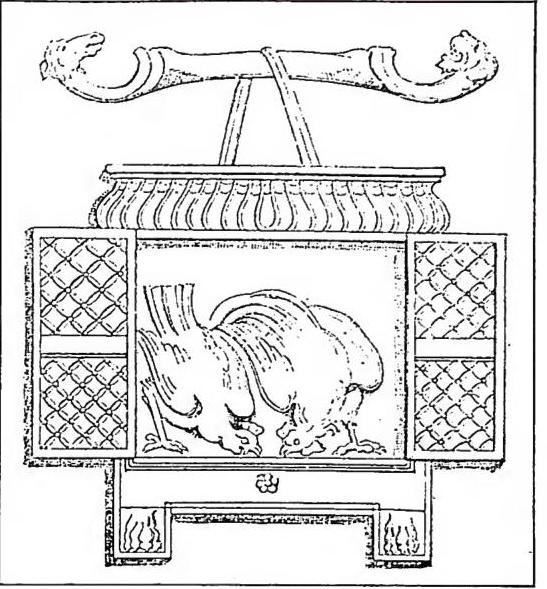
(properly A. P. Frutus)