
BRAILLE, LOUIS. - B. at Coupvray (Seine-et-Marne) on Jan. 4, 1809 and d. in Paris on Jan. 6, 1852. Blind, he dedicated himself to the education of his companions in
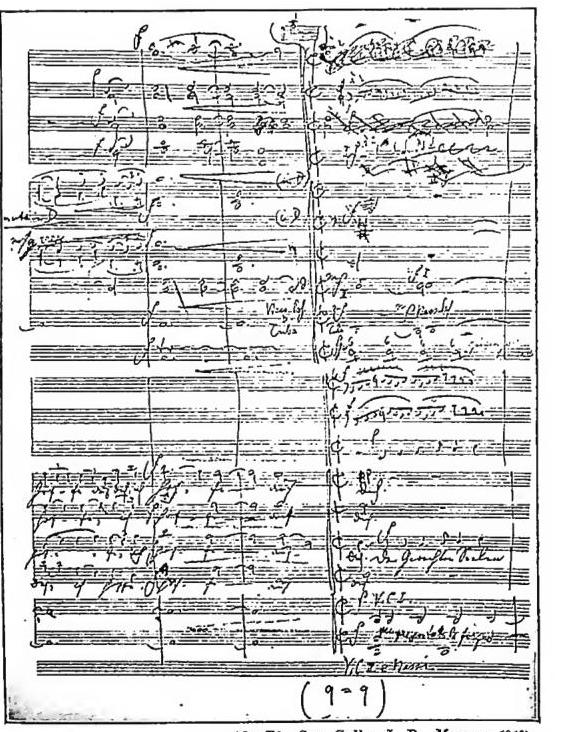
Such was his progress at the Institute for the Blind in Paris in the study of letters, music, and mathematics, that in 1826 he was called to teach grammar, geometry, geography, history, algebra, and arithmetic there successively.
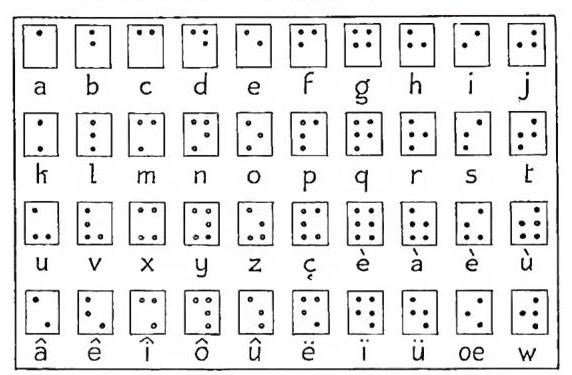
Dissatisfied with the Haüy system then in use for the reading of the blind, he set out to find a new system, and found it by reforming that of Barbier, who, with twelve dots arranged differently in a given space, formed the various letters of the alphabet. B. reduced the dots to 6 and distributed them in three series of ten letters each.
A prospectus of it can be given here:
His system could be officially adopted in the Paris Institute for the Blind only in 1854 and subsequently spread to almost all parts of the world.