
CESELLO. - Properly speaking, it is a steel instrument used to draw, engrave, raise, flatten, or clean the metal being worked; there are therefore various c., which assume particular names and serve for each of the different operations. In common usage the term has come to signify the work of modelling, naturally very delicate, executed with that instrument.
It is a very ancient technique and is always associated with other particular methods of goldsmithing, such as repoussé, damascening, niello, etc. Through c., effects of an almost laminar relief are in fact obtained, which can confer upon works executed with this technique a remarkable airiness owing to the diversity of planes; but in general the volumes are somewhat strengthened by combining it with the technique of repoussé. Works in c. are frequently found in sacred goldsmithing from the Middle Ages to the modern age.
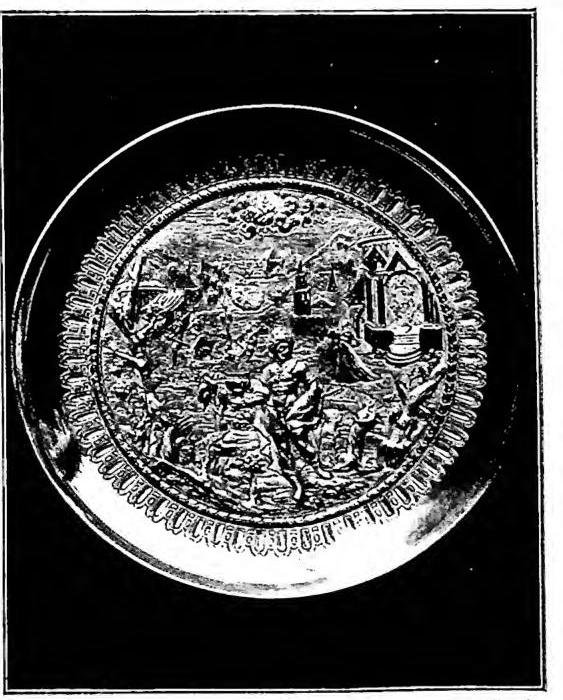
(photo Alinari) CESELLO - Silver salver in repoussé and chased work, with the representation of the month of January. Florentine art of the 16th century - Florence, Gabinetto degli Argenti.