Machine translation of the 1948–1954 Italian original. The original text is authoritative.
DISCO. — With the term discus or missorium and improperly bouclier (« shield »), one usually designates a concave plate of silver or other precious material, of varying size, with relief scenes of mythological, historical, symbolic, or genre subjects. The word missorium belongs to the language of Late Latin and is found in an inventory of silverware discovered in Gaul, in Gregory of Tours.
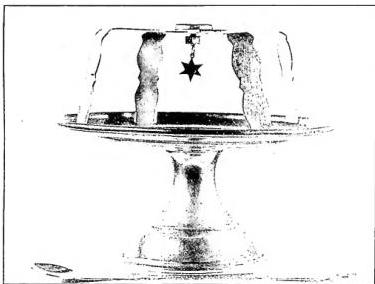
(Ist. Enc. Catt.) DISCO - D. of Byzantine-Slavic type with veil supports. Rome, Pontifical Russian College of St Teresa of the Infant Jesus.In the literary sources this object is variously named and is characteristic of the Roman imperial period; it has come down to us in numerous specimens dating from roughly the mid-4th to the mid-6th century AD. It was offered as a gift by emperors, consuls and high officials to their friends on festive occasions or other events, and generally served as a plate stand. In the Christian world it had a chiefly votive character and became part of the treasures of basilicas. Notable examples include the dish of Valentinian I, found near Geneva, with the figure of the emperor among six soldiers; the dish of Theodosius, found in Extremadura, showing the emperor seated between Valentinian II and the young Arcadius; and the dish depicting Ardaburius Aspar, a barbarian who was consul under Theodosius, from the territory of Cosa (Etruria). A considerable quantity of silver plates has been found in Russia and on the island of Cyprus: noteworthy is one discovered in the catacomb of Kerch, from the first half of the 6th century, with an engraved representation of the triumph of an unidentified emperor, and the Cypriot series illustrating episodes from the life of David, from the 6th century.
BIBL.: E. Saglio, Disque, in Ch.-V. Daremberg - E. Saglio, Dictionn. des antiq. grecques et romaines, II, 1, p. 277 ss.; E. Pottier, Missorium, 2, in op. cit., III, p. 1941; Venturi, I, p. 546 ss.; O. M. Dalton, Byzantine art and archaeology, Oxford 1911, p. 563 ss.; H. Leclercq, Disque, in DACL, IV, 1, cols. 1173-91; id., David., in loc. cit., cols. 295-303; P. Ducati, L'arte in Roma, Roma 1938, p. 382 ss. Luigi Maria Catteruccia
Cite this article
“DISCO.” Enciclopedia Cattolica, vol. IV (1950), p. 1002. Azione Romana digital edition, https://azioneromana.com/article/disco.