Machine translation of the 1948–1954 Italian original. The original text is authoritative.
ERINNI. - Minor Greek divinities, whose nature and the etymology of whose name are obscure and uncertain: they are said to be personifications of storm clouds, or the spirits of those unjustly slain and unavenged, or personified curses. In Homer they are fearful beings: summoned by curses, they come from the Underworld wrapped in mist and drive men to wicked deeds. Eslodo says that they were born from the blood flowing from the genitals of Uranus; they are fearsome, but also promote fertility and fecundity. In Aeschylus they pursue Orestes after the killing of Clytemnestra: terrible and just aveng-
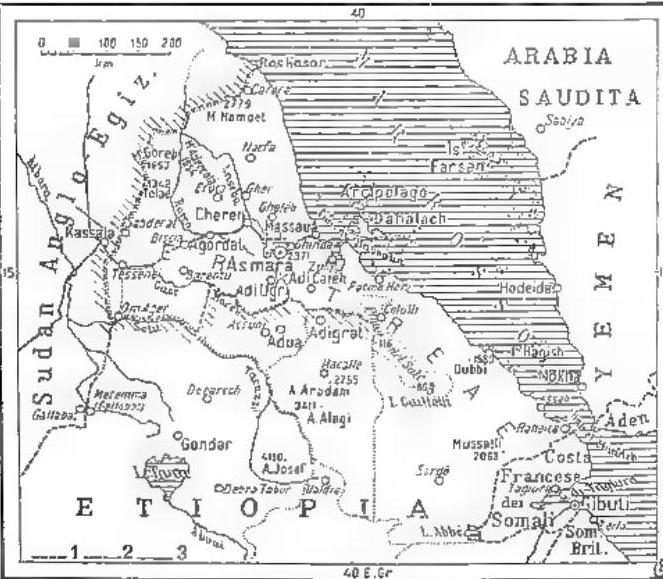
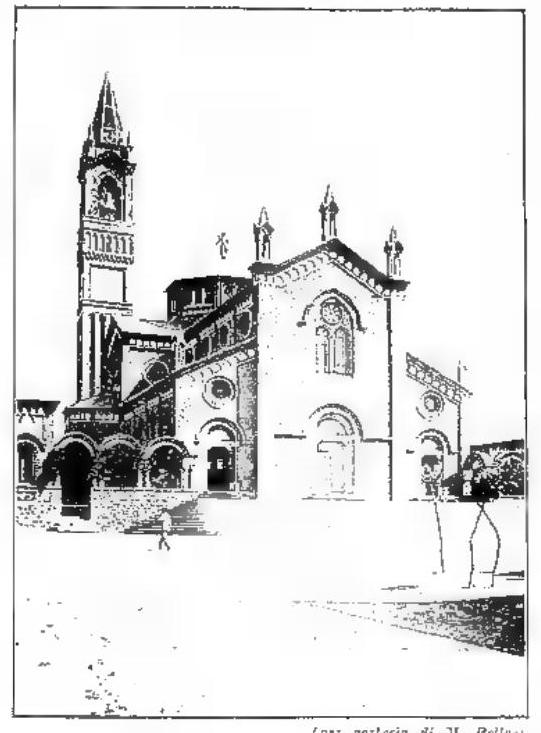
ERITRIA - 1) State boundaries; 2) Boundaries of ecclesiastical jurisdiction; 3) Railways.(courtesy of M. Pellor) ERITREA - Asmara. Modern cathedral.tresses of crime, they know neither pity nor extenuating circumstances. In the Hellenistic age they bear the names of Aletto, Megera, and Ctesifonte. Eschilo, and others with him, identifies the E. Eumenides (v.), benevolent powers of fertility. The E. appear in a considerable number of legends. In art they are depicted with a stern aspect, holding torches and whips or serpents in their hands; other serpents are entwined in their hair. The Greek spirit, opposed to what is ugly and deformed, wished them to be represented as terrible but beautiful women.
BIBL.: L. R. Farrell, The Cults of the Greek States, V. Oxford 1907, p. 237 ff.; P. Mingazzini, s.V. Eos. Ital., XIV (1932), p. 217; U. V. Villamovitz Moellendorff, Der Glaube der Hellenen, I. Berlino 1924, p. 403 ff.; W. V. Ono, Gli dii nella Grecia, Italian trans. by G. Federici Airoldi, Firenze 1941, pp. 19 ff., 188 ff.
Luisa Banti
Cite this article
“ERINNI.” Enciclopedia Cattolica, vol. V (1950), p. 316. Azione Romana digital edition, https://azioneromana.com/article/erinni.