GIOVANNI BATTISTA DE LUCA, BEATO

GIOVANNI BATTISTA de LUCA, Blessed

Celestine, born in Guardiagrele, died in the monastery of St. Onuphrius in Campli in the year 1590. In 1570 he was appointed prior of St. Peter at Majella in Naples, where he spent most of his monastic life. Charitable and generous toward the poor and afflicted, he was greatly loved by the Neapolitans.

He was also a friend and advisor to John of Austria, to whom he gave an image of the Madonna titled *Saeculum miseris*, which the captain carried with him into the Battle of Lepanto; in gratitude, after the victory, 400 of his soldiers laid their helmets before the Virgin’s chapel.

---

GIOVANNI BATTISTA de LA SALLE, Saint

Founder of the Brothers of the Christian Schools.

Born at Reims on April 30, 1651, died at Rouen on April 7, 1719. After a brilliant academic and ecclesiastical career, he abandoned his patrimony and, in 1679, gathered around himself a group of pious teachers to instruct poor boys gratuitously. This modest beginning grew into the Institute of the Brothers of the Christian Schools, which spread with extraordinary rapidity—first in the neighboring regions, then in Paris, Chartres, throughout France, and across Europe—and the saint’s activity became woven into the very history of the Institute.

Strong opposition did not fail to meet the work of J. B. de La S. (especially from calligraphic masters, who at Chartres managed to have the Institute accept only pupils whose parents were enrolled in the poor relief rolls, and from Huguenots and Jansenists); yet the work showed its vitality because it corresponded to a pressing need of the age, which was entirely absorbed in the pursuit of experimental and technical sciences.

A clear and gracious writer, J. B. de La S. left various ascetical and mystical writings, pervaded by a tone of devotion to the mysteries of Christ with a distinctly Berullian flavor: *Recueil de différents petits traités* (Avignon 1711); *Méditations pour les dimanches de l'année* (Rouen n.d.); *Méditations pour le temps de la retraite* (ibid. n.d.); Italian trans. by D. Bassi, *Il manuale religioso del maestro* (Rome 1938). He was canonized by Leo XIII in 1900 and proclaimed by Pius XII as the principal patron of all teachers who work with children and young people (AAS, 42 [1950], pp. 631–32). His feast is celebrated on May 15.

Bibl.: On J. B. de La S. and his Institute the fundamental work is G. Rigault, *Histoire générale de l'Institut des Frères des écoles chrétiennes*, Paris 1937 ff. On the type of Lasallian spirituality: P. Pourrat, *La spiritualité chrétienne*, IV, 6th ed., ibid. 1930, pp. 387 ff.; also cf. J. Walter, *Die Erziehungsprinzipien von Johann Baptist de la Salle*, Freiburg im Br. 1925; M. Dempsey, *John Baptiste de la S.: His life and his Institute*, Milwaukee 1940; Alberto di Maria, *G. B. de la S.*, Rome 1943; G. Bernoville, *St Jean-Baptiste de la S. fondateur des Frères des écoles chrétiennes*, Paris 1944; J. Hermet, *La prière des éducateurs selon St Jean Baptiste de la S.*, Brussels 1944; G. Savino, *S. G. B. della S.*, Brescia 1945.

Massimo Petrochi

---

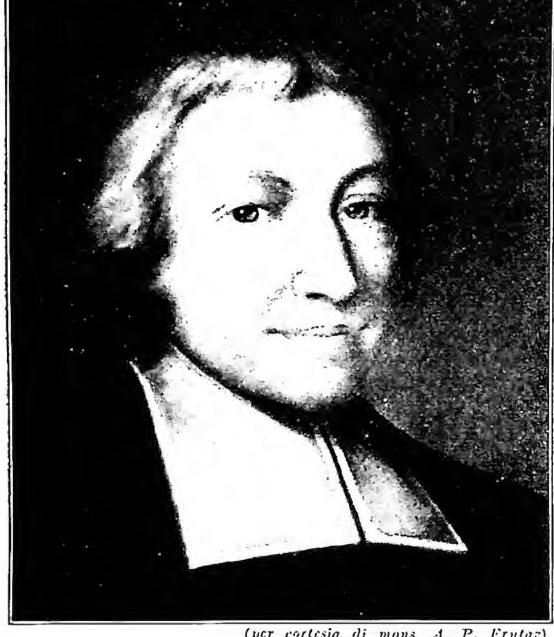
GIOVANNI BATTISTA de LA SALLE, Saint

Portrait executed at Rouen by Pierre Leger (1734) – Rome, Generalate House of the Brothers of the Christian Schools.

In 1585 he became prior of Guardiagrele, but soon returned among the Celestines, who this time reserved for him deep suffering because of slanders spread against him. This led his superiors to remove him again from Naples and entrust him with the direction of the monastery of St. Onuphrius in Campli, where he also displayed particular gifts of prudence and charity. He endured with exemplary humility the calumnious attacks of his enemies, whom he forgave generously.

Bibl.: G. Aurélien, *Vie admirable de st Pierre Célestin*, Bar-le-Duc 1873, pp. 208–11; A. Zimmermann, *Kaleidarium Benedictinum*, Matten 1933, pp. 248 and 250. Ambrogio Mancone