
ROSENMUELLER, JOHANN GEORG. – Protestant pastor and prolific writer of rather rationalist tendencies, born on 18 December 1736 at Ummersstadt (Thuringia), died on 14 March 1815. He studied at Nuremberg (Lorenzschule) and Altdorf (University); from 1767 he was pastor in various places. In 1773 he moved to the chair of theology at Erlangen, then (1783) to Giessen, and subsequently (1785) to Leipzig, where he was also pastor of the parish of St Thomas and superintendent. Canon at Meissen in 1793, he became head of the Chapter (1802).
Works: Scholia in Novum Testamentum (5 vols., 1777; 6th ed., 1815–31); Abhandlungen über die älteste Geschichte der Erde (1782); Emendationes et supplementa (5 vols., 1789–90); Historia interpretationis Librorum Sacrorum in Ecclesia christiana (5 vols., 1795–1814). He also left apologetic, dogmatic and homiletic writings, sermons, and edifying books.
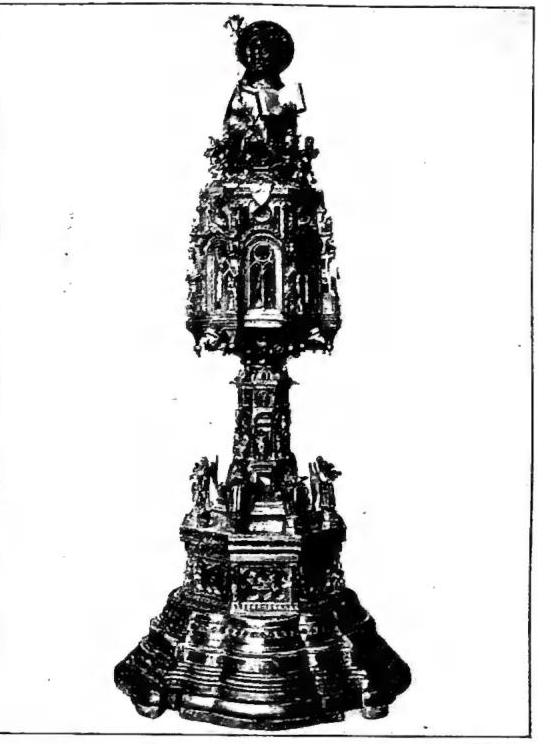
(phot. Villani)
ROSETO, JACOPO da BOLOGNA called R. – Reliquary of the head of St Dominic – Bologna, Basilica of St Dominic
From his diligent and judicious pen came great collections, used and esteemed to the present day (especially the Scholia), compiled by drawing on the learned work of preceding centuries and containing information transmitted by ecclesiastical writers, ancient versions, Greek, Latin, Arabic and rabbinic authors, archaeologists, and lexicographers.
Works: Scholia in Vetus Testamentum (16 parts, 1788–1817; some were repeatedly reprinted); Handbuch für die Literatur der biblischen Kritik und Exegese (4 vols., 1797–1800); De versione Pentateuchi Persica (1813); Das alte und das neue Morgenland (6 vols., 1818–20); Handbuch der biblischen Altertumskunde (4 vols., 1823–31), containing information on biblical natural history and geography; Scholia in Vetus Testamentum in compendium redacta (5 vols., 1828–36), in which he excluded the typical sense of Sacred Scripture. He edited the reprint (1753–96) of the famous Hierozokon by S. Bochart (v.). In the field of Arabic studies, besides publishing the description of Mesopotamia by the famous Arab historian Abū l-Fidā', prince of Hamāh, he wrote: Selecta quaedam Arabum adagia e Meidanensis (Maidānī) proverbiorum syntagmate (1796); Institutiones ad fundamenta linguae Arabicae (1818).