
TOURING CLUB ITALIANO

Image from page 256
Image from page 256

TOURING CLUB ITALIANO. – A society established with the aim of promoting knowledge of Italy among Italians and foreigners and fostering Italian tourism in all its aspects. Founded in Milan in 1894 under the name *Touring Club Ciclistico Italiano* by a group of cycling enthusiasts, it changed its name to the current one in 1900 and soon became one of the most powerful private associations in the country; it currently has approximately 400,000 members.

Key features of its organization are the flexibility of the membership fee and the fact that members, scattered throughout Italy and the world, maintain direct relations with the single headquarters (Milan). It is governed by a council of no fewer than 18 and no more than 24 members, who elect from among themselves a president, two vice presidents, and holders of other honorary positions, all unpaid. The T.C.I. is further represented in Italy’s principal cities by approximately 7,000 consuls and in

Article illustration
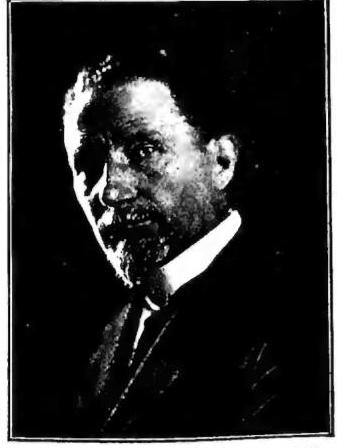
Touring Club Italiano – Portrait of Luigi V. Bertarelli, one of the founders and a driving force of the society, who served as its president from 1919 to 1926.

TOURING CLUB ITALIANO. – A society established with the aim of promoting knowledge of Italy among Italians and foreigners and fostering Italian tourism in all its aspects. Founded in Milan in 1894 under the name *Touring Club Ciclistico Italiano* by a group of cycling enthusiasts, it changed its name to the current one in 1900 and soon became one of the most powerful private associations in the country; it currently has approximately 400,000 members.

Key features of its organization are the flexibility of the membership fee and the fact that members, scattered throughout Italy and the world, maintain direct relations with the single headquarters (Milan). It is governed by a council of no fewer than 18 and no more than 24 members, who elect from among themselves a president, two vice presidents, and holders of other honorary positions, all unpaid. The T.C.I. is further represented in Italy’s principal cities by approximately 7,000 consuls and in

TOURING CLUB ITALIANO. – A society established with the aim of promoting knowledge of Italy among Italians and foreigners and fostering Italian tourism in all its aspects. Founded in Milan in 1894 under the name *Touring Club Ciclistico Italiano* by a group of cycling enthusiasts, it changed its name to the current one in 1900 and soon became one of the most powerful private associations in the country; it currently has approximately 400,000 members.

Key features of its organization are the flexibility of the membership fee and the fact that members, scattered throughout Italy and the world, maintain direct relations with the single headquarters (Milan). It is governed by a council of no fewer than 18 and no more than 24 members, who elect from among themselves a president, two vice presidents, and holders of other honorary positions, all unpaid. The T.C.I. is further represented in Italy’s principal cities by approximately 7,000 consuls and in

TOURING CLUB ITALIANO. – A society established with the aim of promoting knowledge of Italy among Italians and foreigners and fostering Italian tourism in all its aspects. Founded in Milan in 1894 under the name *Touring Club Ciclistico Italiano* by a group of cycling enthusiasts, it changed its name to the current one in 1900 and soon became one of the most powerful private associations in the country; it currently has approximately 400,000 members.TOURING CLUB ITALIANO. – A society whose aim is the dissemination of knowledge about Italy among Italians and foreigners and the promotion of Italian tourism in all its aspects. Founded in Milan in 1894 under the name “Touring Club Ciclistico Italiano” through the initiative of some bicycle enthusiasts, it changed its name to the present one in 1900 and soon became one of the most powerful private associations in the country; it currently has about 400,000 members.

Characteristic features of its organization are the flexibility of the membership fee and the fact that members, scattered throughout Italy and the world, maintain direct relations with the single headquarters (Milan). It is governed by a council of not fewer than 18 and not more than 24 members, which chooses from among its own number a president, two vice presidents, and the holders of the other honorary offices. The T.C.

I. is also represented in the principal cities of Italy by about 7,000 consuls andTOURING CLUB ITALIANO

A society whose purpose is to promote knowledge of Italy among Italians and foreigners and to develop Italian tourism in all its aspects. Founded in Milan in 1894 under the name “Touring Club Ciclistico Italiano” through the initiative of several cycling enthusiasts, it changed its name to the present one in 1900 and soon became one of the most powerful private associations in the country; it now has about 400,000 members.

Characteristic features of its organization are the modified membership fee and the fact that its members, scattered throughout Italy and the world, maintain direct relations with the single headquarters (Milan). It is governed by a council of not fewer than 18 and not more than 24 members, which chooses from among its own ranks a president, two vice presidents, and the holders of the other offices, all of which are honorary. The T.C.I. is further represented in the principal cities of Italy by about 7,000 consuls and

TOURING CLUB ITALIANO. – A society whose aim is to promote knowledge of Italy among Italians and foreigners and to foster Italian tourism in all its aspects. Founded in Milan in 1894 under the name “Touring Club Ciclistico Italiano” by a group of cycling enthusiasts, it changed its name to the present one in 1900 and soon became one of the most powerful private associations in the country; it now has about 400,000 members.

Its organizational features include the flexible membership fee and the fact that members, scattered throughout Italy and abroad, maintain direct contact with the single headquarters (in Milan). It is governed by a council of not fewer than 18 and not more than 24 members, who elect from among themselves a president, two vice presidents, and the holders of other honorary offices. The T.C.

I. is further represented in Italy’s principal cities by about 7,000 consuls and inTOURING CLUB ITALIANO

A society whose aim is the dissemination of knowledge about Italy among Italians and foreigners and the promotion of Italian tourism in all its aspects. Founded in Milan in 1894 under the name “Touring Club Ciclistico Italiano” through the initiative of several cycling enthusiasts, it changed its name to the present one in 1900 and soon became one of the most powerful private associations in the country; it now has about 400,000 members.

Characteristic features of its organization are the flexibility of the membership fee and the fact that members, scattered throughout Italy and the world, maintain direct relations with the single headquarters (Milan). It is governed by a council of not fewer than 18 and not more than 24 members, which chooses from among its own ranks a president, two vice presidents, and the holders of the other honorary offices. The T.C.

I. is also represented in the principal cities of Italy by about 7,000 consuls andTOURING CLUB ITALIANO

A society whose purpose is the dissemination of knowledge about Italy among Italians and foreigners and the promotion of Italian tourism in all its aspects. Founded in Milan in 1894 under the name “Touring Club Ciclistico Italiano” through the initiative of several cycling enthusiasts, it changed its name to the present one in 1900 and soon became one of the most powerful private associations in the country; it currently has about 400,000 members.

Characteristic features of its organization are the modified membership fee and the fact that its members, scattered throughout Italy and the world, maintain direct relations with the single headquarters (Milan). It is governed by a council of no fewer than 18 and no more than 24 members, which chooses from among its own number a president, two vice presidents, and the holders of the other honorary positions. The T.C.I. is also represented in the principal cities of Italy by about 7,000 consuls and in## TOURING CLUB ITALIANO

A society whose purpose is the dissemination of knowledge about Italy among Italians and foreigners and the promotion of Italian tourism in all its aspects. Founded in Milan in 1894 under the name *Touring Club Ciclistico Italiano* through the initiative of some cycling enthusiasts, it changed its name to the current one in 1900 and soon became one of the most powerful private associations in the country; it currently has approximately 400,000 members.

Characteristic features of its organization are the modification of the membership fee and the fact that members, scattered throughout Italy and the world, maintain direct relations with the single headquarters (Milan). It is governed by a council of no fewer than 18 and no more than 24 members, which elects from among its own ranks a president, two vice presidents, and the holders of the other honorary positions. The T.C.I. is also represented in the principal cities of Italy by approximately 7,000 consuls and in
TOURING CLUB ITALIANO. – A society whose aim is the dissemination of knowledge about Italy among Italians and foreigners and the promotion of Italian tourism in all its aspects. Founded in Milan in 1894 under the name “Touring Club Ciclistico Italiano” through the initiative of several cycling enthusiasts, it changed its name to the current one in 1900 and soon became one of the most powerful private associations in the country; it now has approximately 400,000 members.

Characteristics of its organization are the flexibility of the membership fee and the fact that members, scattered throughout Italy and the world, maintain direct relations with the single headquarters (Milan). It is governed by a council of no fewer than 18 and no more than 24 members, who choose from among themselves a president, two vice presidents, and the holders of the other honorary offices. The T.C.

I. is also represented in the principal cities of Italy by approximately 7,000 consuls and inTOURING CLUB ITALIANO

A society whose purpose is the dissemination of knowledge about Italy among Italians and foreigners and the promotion of Italian tourism in all its aspects. Founded in Milan in 1894 under the name “Touring Club Ciclistico Italiano” through the initiative of several cycling enthusiasts, it changed its name to the present one in 1900 and soon became one of the most powerful private associations in the country; it currently has about 400,000 members.

Characteristic features of its organization are the modification of the membership fee and the fact that members, scattered throughout Italy and the world, maintain direct relations with the single headquarters (Milan). It is governed by a council of no fewer than 18 and no more than 24 members, which chooses from among its own ranks a president, two vice presidents, and the holders of the other honorary positions. The T.C.

I. is also represented in the principal cities of Italy by about 7,000 consuls and inTOURING CLUB ITALIANO

A society whose purpose is to promote knowledge of Italy among Italians and foreigners and to develop Italian tourism in all its aspects. Founded in Milan in 1894 under the name “Touring Club Ciclistico Italiano” by a group of cycling enthusiasts, it changed its name to the present one in 1900 and soon became one of the most powerful private associations in the country; it now has about 400,000 members.

Characteristic features of its organization are the fixed membership fee and the fact that members, scattered throughout Italy and the world, maintain direct relations with the single headquarters (Milan). It is governed by a council of not fewer than 18 and not more than 24 members, which chooses from among its own ranks a president, two vice presidents, and the holders of the other honorary offices. The T.C.I. is further represented in the principal cities of Italy by about 7,000 consuls and in## TOURING CLUB ITALIANO

A society whose purpose is to promote knowledge of Italy among Italians and foreigners and to develop Italian tourism in all its aspects. Founded in Milan in 1894 under the name *Touring Club Ciclistico Italiano* through the initiative of several cycling enthusiasts, it changed its name to the current one in 1900 and soon became one of the most powerful private associations in the country; it currently has approximately 400,000 members.

Characteristic features of its organization are the modified membership fee and the fact that members, scattered throughout Italy and the world, maintain direct relations with the single headquarters (Milan). It is governed by a council of no fewer than 18 and no more than 24 members, which elects from among its own ranks a president, two vice presidents, and the holders of the other honorary positions. The T.C.I. is also represented in the principal cities of Italy by approximately 7,000 consuls and

TOURING CLUB ITALIANO. – A society whose aim is to promote knowledge of Italy among Italians and foreigners and to foster Italian tourism in all its aspects. Founded in Milan in 1894 under the name “Touring Club Ciclistico Italiano” by a group of cycling enthusiasts, it changed its name to the present one in 1900 and soon became one of the most powerful private associations in the country; it now has about 400,000 members.

Characteristics of its organization are the fixed membership fee and the fact that members, scattered throughout Italy and the world, maintain direct relations with the single headquarters (Milan). It is governed by a council of not fewer than 18 and not more than 24 members, which elects from among its own number a president, two vice presidents, and the holders of other honorary offices. The T. C. I. is also represented in Italy’s principal cities by about 7,000 consuls and in many foreign countries by its own delegates.

The T. C. I.’s chief merit is that it has provided Italy with a body of cartography and tourist literature superior to that of any other country. The distribution to members of publications, free or for a modest contribution, has always been the main benefit of membership; these consist largely of reference works (guides, maps, illustrated monographs) of practical utility and easy readability, designed to present Italy in all its aspects, but especially for the use of tourists. Particularly noteworthy for their scholarly character are the T. C. I.’s great International Atlas, the most modern and comprehensive reference atlas in existence, and the Physical-Economic Atlas of Italy.

In the field of active tourism the T. C. I. organizes national excursions, reserved for members, in Italy’s various regions, as well as individual and group vacations, campsites, cruises, etc. Its activities in this area are almost always aimed at making known Italy’s lesser-known regions or at encouraging new forms of tourism.

Within the T. C. I. there have arisen bodies such as School Tourism, which promotes tourism among young people, and the Travel and Vacation Fund, which aims to encourage saving for travel purposes.

Among other initiatives are the Road Research Institute, founded in Milan in 1921 to study technical problems of road construction and maintenance, and the Technical Office for Road Signs, which since its establishment has equipped Italy’s roads with about 400,000 signs.

Among the T. C. I.’s publications are the following (with the year of first appearance given in parentheses for those still current): Periodicals: *Le Vie d’Italia*, monthly (founded in 1895 as *Rivista mensile del Touring Club Ciclistico Italiano*, adopting its present title in 1920); *Le Vie del Mondo*, monthly (1924); *Monti e boschi*, monthly (1950); continues the work of the journal *L’Alpe* (1928–38); *Turismo e alberghi*, monthly (1947); continues the work of the journal *L’Albergo in Italia* (1925–43); *Le Strade*, monthly (1919); *Marco Polo*, bimonthly, organ of the T. C. I.’s School Tourism (1950); resumes the work of the journal *La Sorgente* (1917–28). Series: *Attraverso l’Italia*, 20 illustrated regional monographs with about 500 black-and-white illustrations and color plates (1930). Guides: *Guida d’Italia*, 23 vols. (1913); *Guida breve d’Italia*, 3 vols. (1937); *Guida dei Monti d’Italia*, so far 13 vols. out of about 45 (1934); *Guida da rifugio a rifugio*, 6 vols. out of about 12 (1929); *Guida d’Italia per gli stranieri*, including volumes in the principal languages (1922). Cartography: *Carta d’Italia* at 1:250,000, in 62 sheets (1906); *Carta automobilistica d’Italia* at 1:200,000, in 28 sheets (1934); *Carta automobilistica della Svizzera* at 1:200,000, in 4 sheets (1949); *Carta automobilistica d’Italia* at 1:650,000, in 2 sheets (1909); *Carta stradale d’Italia* at 1:500,000, in 13 sheets (1933); *Nuova carta generale d’Italia* at 1:500,000, in 4 sheets (1950); *Carta stradale d’Europa* at 1:500,000, in about 37 sheets (1951); *Grande atlante internazionale*, 176 plates (1927); *Atlante fisico-economico d’Italia*, 82 plates (1940); *Annuario generale*, a directory of Italian communes and hamlets (1904).

Bibl.: *I Sessant’anni del T. C. I.*, forthcoming. Giuseppe Vota