
AIRE, DIOCESI di. – Bishopric of southern France, suffragan to the metropolitan see of Auch. Its territory comprises the department of Landes, with 240,000 inhabitants, of whom 200,000 are Catholics; it has 245 priests and 322 parishes. The city of A. (Aturum, from Atura or Adura), not to be confused with the town of the same name on the banks of the Lys, in Artois, owes its name to the Adour, which flows through II. It was once the capital of the civitas Aturensium, formed in the third century by the division of the civitas Aquensium (Dax, Aquae Augustae). Previously, and probably already before the end of the Julio-Claudian dynasty (A.D. 69), it bore the name Vicus Iulii, whence the title episcopi vicioiulentes borne by its bishops until the Norman invasions. Its Christian origins are not known with certainty. The first known bishop is Marcello, who appears at the Council of Agde in 506.
This diocese, like that of Dax, was suppressed on 20 November 1801 and united with that of Baiona. Restored in 1817, it was given the additional title of Dax in 1857; in 1933, the episcopal residence was transferred to that city.
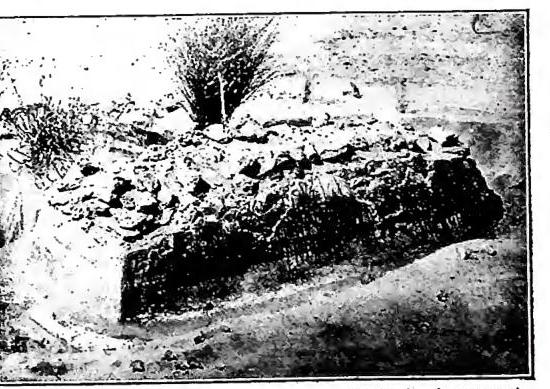
(prop. D. Aurigemma)
AIN-ZARA – Christian tomb with inscription.
…gious: around the year 1620, a young shepherd, from the top of an oak tree, repeatedly saw an ox from his herd descend into a marsh and always stop in the same place. One day, seized by curiosity, he followed it and found it beside a statue of the Madonna. The parish priest of Pouy, informed of the matter and accompanied by many witnesses, had the miraculous image removed from the marsh, while numerous pilgrimages began to arrive from the surrounding areas. On 8 September 1866, in the presence of archbishops and bishops and a very large crowd, the bishop of A., delegated by Pius IX, placed in his name a double diadem upon the forehead of the Holy Child and of his Most Holy Mother, venerated under the name of Our Lady of Buglose. The month of September is especially devoted to pilgrimages to the sanctuary, at which diocesan missionaries officiate.