ALBERTRANDI, Giovanni Battista. — Polish Jesuit, b. 7 Dec. 1731 at Warsaw, d. there 10 Aug. 1588. Son of an Italian painter living at the court of Stanislao Augusto Poniatowski, he was first director
ALBERTRANDI GIOVANNI BATTISTA - ALBIGESI
of the engineering corps of the papal army. He is praised by Paulinus of Nola as a contemporary (cf. Epistolae, in CSEL, XXIX, 1, p. 390). He is also mentioned by Gregory of Tours (Hist. Francorum, II, 13). At that time the diocese of A. formed part of I Aquitania; it remained united to it even after John XXII in 1317 separated the southern part to form the diocese of Castres.
A. gave its name to a sect of heretics against whom, in 1209, Pope Innocent III ordered a crusade which defeated them at Murat and Toulouse in 1213 (v. ALBIGESI). Innocent XI raised A. to metropolitan status on 3 Oct. 1678. The concordat suppressed it in 1801. In 1817 a new concordat—whose execution was suspended until 1822—restored it and extended its jurisdiction over the ancient dioceses of Castres and Lavaur, whose title it has borne since 17 Feb. 1922. The dioceses of Rodez, Mende, Cahors, and Perpignan are its suffragans. It has 283,000 Catholics, grouped in 507 parishes, with 490 diocesan priests and 118 regulars. Its territory coincides exactly with that of the department of Tarn.
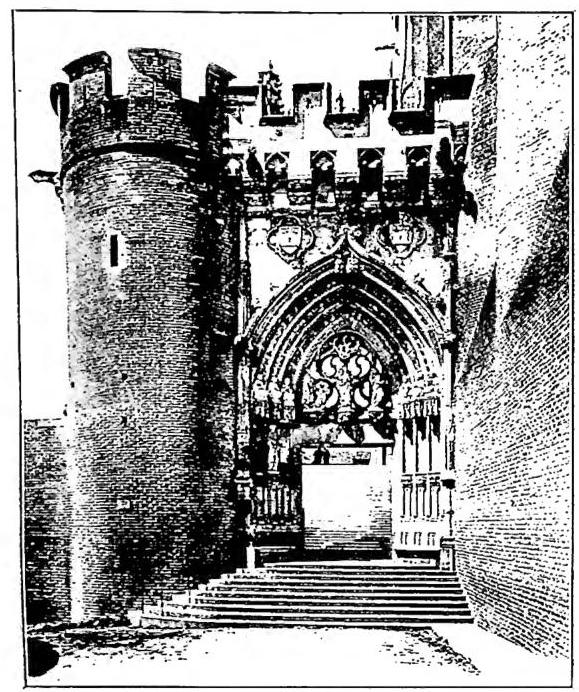
The principal ecclesiastical monuments are the magnificent fortress-cathedral dedicated to St Cecilia (13th–14th cent.), the church of St Salvi (12th and 15th cents.) and the former archbishop’s palace (late 13th cent.), now a museum.
