
ANDANIA, MISTERI di. – The existence of mysteries celebrated at Andania, a small city in northern Messenia, is attested by various passages of Pausanias and by a long and intact inscription from 91 B.C., discovered at Konstantini, near the site of the ancient city.
In these mysteries Demeter, Kore (under the epithet ἀγνά, that is, Holy), the Great Gods (probably the Cabeiri), Hermes, and Apollo Carneius were worshipped; the sacred grove of the latter served for the celebration of the rite. According to Pausanias, the reformer of the cult was a certain Methapus, the same person who is said to have introduced the cult of the Samothracian Cabeiri at Thebes. Pausanias says of him that he was an organizer of initiations and mysteries of every kind; this suggests that he was responsible for associating the ancient local cult with the mysteries of Samothrace. The mysteries of A. were also connected with the Eleusinian mysteries: not only do Demeter and Kore appear among the divinities worshipped there, but so too do the Great Eleusinian Goddesses.
Pausanias sheds no light on the intimate nature of the mysteries of A.; he expressly takes refuge behind the prohibition against revealing what was forbidden to divulge, and still less does the long inscription of Konstantini do so. From it we learn only, with regard to the cult, that at A. a liturgical drama was celebrated, as at Eleusis, and that the festival culminated in a procession; furthermore, that the mysteries were open to everyone, without distinction of sex, including slaves. The inscription is nevertheless interesting because it gives us a vivid picture of the festival’s external features.
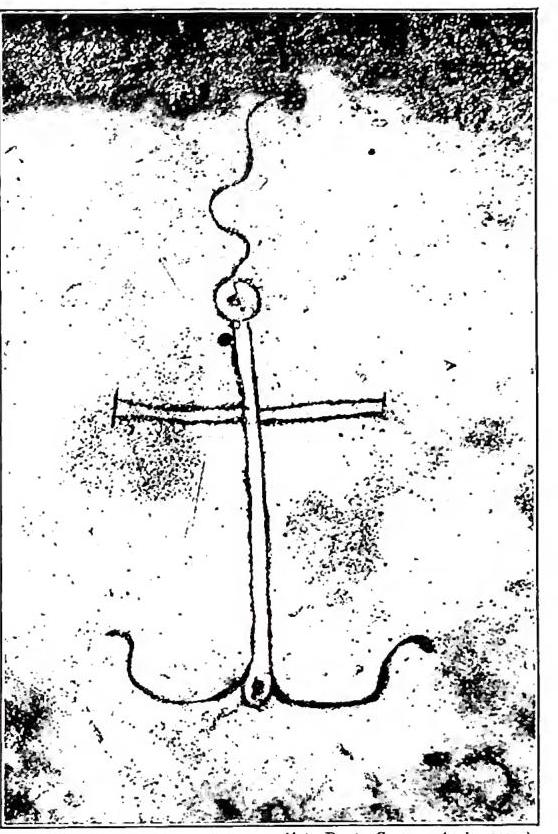
(phot. Pont. Comm. Arch. sacra)
ANCORA – Tomb slab with a cruciform anchor (4th century). Rome, Cemetery of Domitilla.