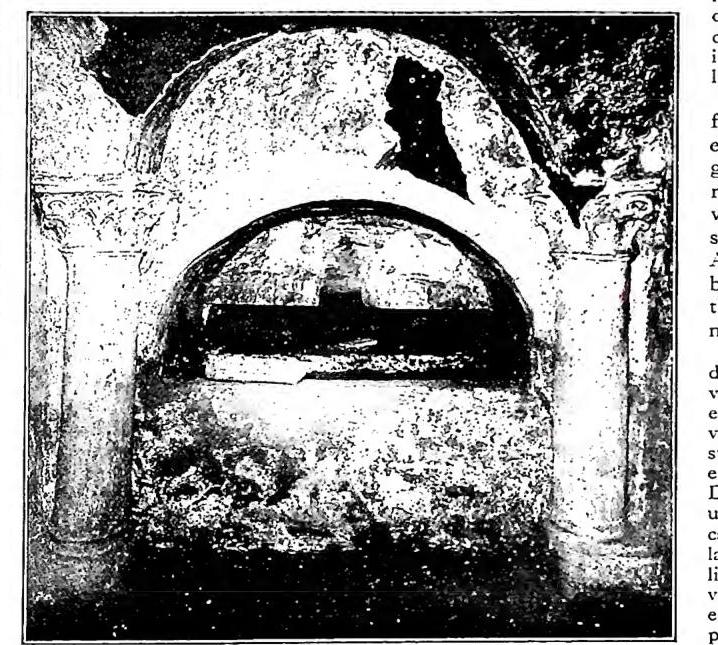
ARCOSOLIUM. - In Latin, solium means, besides throne and seat, also basin, and, like other analogous names, was subsequently used to designate the tomb. Thus an a. was called a tomb placed beneath an arch, both either built of masonry or hewn from tufa. Christians adopted this usage from the pagans (among whom it is frequent in the mausoleums of the 2nd and 3rd centuries) and practised it extensively in the catacombs. The solium, or tomb properly so called, received the deceased through its upper opening, which was then closed with a marble slab or with large tiles set in mortar. The lunette and vault of the arch (sometimes also the front) were often decorated with paintings. In Rome there is only one burial beneath an arch (very rarely two); in Sicily, on the other hand, a. are commonly pro-