
ARICANDA. — An ancient city of Lycia (Arykanda), today a settlement called Aruf, where the text of a curious petition sent to Massimino has been found, requesting measures of persecution against the Christians. This fanatical pagan had sought, after Galerius’s edict of toleration (30 April 311), to revive the persecution by every means; among other expedients, he prompted various cities to lodge complaints against the Christians and to submit formal requests for persecution (v. EUGENIO, Historia eccl., IX, 4 and 7). One such petition was found in 1892 at A., engraved on a stone slab. It dates from 311 or 312 and reads:
«To the saviors of the entire human race, the august Caesars Galerio, Valerio Massimino Flavio, Valerio Costantino,
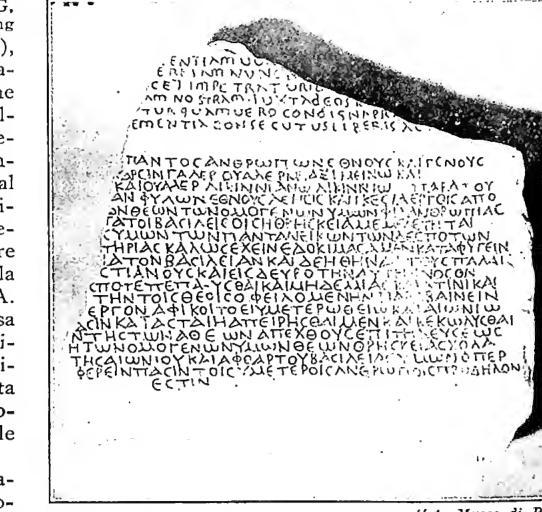
ARICANDA - Cast in the Museo di Roma of the bilingual inscription of A. containing the favorable response of the emperor Massimino (Latin text) to the petition (Greek text) submitted by the inhabitants of Lycia and Pamphylia asking that the Christians be persecuted. The original marble is preserved in the Museum of Constantinople.
Valerio Liciniano Licinio, petition of the people of Lycia and Pamphylia: O most divine emperors, since your kindred gods have always favored those who are devoted to their worship and who pray to them for the perpetual well-being of our unconquered emperors, we have deemed it good to have recourse to your immortal majesty to request that the Christians, who for so long have been impious and continue still to be so, may at last be suppressed and not, through their wicked and novel worship, fail in the respect owed to the gods. And this will be achieved if, by your divine and eternal decree, the impious practices are forbidden to all of them and they are likewise compelled to practice the worship of your kindred gods and invoke them for your eternal and incorruptible majesty: which would evidently be of great benefit to all your subjects.
A portion of the emperor’s affirmative reply also remains.