Machine translation of the 1948–1954 Italian original. The original text is authoritative.
CUTBERTO di LINDISFARNE, santo. - Contemporary of Wilfrid, Theodore of Tarsus, and Benedict Biscop, he belongs to the period of conflicts between Celtic and Roman influence in the Anglo-
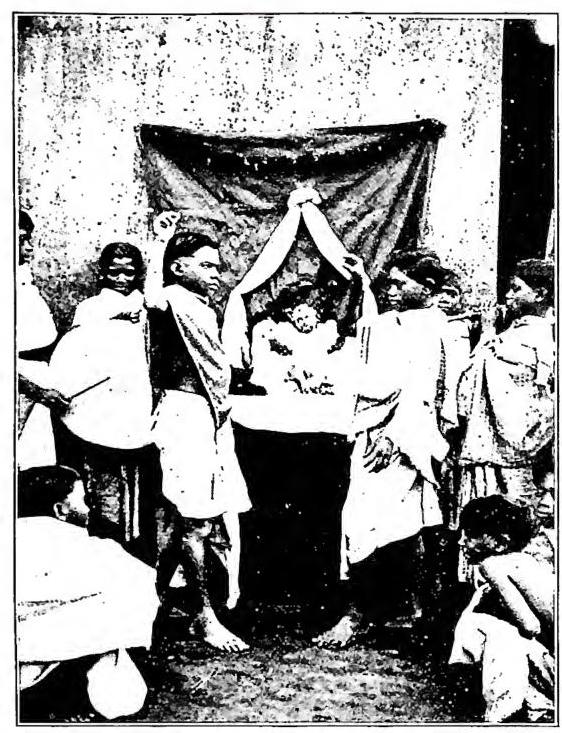
CUTTACK, diocesi di - Gioia natalizia. (phot. Fides)Saxon Church. Born in Northumbria at the beginning of the 7th century, he entered the monastic life in 651: he was first at Melrose, a foundation of Lindisfarne, then at Ripon, then again at Melrose as prior, and subsequently for 12 years prior at Lindisfarne, where he seems to have caused the Roman Easter to be adopted. He retired in solitude to Howburne and then to a small island near Lindisfarne where he lived as a recluse for 9 years. In 684 he was appointed bishop of Lindisfarne, but after 2 years he returned to his hermitage and died there on March 20, 687. Buried at Lindisfarne, he was considered the patron of the great monastery. The Venerable Bede wrote a Metrical Life of him before 705 (PL 94, 575-95) and a Prose Life around 720 (ibid., 729-88).
BIBL.: J. Raine, Cuthbert, in Dictionary of Christian Biography, I, coll. 724-29; F. Cabrol, L'Angleterre chrétienne avant les Normands, Paris 1909, p. 138 ff.; J. F. Kenney, The sources for the early history of Ireland, I: Ecclesiastical, New York 1929, p. 225 f. and passim (v. indice).
Anselmo M. Tommasini
Cite this article
“CUTBERTO DI LINDISFARNE, SANTO.” Enciclopedia Cattolica, vol. IV (1950), p. 651. Azione Romana digital edition, https://azioneromana.com/article/cutberto-di-lindisfarne-santo.
 Enciclopedia Cattolica