
BENEDETTO BISCOP (BADUCINO), saint. — Abbot of Wearmouth-Jarrow, born in Northumbria of noble Anglo-Saxon stock around 628, died on 12 January 690.
B. served at the court of King Oswiu (Oswy) until the age of twenty-five. Returning from a journey to Rome (653) with the king’s son, instead of returning to his homeland he stopped in Provence, becoming a Benedictine at the monastery of Lerins. Some years later (665–67), he returned to Rome, and Pope Vitalian entrusted him with accompanying to England the new archbishop of Canterbury, Theodore of Tarsus, together with Abbot Hadrian. Once there, Theodore kept him with him, appointing him abbot of the monastery of St Peter (668). After two years, B. resigned the abbacy in favor of Hadrian and undertook a third pilgrimage to Rome (670). He departed laden with codices which, together with those already collected at Vienne, he transported to England along with a large quantity of martyrs’ relics. But, since the king of the West Saxons, Coinualch, his friend and benefactor, had died, he turned toward his native land and presented himself to the king of Northumbria, Egfrid (son and successor of Oswiu), whom he immediately won over to his cause.
Having received from him a gift of land near the mouths of the Vyri (Were or Wear), B. began, in 674, the monastery of Wear-mouth (mouth of the Wear), dedicating it to St Peter the Apostle. Once the foundation had begun, he went to France in search of caementarii and other craftsmen; he also came to Rome (678), from which he brought back «innumerabile librorum omnis generis copiam», relics, and works of art. On this same occasion, eager to establish a model monastery, he obtained from Pope Agatho Abbot John, archicantor of the basilica of St Peter, to promote Roman chant and liturgy (cf. Bede, Hist. Eccl., IV, 18). From the Pontiff he also obtained a diploma or epistola privilegia, to guarantee the monastery’s freedom; this privilege was subsequently confirmed in a public assembly by the king and the bishops (cf. Jaffé-Wattenbach, I, 2106).
Having received another gift of land from the sovereign, somewhat farther north, at the mouth of the Tyne, B. founded there, in 681–82, the monastery of Jarrow, dedicating it to St Paul (in imitation of Rome); its name is linked with that of St Bede. Since they were close to one another, the two monasteries were regarded as a single community in two houses. Having appointed Ceolfrid to Jarrow and Easterwine to Wearmouth, B., wishing to provide the new monastery with fitting furnishings, undertook a sixth journey to Rome (684), from which he brought back a large quantity of books and paintings «de concordia Veteris et Novi Testamenti», of the Most Blessed Virgin, and of the Apocalypse, which, as a true Biblia pauperum, were to adorn the church of Jarrow and instruct the faithful.
But upon his return his grief was great when he found the king dead and the two monasteries devastated by an epidemic. Without losing courage, he recruited new members and continued the decoration of the churches. Finally, progressive paralysis confined him to bed for three years: at approximately seventy-two years of age, after earnestly commending to his monks the library «quam de Roma nobilissimam copiosissimamque advexerat», he died a holy death. B., whose work is of great importance in the history of culture, was soon venerated. Bede composed a homily «in natali s. Benedicti episcopi» (PL 94, 224–28). The Roman Martyrology commemorates him on 12 January. The English Benedictines honor him as their patron.
BENEDICT, JOHN, ISAAC, MATTHEW, and CHRISTINE, also known as the FIVE POLISH BROTHERS, saints. - B., from Benevento, first a priest, canon, and monk, later embraced eremitical life on Mount Soratte and then near Montecassino, until he joined St. Romuald and went with him to Ravenna. When, in 1001, Otto III sought to prepare the ecclesiastical organization of Poland and extend evangelization to the still-pagan Slavic lands, Bruno of Querfurt pointed out the Italian ascetic to the young emperor, and Otto persuaded B. to found a community of missionary hermits in Poland.
With B. went one of his companions in devotion at Ravenna, G., and in the places where they were to carry out their ministry, two Poles, I. and M., joined them. Encouraged by the zeal of Duke Boleslaus, B. exercised his mission with his companions for several months, while Bruno of Querfurt evangelized eastern Hungary. Suspected of carrying large sums—which they had instead returned to the duke—B. and his companions, along with the cook C. (or Christine), who had vainly rushed to their defense, were slaughtered by outlaws on the night of November 10–11, 1003. Through the intervention of the bishop of Poznań, Unger, they were buried in their church. Soon, miracles and visions occurred around their tombs, prompting the duke to spare the lives of the assassins and instead bind them
In 1038, Duke Bretislaus of Bohemia, who had already seized the body of St. Adalbert, exhumed and brought to Olomouc the remains of the "five brothers," as they soon came to be called. The confirmation of their cult by Julius II is a 17th-century invention. The Roman Martyrology commemorates them on November 12, the day of their burial.
---
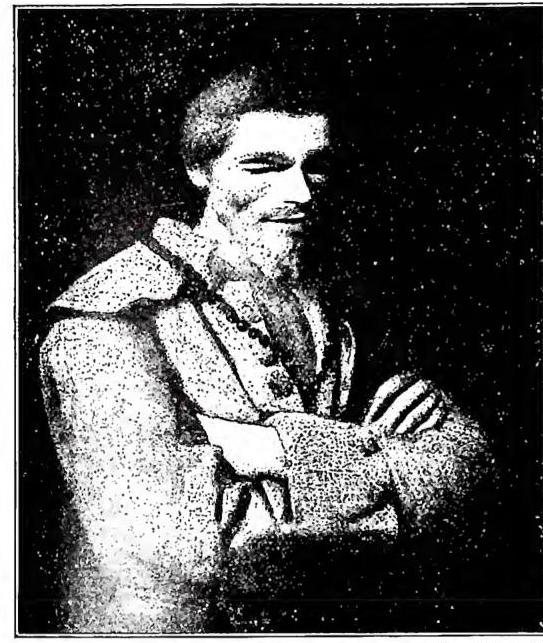
BENEDICT JOSEPH LABRE, Saint - Portrait painted by A. Cavallucci (1752-93) - Rome, Galleria Nazionale d'Arte Antica.