
LÉRINS. – Cistercian abbey on a small island situated opposite Cannes in the department of Alpes-Maritimes (France). Onorato (d. ca. 430), a patrician originally from the Vosges, settled there with the consent of St Leontius, bishop of Fréjus; he was accompanied by an old man named Caprese and founded a monastery that immediately flourished. From it came Sts Lupo of Troyes, Eucherio of Lione, Ilario of Arles, Massimo and Fausto of Riez, Cesario and Virgilio of Arles; St Vincenzo of L., Salviano of Marsiglia, St Patrizio, and St Agostino of Canterbury stayed there. L. was therefore called the Island of the Saints.
In 660, St Aigulfo is said to have introduced the Rule of St Benedict at L. Abbot Porcario II was martyred together with approximately 500 monks around 732 by the Saracens, who had ...
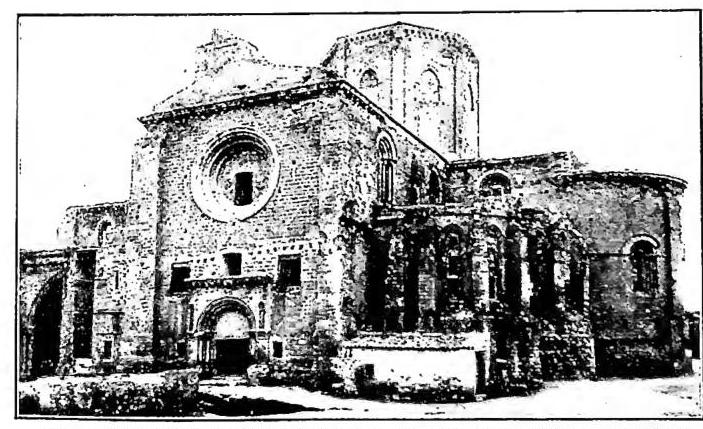
In 1788 the bishops of Grasse and Senez obtained its suppression from Pope Pio VI. During the French Revolution, in 1788, the island was confiscated; the name it had taken, S. Donato, was changed to Pelletier; in 1791 it was sold at auction; in 1859 it was purchased by the bishop of Fréjus, Mons. Jordany, who restored worship there, entrusting the monastery first to the Friars devoted to cultivation of S. Francesco d’Assisi, then to the Cistercians of S. Pietro in Vincoli, and finally, in October 1871, to the Cistercians of the Immaculate Conception of the Congregation of Sénanque.
A characteristic feature of the island is its seven chapels, which perhaps constituted the first isolated groups of the monks of L.: the first is dedicated to the Most Holy Trinity, the second to the martyrs Cipriano and Giustino, the third to the archangel S. Michele, the fourth to the Transfiguration, the fifth to S. Caprese, the sixth to S. Pietro, and the seventh to Abbot Porcario and his fellow martyrs. The monastery would have been built later; what remains of it is the ancient cloister, on the eastern side of which a chapel was constructed, initially dedicated to S. Leonardo and later to S. Benedetto; on the southern side was the refectory.
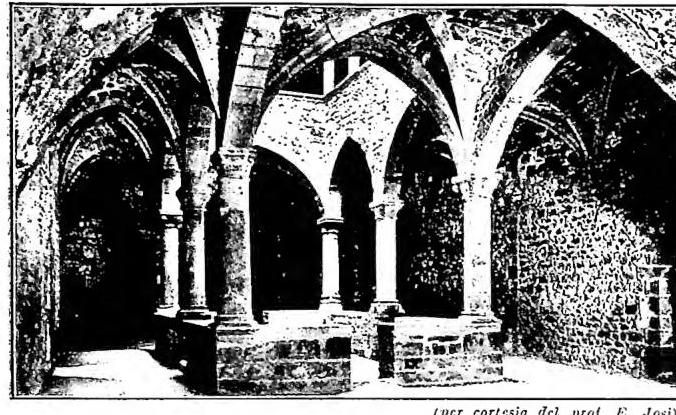
(courtesy of Prof. E. Josi) LÉRINS - Cloister of the abbey (12th century).