
LEROQUAIS, VICTOR-MARTIAL. — French priest and liturgist, born at St-Germain-de-Tallevende (diocese of Bayeux, department of Calvados) on 7 September 1875, died in Paris on 1 March 1946. He began his studies at Vire (1887) and completed them successfully at the Seminary of Saint-Sulpice in Paris (1900). Ordained a priest on 9 June 1900, he exercised the pastoral ministry in his diocese for twelve years before being able to settle in Paris and devote himself to scholarly research. He was an honorary canon of Notre-Dame (15 January 1938) and, in recognition of his merits in the field of liturgical studies, vice-president of the Henry Bradshaw Society of London (1939). The pious and learned L., who left scholars, and especially students of liturgy, tools of primary importance, rests in the small parish of Bény-sur-Mer, where he was a zealous pastor from 1906 to 1912.
Initially L.’s research was intended to illustrate the historical and liturgical development of the Holy Mass, but it soon extended to the contents and ornamentation of the principal liturgical books. He became a specialist and a master in their description and, thanks to his extensive historical, palaeographical, and liturgical culture, was able to identify all their features capable of interesting scholars. The notices he devotes to each manuscript, concise yet comprehensive, are always drawn up according to an impeccable method: a manuscript analyzed by L. holds no further secrets for other scholars. He possessed a refined artistic taste, revealed both in his choice of plates outside the text (more than 1,500), which abundantly adorn even his briefest study, and in the elegant typographical form in which he presented his great catalogues, published almost always at his own expense, given publishers’ distrust of this kind of publication. He made the complete circuit of all the French public libraries several times: for example, from the end of 1912 to 1914, from 1919 to 1923, from 1929 to 1933, etc. The material collected and checked against the originals is truly immense, as the following substantial publications testify (about fifteen smaller works are omitted): Les sacramentaires et missiles manuscrits des bibliothèques publiques de France (3 vols. in-4º of text and 1 of plates, Paris 1924), in which 914 manuscripts dating from the seventh–eighth century to the eighteenth are described (cf. supplement, another 10 manuscripts dating from the twelfth century, inserted in vol. V of the Bréviaires, pp. 420–41, and supplement added to vol. II of the Pontificaux, pp. 429–62); Les Livres d'Heures manuscrits de la Bibliothèque nationale (2 vols. in-4º of text and 1 of plates, ibid. 1927), in which 313 manuscripts, delightful in content and ornamentation, dating from the twelfth to the seventeenth century, are described, followed by the Supplément aux Livres d'Heures manuscrits de la Bibliothèque nationale (1 vol. in-4º, with plates, ibid. 1943), a description of the new acquisitions;
Le Bréviaire de Philippe le Bon. Bréviaire Parisien du XVᵉ siècle (2 vols. in-fol. of text, 1 of plates, Brussels 1929), an important manuscript, probably produced by G. Vrelant; Les Bréviaires manuscrits des bibl. pub. de France (5 vols., in-4º, of text, 1 of plates, Paris 1934), in which 1,034 manuscripts dating from the eleventh century onward are described; Les Pontificaux manuscrits des bibl. pub. de France (3 vols. in-4º of text, 1 of plates, ibid. 1937), in which 233 manuscripts dating from the ninth to the sixteenth century are described; Les Psautiers manuscrits latins des bibl. pub. de France (2 vols. in-4º of text, 1 of plates, Mâcon 1940–41), in which 472 manuscripts dating from the sixth to the eighteenth century are described (a further 23 manuscripts are described in an appendix: breviaries, Books of Hours, etc.). Finally, he left ready for printing the edition of the important Sacramentaire de Gellone, which will be published under the care of the Bibliothèque nationale under the direction of dom Hesbert, O.S.B. (to meet the expenses of this edition, in 2 vols. of text and 1 of plates, L. completed the heroic act of pledging his library), and the Evangélaire carolingien dit de François II, ms. lat. 257 of the Bibliothèque nationale. Of great importance are the substantial introductions prefixed to his catalogues, in which the genetic and artistic development of the Missal, the Breviary, the Pontifical, the Psalter, and the Book of Hours is studied. L.’s cordiality toward scholars or students who sought his advice was proverbial.
A. Pietro Frutaz
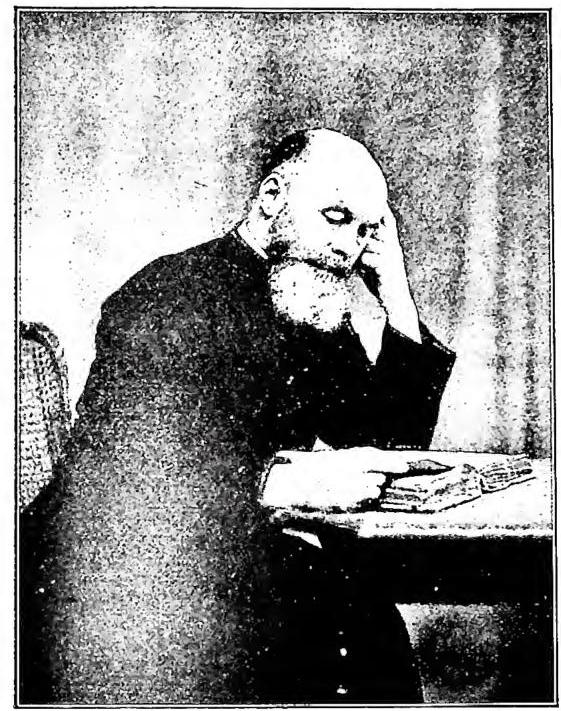
(from R. Dubois, Une gloire du diocèse de Bayeux, Monsieur le chanoine L., Bayeux 1858) LEROQUAIS, VICTOR-MARTIAL - Ritratto.