
JEALOUSY, LAW of. - According to the law contained in Num. 5:11 ff., a husband who harbours suspicions concerning his wife’s fidelity, suspicions not confirmed by any testimony, brings the woman to the priest, bearing an offering for the evocation of the possible guilt.
The oblation consists solely of barley flour. The priest pours holy water into an earthen vessel and adds to it dust from the floor of the tabernacle (thus also rich in sacred powers). He then has the woman approach, loosens her hair, and places the flour in her hands, while he himself holds the vessel containing the water. The woman pronounces the formula of self-curse should she be guilty. In the event of guilt—thus the priest—“may the Lord make you an object of imprecation and execration among your people, by making your thigh waste away and your belly swell.” The woman replies: “Amen, amen.” The priest then writes the curses upon a sheet and dissolves them “in the bitter water of cursing.” The priest burns upon the altar as a fragrance a handful of the barley (“azkārāh, or evocation”), and then makes the woman drink the water.
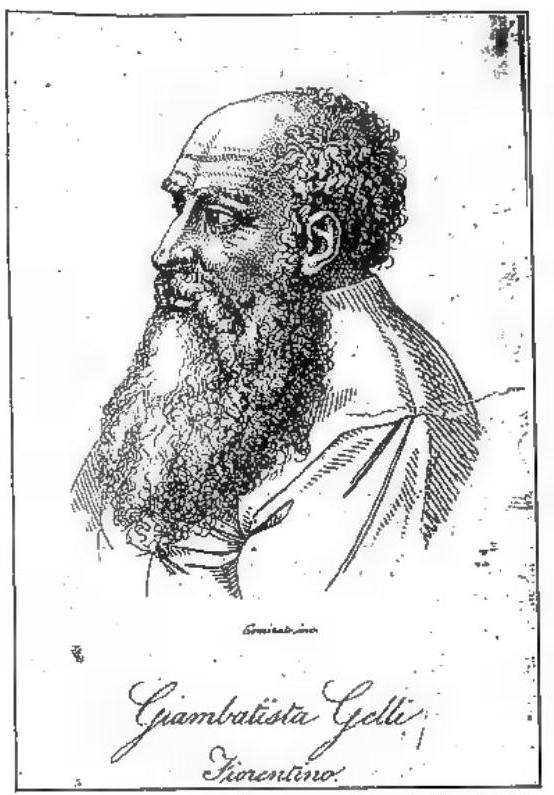
(from La Circe by G. B. G., Venice 1885) GELLI, GIOVANNI BATTISTA - RATATO, Engraving by the Committee, from a contemporary portrait.1876, pp. 35-72; A. Wendel, Das Opfer, in Die edizierolische
Religion, Leipzig 1927, p. 121; E. Zolli, Israele, Udine 1935, p. 238
ff.; R. Pettizzoni, La confusione dei peccati, II, Bologna 1935,
pp. 139-62; M. W. Rapoport, Eiferscasser, in Jüdisches Lexikon,
II, pp. 299-300; La S. Bibbia... edited by the Fond. ist. bibl.,
I, Florence 1942, pp. 355-57. Eugenio Zolli