
GORGONE. - From the Greek Γοργά, Γοργόνη (Lat. Gorgón and Gorgón). A female figure of Greek myth, originally single, later divided into three sisters: Steno, Euriale, and Medusa, the first two immortal, the third mortal.
The Gorgons dwell in a dark region in the far west (Hesiod, Theog., 274 ff.): they therefore represent the darkness of night, and for this reason one of them, Medusa, is in conflict with the solar hero Perseus; in the legend of Argos he cuts off her head, whose terrible eye is capable of turning men to stone; another naturalistic symbol of the storm-cloud from which the life-annihilating lightning is unleashed. The serpent-haired head is given by the hero to Atena, who places it in the centre of her shield; this has led some mythographers to conjecture the original unity of Medusa and Atena.
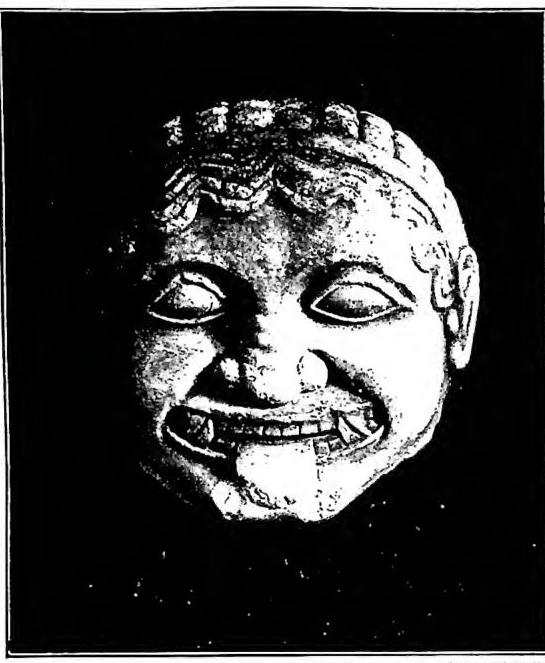
(photo Alinari)
GORGONE — Head of a G. Marble (6th century B.C.) — Athens,
Acropolis Museum.