
MANUEL II PALAIOLOGOS. - Born in Constantinople in 1350, died there on 21 July 1425. Byzantine emperor, he reigned from 1391. A theologian and a man of great talent, he had a very difficult reign because of the Turkish power that threatened and increasingly restricted the Byzantine Empire. To ask for help against the Turks he made a journey to the courts of the princes of the West (1399-1403: Venice, Paris, London, Paris again, Genoa and Venice again). He also several times, during his long rule, sent embassies to the supreme pontiffs, including during the period of the Western Schism, and after it to Pope Martin V, to whom he sent the Greek Dominicans Theodore and Andrew Chrysoberges, both converts and well regarded by the Emperor. On 6 April 1418 M. obtained from the Pope the dispensation requested because of the impediment of mixed marriage for his children. The papal embassy, entrusted to the Franciscan Antonio di Massa in 1422, could no longer deal with M., already stricken by serious illness, but rather with his son John VIII, who had already been associated with the imperial government for some years. M. died without having returned to the union so many times promised.
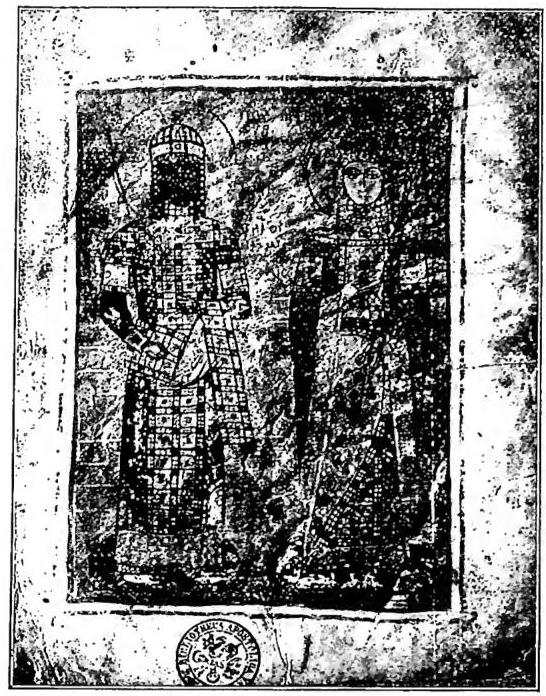
He left many writings, letters and above all theological books, homilies and other religious discourses, among which a mariological homily recently published by M. Jugie (PO 15, 539-66). A great treatise, for the most part still unpublished, is his Apologies of Christianity against Islam, dedicated to his brother Theodore. In Paris M. composed a still unpublished treatise against the Filioque, on the occasion of a short writing presented to him on the same theme by a monk of the abbey of St. Denis. A jewel of the Louvre Museum is the codex of the works of Pseudo-Dionysius the Areopagite, sent in 1408 by M.'s ambassador, the humanist Manuel Chrysoloras, to the monastery of St. Denis. Several letters of the Greek convert Demetrios Kydones testify to M.'s relations with him.
Bibliography5 works
Giorgio Hofmann