
TALLIS, THOMAS. - B. ca. 1505, d. 25 Nov. 1585 at Greenwich, he was a singer and organist of the abbey of S. Croce at Waltham, composer and Court organist under Henry VIII, Edward VI, Mary, and Elizabeth.
His first work comprises 34 Cantiones quae ab argumento sacrae vocatur, 5 et 6 partium (1575). Another sixteen of his motets were published together with eighteen by Byrd, his great pupil and collaborator at the court organ. One of his famous motets for 40 voices, divided into 5 choirs, is entitled Spem in alium non habuit.
He was the first to adapt musical notation to the vernacular text of the new English liturgy, publishing several sacred services and also a mass for 4 voices (Sine titulo), one for five (Salve intemerata), and various other compositions for four voices: Venite, Te Deum, Benedictus, Kyrie, Credo, Sanctus, Gloria, Magnificat, Nunc dimittis, in the First book of selected Church music (1641).
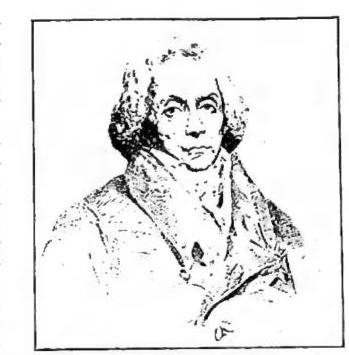
(from Lettres inédites de T. à Napoléon, Paris 1889)
TALLEYRAND PÉRIGORD, CHARLES-MAURICE, prince of - Portrait. Engraving by Blanchard.