ZOBOR

ZOBOR. – A monastic centre in Slovakia, on the mountain of the same name near Nitra.

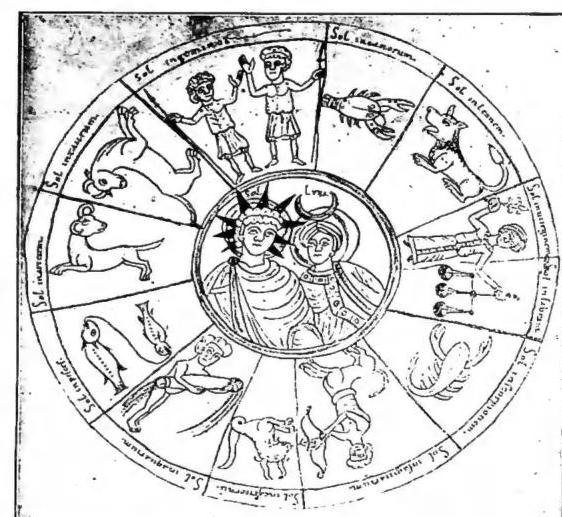
Over the centuries, monastic life on Z. has passed through three periods: in the first, according to the ancient tradition recounted by Cosmas of Prague in his Chronica, the Benedictine abbey of St Hippolytus at Z. is said to have been founded in the 9th century, during the era of Great Moravia, around the year 880. However, the first historical notices date from around the year 1000, at the time of the saints Andrew Svorad (Zoerardus) and Benedict, who were martyred in 1012 at Skalka. The abbey continued until 1468, when it was taken over by the diocese of Nitra and the monks were dispersed. The second period began in 1691.traced in the sky. It is not certain that all the Sumerian names of the zodiacal constellations can be traced back to the Sumerians themselves. The names, however, demonstrate that they arose as a consequence of Sumerian, Babylonian, and Assyrian religion, myths, and legends. Not a few zodiacal constellations are represented by depictions of the gods or objects whose names they bear on boundary stones, kudurru, dating predominantly to the Middle Babylonian period; the preference given, however, in such artistic representations in low relief to one or another divine figure was not determined by astronomical or astrological reasons, but by religious ones. In other words, those figures of deities were represented on the kudurru, including some zodiacal constellations, which were deemed—though for reasons unknown to us—better suited to preserving the integrity of the stone itself and to inspiring respect in potential wrongdoers. The kudurru therefore do not offer reproductions of the zodiac itself, but of a certain number of deities, among which some zodiacal constellations were also included. In any case, it is observed that boundary stones contain images, according to some, of about half of the constellations in question, namely Aries, Taurus, Gemini, Scorpio, Sagittarius, Capricorn, and Virgo (?), perhaps also Leo, though this is uncertain, since the predominantly zodiacal figures on the kudurru in some cases diverge somewhat from those of the beings indicated by the names of the constellations in question; some images of zodiacal constellations are also found on tablets or seals.The Sumerian names of the zodiacal signs are as follows: ARIES: mul-lû-hun-ga = mercenary; TAURUS: mul-mul = constellation; GEMINI: mul-mas-tab-ba-gal-gal = great twins; CANCER: mul-al-lu = crab; LEO: mul-ur-a = lion; VIRGO: mul-ab-sin = ear of grain; LIBRA: mul-zi-ba-an-na = scales; SCORPIUS: mul-gir-tab = scorpion; SAGITTARIUS: mul-PA-BIL. SAG = archer; CAPRICORNUS: mul-suhur-mas = capricorn; AQUARIUS: mul-gu-la = great constellation (?); PISCES: mul-KUN (mes) = tail. The word mul, which precedes these names, has the value of "constellation" and is the determinative of these names, i.e., it shows that the names are names of constellations.

The Babylonians saw in the celestial sphere various paths which they called harânu = way, road, because they were traversed by the planets and constellations. They distinguished the paths of Anu, of Enlil, and of Ea, as well as those of Sin, the Moon, and of Shammash, the Sun. They called harân (d) Sin = path of the Moon, the zodiac, a band on either side of the ecliptic of 90° on each side. A tablet enumerates seventeen constellations, the vast majority zodiacal, of this path, which lie in the path of the Moon and in whose district the Moon passes in the course of a month and touches; moreover, the path of the Moon is traversed by the Sun and the five planets. This designation of the zodiac is explained by the fact that Sin was a very important god in the Babylonian pantheon. A step forward was made when the zodiac was divided into twelve compartments, when the twelve-fold zodiac was created. It is not known exactly how this zodiac, which is still that of today, came into being. This solar zodiac is certainly not earlier than the first millennium B.C., but is the product of a more recent epoch. A tablet, not earlier than the 5th century B.C., names fifteen zodiacal constellations; at this time one must have passed to dividing the zodiac into twelve equal parts and to transferring to these parts the signs and names of the constellations, more or less corresponding. One scholar has affirmed that an attempt was made to establish a perfect correspondence between the solar year with its twelve parts and the zodiac, which was then divided only into four parts, and therefore each of its four parts was divided into three parts of equal length, and it was precisely with this division that the zodiacal signs were created. The oldest Babylonian mention of the signs is found in a text of 420 B.C., in which, among other things, it is assumed, for example, that the planets Jupiter and Venus stand in the month of Nisânu in the front part of Gemini, Mars in Leo, Saturn in Pisces, and Mercury sets in Taurus; the names of the signs were taken from the constellations which they contain, so that the sign