Machine translation of the 1948–1954 Italian original. The original text is authoritative.
BIONDO, FLAVIO. - Humanist and archaeologist, born in Forlì in 1392, died in Rome on June 4, 1463 (he added the second name later, latinizing the first).
He studied in his native city where he lived until 1423, when he was driven out by factions. In 1434 he became apostolic secretary to Eugenius IV, but having fallen out of favor with Nicholas V, he wandered extensively through Italy
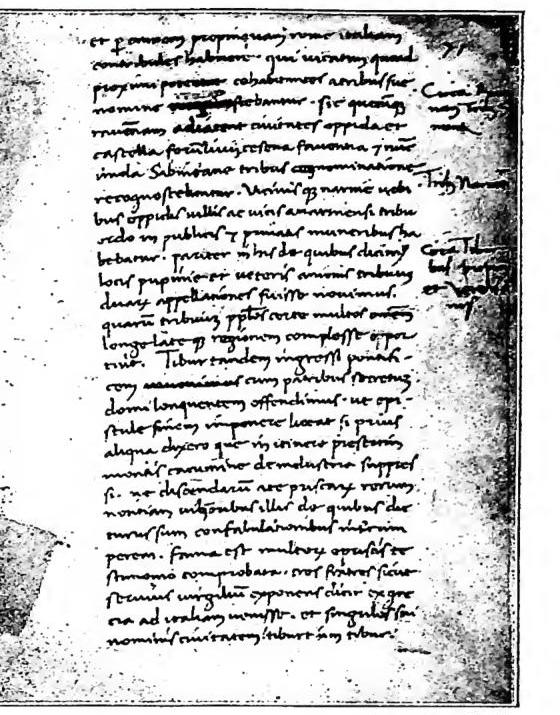
(prop. Enc. Catt.) BIONDO, FLAVIO - Excerpt of the letter addressed to Gregorio Lolli Piccolomini, 12 Sept. 1461 - Biblioteca Vaticana, cod. Vat. Lat. 6284, f. 71.ly. In the De verbis romanae locutionis (1435) he maintained against Leonardo Bruni that Italian is the natural continuation of ancient Latin; with the Historiae ab inclinatione romanorum (1438-53) he was the first to give us an organic history of the Middle Ages; L'Italia illustrata (from the Alps to Salerno, of 1453) is a systematic description of his homeland, bringing together classical data with contemporary information (topography and biography); in the Roma triumphans (1457-59) he provided a treatise on the public and private institutions of the ancient Romans, often compared to contemporary ones. The Roma instaurata (1444-46) is the first treatise on the topography of ancient Rome, particularly classical, but also medieval and Christian: «basilicas quoque, templa et sacra, quas vocamus ecclesias, loca per quos pontifices vel alios christianos vel fundatae primo vel auctae vel fuerint instauratae ostendam». His work is in fact rich in information and of great merit, but of little utility to modern scholars, since almost all the sources upon which he drew are still at our disposal.
BIBL.: Pastor, I, pp. 308-10; B. Nogara, Scritti inediti e rari di B. F. (Studi e testi, 48), Roma 1927; F. Baix, s. V. in DHG, cols. 1513-17; G. Ferretto, Note storico-bibliografiche di archeologia cristiana, Roma 1942, p. 66 f. Antonio Ferrua
Cite this article
“BIONDO, FLAVIO.” Enciclopedia Cattolica, vol. II (1949), p. 959. Azione Romana digital edition, https://azioneromana.com/article/biondo-flavio.