Machine translation of the 1948–1954 Italian original. The original text is authoritative.
CAIO, POPE, saint. - The Liber Pontificalis states that he was of Dalmatian origin, and indeed a relative of the emperor Diocletian (the latter addition is open to doubt). According to the chronology of the same Liber, he was pontiff from the second consulship of Carus and Carinus (282 or 283) to the sixth of Diocletian and the second of Constantius (295 or 296); he certainly must have governed the Church at the end of the 3rd century.
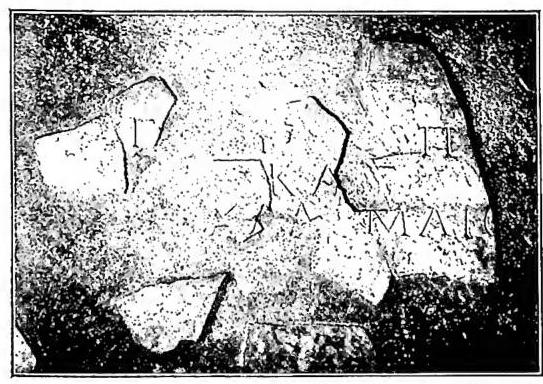
(phot. Pont. Commission of Sacred Arch.) CAIO, PAPA - Fragments of the epitaph of Pope C. Rome, cemetery of S. Callisto.His epitaph was found in the cemetery of Callisto (cf. Diehl, Inscr. Chr., n. 961: erroneous transcription); from this inscription it appears that he was "laid to rest" on April 22 (though the day number is not certain to read). Nor is it certain that the cubicle where the inscription is located, which is not "in situ", is indeed the one where the Pontiff's body lay. The Cononian epitome and the full edition of the Liber Pontificalis record an important reform of his whereby it was forbidden to ascend to the episcopal dignity without having climbed the ladder of the lower orders. What the Passio s. Susannae says about C. has no historical value. It is not certain that he died a martyr. Perhaps he is only a confessor.
BIBL.: Acta SS. Aprilis, III, Anversa 1675, pp. 13-17, 982-83; Becillus, Acta S. C. P. et M., Roma 1628; G. B. de Rossi, Roma sotterranea, III, Roma 1877, pp. 114-20; Lib. Pont., pp. 6, 70, 171; A. Harnack, Gesch. der altchristlich. Lit., I, Lipsia 1893, p. 589. Carlo Cecchelli
Cite this article
“CAIO, PAPA, SANTO.” Enciclopedia Cattolica, vol. III (1949), p. 199. Azione Romana digital edition, https://azioneromana.com/article/caio-papa-santo.