CALLISTO I, PAPA, SANTO

CALLISTUS I, POPE, Saint. — The *Liber Pontificalis* and the *Liberian Catalogue* state that he was a Roman from the Transtiberine region ("*de regione Urbe Ravennantium*") and that he reigned from the consulship of Antoninus and Adventus (218) until the consulship of Antoninus (III) and Alexander (222). From the *Liber Pontificalis* (I, p. 141) we also learn that he established the Saturday fast three times a year (the fast of wheat, wine, and oil: cf. Zisch. 8, 19). This was a precedent for the fast of the Ember Days. It is also said that, as a martyr, he was buried in his own cemetery on the Via Aurelia, later called the Cemetery of Calepodius. But another source (the *Philosophumena*, attributed—though not definitively—to Hippolytus, who would have been Callistus’s bitter adversary) tells us much more about the Pope.

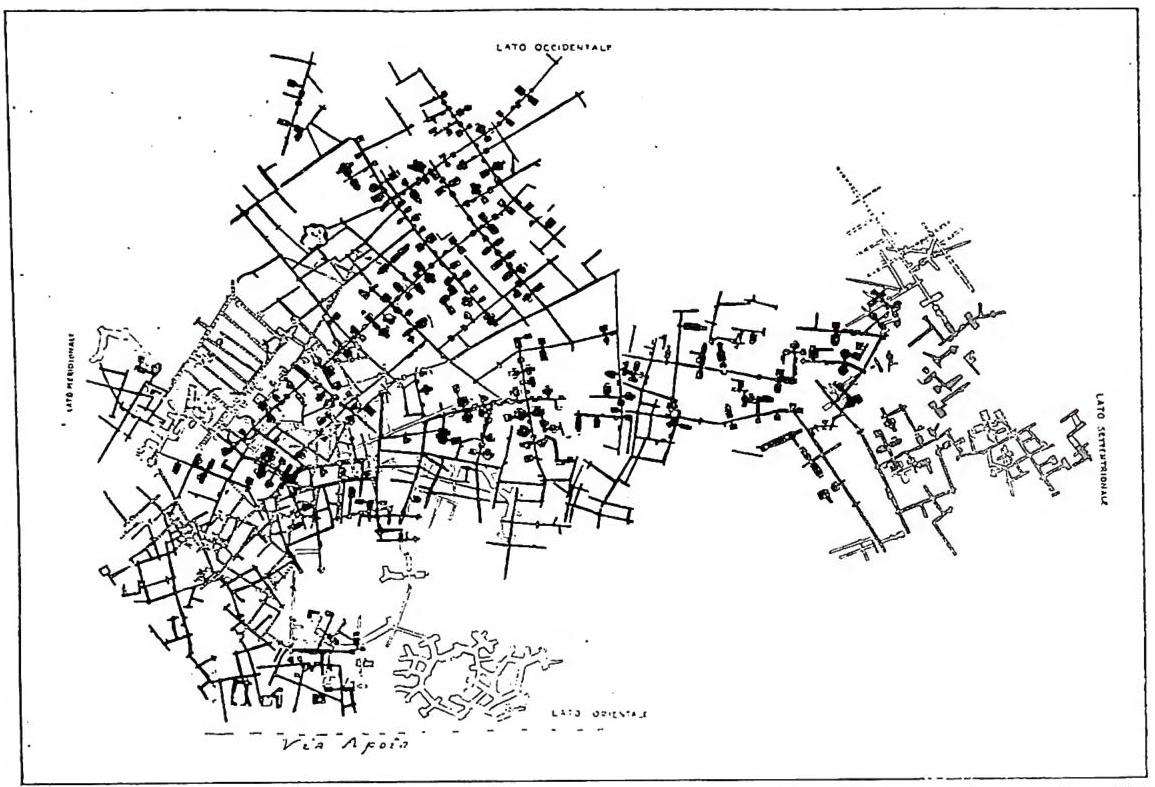
According to this account, he was of servile condition and gave his master considerable trouble with his reckless speculations and imprudent ventures. An incident with the Jews led to his falling into the hands of Roman justice, which sentenced him to the mines in Sardinia. He managed to secure his release along with a group of confessors who were suffering there and were recalled through the intervention of Marcia, the concubine of Commodus. He was then exiled to Antium by the severe Pope Victor. Under the pontificate of his successor, the mild Zephyrinus, Callistus returned to Rome and, as a deacon, was placed in charge of the official cemetery of the Church, located on the Appian Way, which later took his name.

Article illustration
This is the first time we learn of the existence of this cemetery, which was directly dependent on the administration of the Roman community.
After the death of Zephyrinus (217), Callistus became pope. According to the assertions of his biased and irate biographer, his conduct was far from upright. The latter reproaches him for remitting sins, readmitting those who had been too weak in the face of pagan intimidation, alleged complicity with heretics, and other matters. But Callistus had excellent arguments with which to defend himself. He compared the Church to a field in which tares are mixed with wheat (Matt. 13:29–30) or to Noah’s ark, in which both clean and unclean animals took refuge (Gen. 6:19ff.). Whoever does not grant forgiveness to a sinner who is truly repentant betrays the word of the Lord, who came into the world not to condemn but to redeem and forgive (cf. *Philosophumena*, 11). It has been suggested that Tertullian’s sarcastic allusions to an “*episcopus episcoporum*” and a “*summus pontifex*” were also directed at Callistus (cf. *De Pudicitia*, 21). Indeed, it has even been claimed that the idea of the preeminent authority of the Church of Rome in disciplinary matters originated from the controversies of Callistus’s time. But these ideas must be rejected. The phrase “*omnem ecclesiam Petri propinquam*” (*De Pud.*, 21, 9) refers generally to a Church that preserves the tradition of the faith taught by Peter. Nothing demonstrates that the bishop Tertullian had in mind was the Bishop of Rome. It seems rather that he was referring to the local African bishop, namely Agrippinus.

Article illustration

The relatively late hagiographical legends of the city speak of the origins of the *titulus Callisti* in Trastevere, narrating that Callistus gathered Christians in his humble home in Trastevere, where the old priest Calepodius was also to be found. The author of the *Passio* has Calepodius—i.e., the eponym of the suburban cemetery—buried by Callistus, and Callistus buried by a martyr from Ostia, Astius, whose *dies natalis* occurred a few days after his own. In any case, it is highly probable that in Trastevere there existed a memory of Pope Callistus, similar to the “Memory of Hippolytus” near the Vicus Patricius. Alongside this monumental memory, Pope Julius I, in the 4th century, erected a basilica that was called the “*titulus Iulii et Callisti*.” The *Depositio martyrum* (certainly prior to 354) records: “*pridie idus Octob.* (depositio) *Callisti in via Aurelia miliario III*.” He was therefore considered a martyr from a very early time. The fact that he was buried in a cemetery in Trastevere rather than in the Appian cemetery he had himself supervised has led to the suspicion that his martyrdom occurred in Trastevere and that there was not even the possibility of depositing his body in the cistercian cemetery.

For the so-called Edict of Callistus, V. Penitential Discipline.

BIBL.: G. Bardy, s.V. in *DThC*, II, cols. 1333ff.; G. B. de Rossi, *Esame archeologico e critico della storia di s. Callisto narrata in un libro nono dei Philosophumena*, in *Bulletino di archeologia cristiana*, 4th ser., 4 (1886), pp. 1–33; 65–72; 77–100; A. d’Alès, *L’édit de Calliste. Étude sur les origines de la pénitence chrétienne*, Paris 1914; id., *Zéphyrin, Calliste ou Agrippinus?*, in *Recherches de science religieuse*, 10 (1920), pp. 254ff.; A. Donini, *L’édit d’Agrippino*, in *Ricerce religiose*, 2 (1925), pp. 56–78; F. Lanzoni, *I titoli presbiteriali di Roma antica nella storia e nella leggenda*, in *Rivista di archeologia cristiana*, 2 (1926), pp. 203, 243–245; E. Caspar, *Primatus Petri*, Weimar 1927; C. Cecchelli, *Tre deportati in Sardegna: Callisto, Ponziano ed Ippolito*, extract from *Sardegna romana*, Rome 1939; id., *S. Maria in Trastevere* (*Le chiese di Roma illustrate*, nos. 31–32), ibid., n.d.