
VITTORE I, PAPA, saint. — African and son of Felice, according to the Lib. Pont., he was the thirteenth bishop of Rome after s. Pietro, successor to Eleuterio. The Catalogo Liberiano assigns him a reign of approximately 9 years (186–97?); Eusebius, however, followed by s. Girolamo, gives 10 years (189–201?; Hist. eccl., V, 22, 28). He died on 28 July and was buried in the Vatican. The Martirologio romano commemorates him on that day as a martyr.
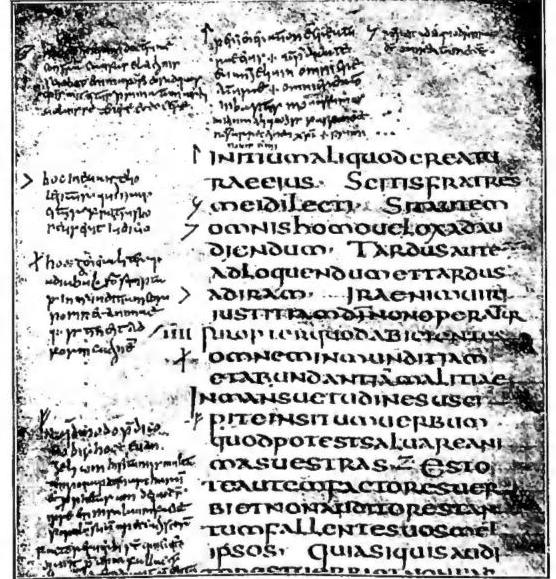
During the pontificate of V., the Latin element, alongside the Greek-Oriental element that had until then predominated, gained strength in Rome; s. Girolamo (De viris ill., 34) considers V. to have been the first Latin writer. Marcia, Commodus’s favorite, turned to him for the list of Christians deported to Sardinia who were freed by the presbyter Giacinto (Ippolito, Philosoph., IX, 12). Energetic and resolute in character, fully conscious of his authority, V. was the vigilant guardian of traditional doctrine and liturgical practice, threatened by critics and rebellious bishops who were creating schisms and confusion in Rome itself. He did not hesitate to excommunicate Teodoto the tanner, author of the Adoptionist error (Eusebius, Hist. eccl., VI, 28). He confronted the question of the celebration of Easter: the Churches of Asia, following the example of the apostles
Giovanni and Filippo, celebrated it on the 14th of the month of nísán, the anniversary of the Redeemer’s death (pascha crucifixionis; V. QUARTODECIMANI); all the other Churches, however, following Roman usage, celebrated it on the following Sunday (pascha resurrectionis). Significant disagreements, especially in Rome, where many Orientals lived, had arisen around the middle of the 2nd century, and during the time of Pope Aniceto s. Policarpo had come to Rome hoping to persuade the Pontiff to accept the Quartodeciman usage. V. opinion. There was a dense exchange of letters among the various Churches, and all of them, unanimously—from Palestine, Egypt, Pontus, Osroene, Greece, and Gaul—informed V. that they followed Roman usage. Only the bishops of Asia, headed by Policrate of Ephesus, expressed their dissent, and in rather harsh words. V. was on the point of excommunicating them, but many bishops, among them s. Ireneo of Lyon, wrote to V., according to Eusebius, to point out to him that such severity was not appropriate toward illustrious and venerable Churches in a matter that did not properly touch the essence of Christian observance, and exhorting him to safeguard peace, charity, and unity. It appears that V. followed the advice.