
ANICETUS, POPE, saint. — According to the list of the popes preserved by Irenaeus (Adv. haer., III, 3: PG 7, 851; cf. also Eusebius, Hist. ecl., V, 24, 14), A. succeeded Pius I and was the tenth successor of s. Peter. The later document known as the Catalogus Liberianus, on the other hand, gives A. as the predecessor of Pius I. The error may be explained by the fact that, in a list from the 3rd century, one of the two names was omitted and then, when the omission was noticed, added in the margin; in copying the list, it was placed in the wrong position in the body of the catalogue. The testimony of Irenaeus is confirmed by Hegesippus (Eusebius, Hist. ecl., IV, 22, 3), who gives Soter, not Pius I, as A.’s successor.
During his pontificate, which may be placed between 155 and 166, numerous Eastern Christians came to Rome or were already there: the philosopher Justin was teaching and combating the heretics; Hegesippus came there from Palestine to learn about the faith of the Roman Church; Polycarp, the distinguished bishop of Smyrna, martyred in 155, came in 154 to discuss with the Pope certain questions of ecclesiastical life, especially the question of the celebration of Easter. Although he was unable to reach an agreement with him on the Paschal controversy, nevertheless “they remained in communion with one another, and in church Anicetus had the Eucharist celebrated for Polycarp, evidently out of deference” (Eusebius, Hist. ecl., V, 24, 17). The heretics too were then very numerous in Rome, where they engaged in propaganda, the best known being Valentinus of Alexandria, Cerdo, and Marcion. Gnosticism was continually gaining ground, but we know nothing of A.’s activity against heresy.
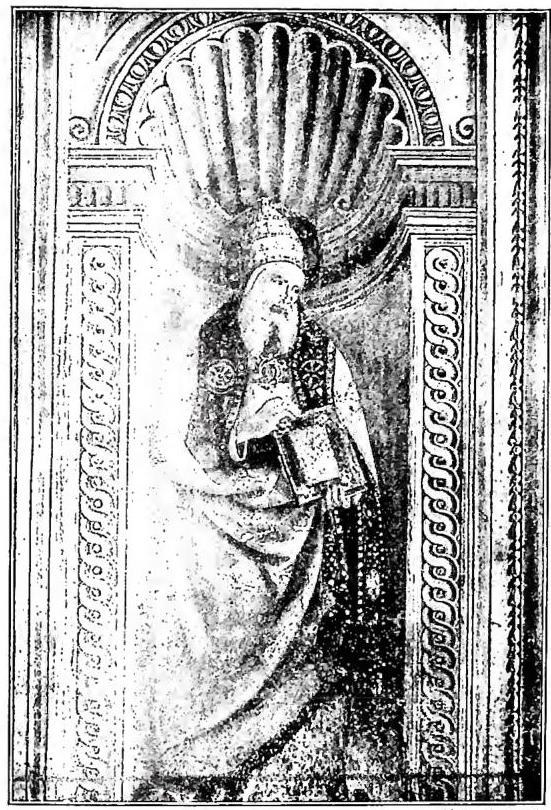
(phot. Annuri)