Machine translation of the 1948–1954 Italian original. The original text is authoritative.
ANASTASIO III, POPE. — A Roman, son of Luciano, he succeeded Sergio III and was consecrated about the month of June 911. During his brief pontificate, which ended in 913, he was unable to exercise any political power, because Rome was then dominated by the family of Teofilatto, « consul et senator », and by Teodora, who, if we are to believe Liutprando, governed the city with a certain energy: « romanae civitatis non inviriliter monarchiam obtinebat » (Antepodosis, 2, 48). When the emperor Alessandro ascended the throne of Constantinople, A. received a letter from the Byzantine patriarch Nicola il Mistico, who complained that Sergio III had authorized his legates to permit the fourth marriage of the emperor Leone VI, and sought to justify his own opposition to this marriage.
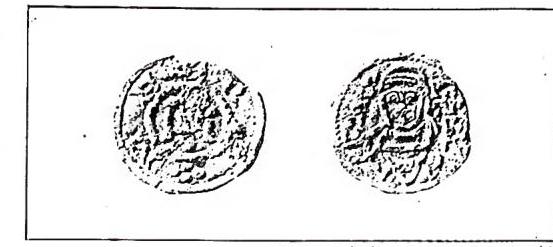
(from Serafini, Monete e Bolle pontificie) ANASTASIO III, pope — Silver coin.Indeed, the Eastern Church forbade such marriages, whereas the Western Church raised no objection to them. We do not know whether the Pope replied to the patriarch of Constantinople. Of A. there remains only one bull, by which he grants Ragemberto, bishop of Vercelli, the use of the pallium. The other bull, however, by which he confers upon Ogero, archbishop of Amburgo, and his successors a very extensive jurisdiction over the bishops of northern Europe, is not authentic. A. was buried in the Vatican basilica; the inscription placed on his tomb still survives.
BIBL.: Jaffé-Wattenbach, I, p. 448; Liber Pontificalis, ed. L. Duchesne, II, Parigi 1892, p. 219. Pietro Goggi
Cite this article
“ANASTASIO III, PAPA.” Enciclopedia Cattolica, vol. I (1948), p. 708. Azione Romana digital edition, https://azioneromana.com/article/anastasio-iii-papa.