Machine translation of the 1948–1954 Italian original. The original text is authoritative.
LUNAR CYCLE. — In chronology, this name (Latin circulus lunae, or lunaris; French cycle lunaire; German Mondzyklus) designates a period of nineteen solar years, corresponding to 235 lunations or lunar months, necessary for a given moment of the solar year to coincide once again with the same lunar phase.
It is one of the computations adopted in the Middle Ages for determining Easter: already used by the Greeks, it was derived from them by the Jews in A.D. 338. In itself, it corresponds exact-
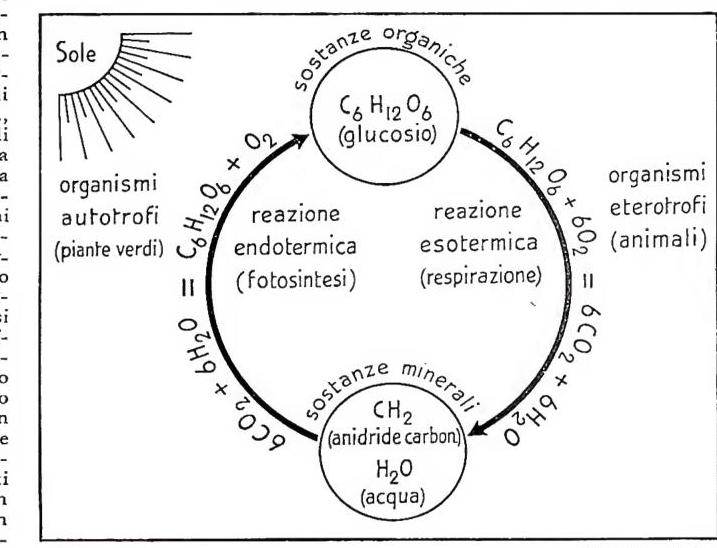
(des. Eur. Cult.) CICLI BIOLOGICI - Cycle of matter (carbon) between the inanimate world and the living world, represented by green plants and animals.exactly to the so-called “nineteen-year” cycle (circulus decennovennalis), with which indeed it is often confused, but it differs from it in the ideal starting date, which in the c. l. is calculated as A.D. 3, whereas in the nineteen-year cycle it is placed in the year 1 B.C. It is mentioned in certain medieval documents alongside the date.
BIBL.: E. Brinckmeier, Praktisches Handbuch der historischen Chronologie... des Mittelalters, Berlino 1882, p. 65; A. Giry, Manuel de diplomatique, Parigi 1894, pp. 148-49; H. Grotefend, Abriss der Chronologie des deutschen Mittelalters und der Neuzeit (Grundriss der Geschichtswissenschaft, ed. by A. Meister, I, III), 2nd ed., Lipsia-Berlino 1912, pp. 7-10.
Alessandro Pratesi
Cite this article
“CICLO LUNARE.” Enciclopedia Cattolica, vol. III (1949), p. 924. Azione Romana digital edition, https://azioneromana.com/article/ciclo-lunare.