
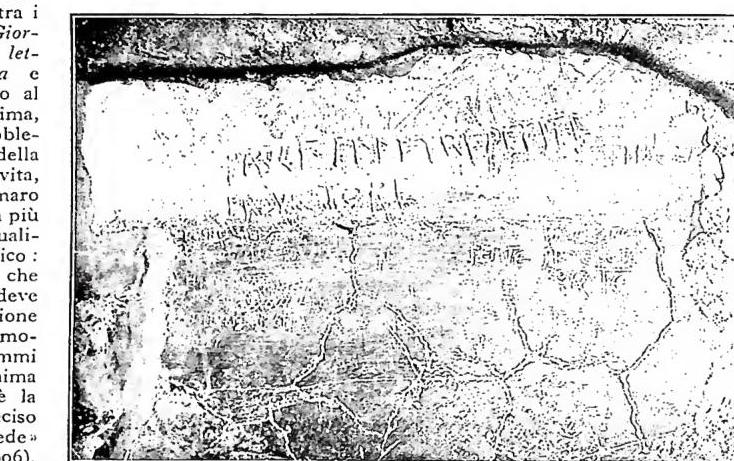
GRAFFITI. - G., as the name indicates, are drawings or writings made with a hard point upon a softer surface, such as wall plaster, terracotta, or even marble or metal. The drawing is characterized by its flat appearance, with scarcely any relief, although this is compensated for by shading and fine strokes; the writing by its cursive and summary nature, which generally makes it a text difficult to read.
In compensation, it tends to express personal feelings with greater freshness and immediacy. For this reason, the countless g. found on almost every wall of Pompeii are extremely precious; no less so for the history of Christianity are those left by the first Christians on their tombs, on the walls of their houses, and especially on the walls of their sanctuaries. Precisely thanks to them it has repeatedly been possible to identify sanctuaries of martyrs venerated in the catacombs, for example, the «memoria
For this type of writing, see CAPITALE, SCRITTURA.