
IVAN III, Grand Duke of MOSCOVIA and of all the RUSSIE. - The name of this sovereign is identified with the rise of Russia at the transition from the fifteenth to the sixteenth century. B. 22 Jan. 1440, d. 1505. He married Sofia Paleologo, niece of the last Byzantine emperor, Costantino: thus, in the eyes of his compatriots, he transformed Moscow into the heir of Byzantium, inaugurating a policy of great-power status and currents of thought which, in the
nineteenth century, would form the basis of Slavophile ideology.
The Pontiff had consented to the marriage of the Catholic Sofia, hoping for Catholic penetration into Moscow; but this hope proved unreal, because Sofia became Orthodox. I. emphasized the concept that the land inhabited by the Russians is “our legitimate patrimony, rightfully transmitted to us by our ancestors” (especially in controversy with the Poles and Lithuanians). He concluded treaties and established cultural and friendly ties with Venice, Hungary, Austria, and Denmark. Italian artists and engineers were summoned to Russia, in an increasingly political and spiri-
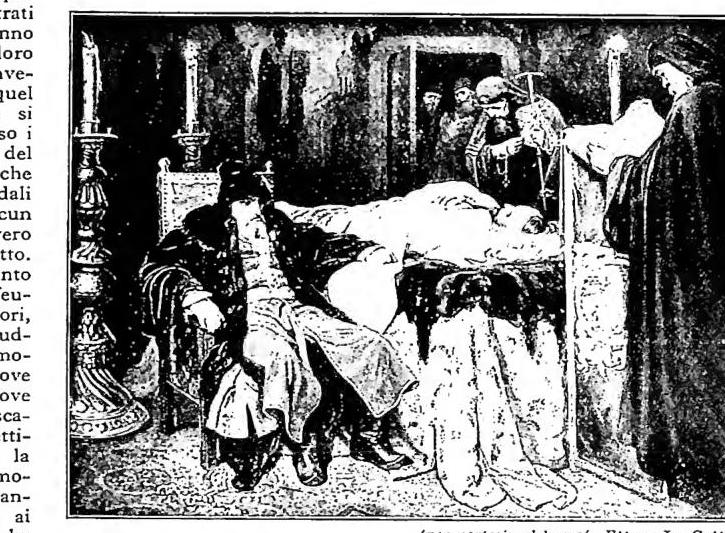
IVAN IV, the TERRIBLE - I. the T. beside the corpse of the son whom he killed. Lithograph by Julius Sittenfeld (Berlin), after the original painting by V. G. Svarc.
tual climate increasingly interested in the life and civilization of the West (which was beginning, in some respects, to be imitated).