
MAJUSCULE WRITING. - The term m., in its proper sense, does not denote a particular script, but should be understood, as an adjective, as referring to all those scripts whose alphabet, as a whole, can be delimited by a bilinear system, the first line of which touches the uppermost points of each letter and the second line, parallel to the former, touches the lowermost points of those same letters.
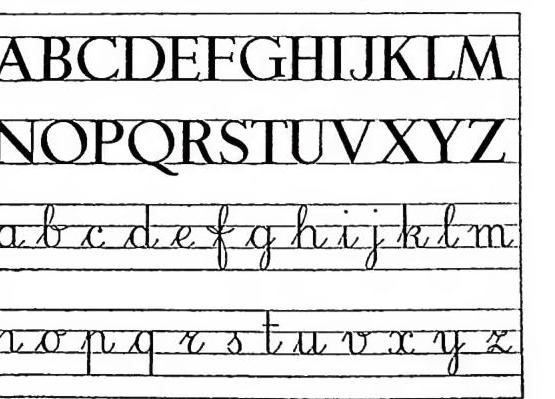
(property of Enc. Catt.) MAIUSCOLA, SCRITTURA - Alphabet of majuscule writing.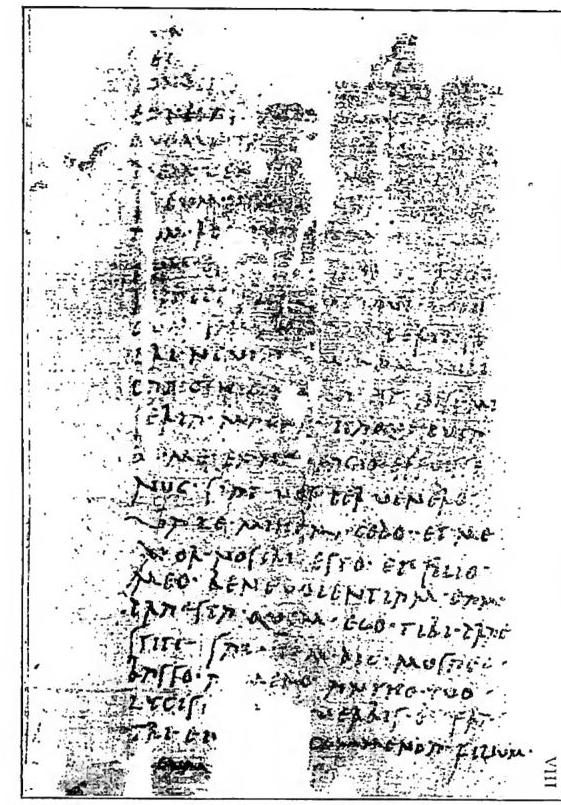
MAIUSCOLA, SCRITTURA - Letter to “Macedo.” Papyrus fragment from the collection of Archduke Ranieri (17–4 B.C.) in m. script. Vienna, Rainer Pap. lat. Ib.
Latin script, predominantly documentary, of mixed character, which he classifies as “cursive m.” and distinguishes from capital script by the tendency of its letters to abandon their original capital forms for forms derived from them through natural development, determined chiefly by the cursive ductus. Schiaparelli further distinguishes, according to the degree of cursiveness, between a “cursive m.” and a “semi-cursive m.”