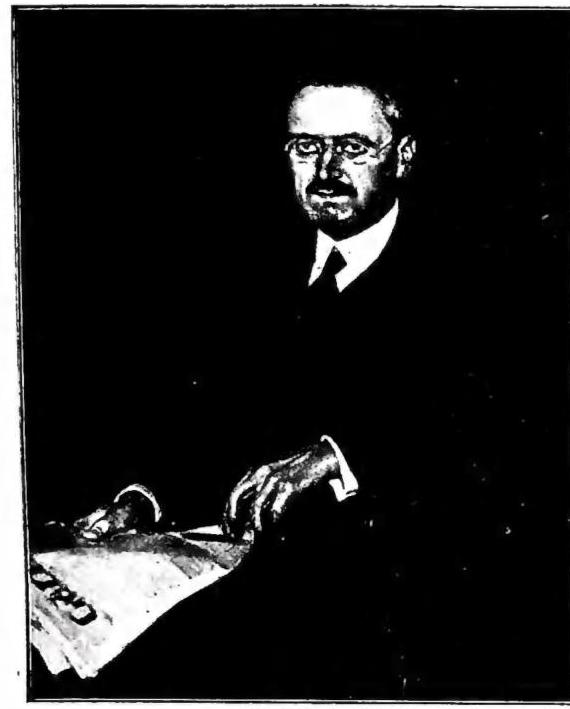
SCHIAPARELLI, LUIGI. — Distinguished master of diplomatic and palaeographic disciplines, born at Cerione (Biella) on 2 Aug. 1871, died at Florence on 26 Jan. 1934.
Soon after graduating he pursued advanced studies in Munich at the school of L. Traube; called to join the Historical School established by E. Monaci at the Royal Roman Society of National History, he was able to study and illustrate several Roman archives; he was the principal collaborator of P. F. Kehr for the Italia Pontificia (v. REGESTO); in 1903 he was appointed to the chair of palaeography and diplomatics at the Institute of Advanced Studies in Florence, later the University, which he held until his death; he was director of the School for Palaeographic Librarians and Archivists; co-director of the journal Archivio storico italiano from 1927; national fellow of the Royal Academy of the Lincei in 1928 and of numerous other learned societies; he was a member of the governing board of the Italian Historical Institute for the Middle Ages, of which he was an active collaborator; he directed at the same Institute the series of Regesta chartarum Italiae and the Historical and Bibliographical Guides to the Archives and Libraries of Italy.
Among his major publications: I diplomi dei Re d'Italia, in the Fonti per la storia d'Italia, namely I diplomi di Berengario I (1905), of Guido and Lamberto (1906), of Ludovico III and Rodolfo II (1910), of Ugo, Letorio, Berengario II and Adalberto (1924); the publication in facsimile of diplomas in the Archivio paleografico italiano (vol. IX); in the same Fonti: the Codice diplomatico longobardo (left unfinished), vol. I (1929) and vol. II (1933). Studies on the private document in the Middle Ages and in particular on the Lombard document are in the Bullettino dell'Istituto storico italiano and in the Archivio storico italiano where he also published a series of palaeographic studies on the origin and characteristics of various scripts.
Among his palaeographic studies: the Codex CCCXCX of the Capitular Library of Lucca (1924), with an illustration of the Lucchese scriptorium (Studi e testi, 36), and Influenze straniere nella scrittura italiana dei secc. VIII e IX (1927; ibid., 47). He published for the school: La scrittura latina nell'Università di Macerata. Called to the University of Pavia, in 1911 he moved to that of Naples to succeed Francesco Scaduto, and there he remained for three decades.
Schiaparelli, Scaduto (v.), always remained very close to his master in conceptions and scientific approach: he followed his tendency to separate the study of State law from that of the Church and to regard ecclesiastical law as a branch of public law, with the natural consequence of an identical method in the treatment and applicability to the institutions of this law of the notions and rules proper to administrative law.
With Scaduto and Ruffini, he shares the credit for having restored ecclesiastical law to the position it deserved within Italian universities. Among his principal works are to be noted: Diritto ecclesiastico vigente in Francia, I, Turin, 1892; II, 1893; La prescrizione del diritto di patronato: teoria canonistica e diritto vigente (ibid. 1894); L'indirizzo odierno del diritto ecclesiastico (Naples 1895); Le congrue ed i supplementi di congrue ai parroci: studio giuridico (Turin 1898); Manuale di diritto ecclesiastico (ibid. 1902, with subsequent editions); Diritto penale canonico (in Enc. del dir. pen. ital., ed. E. Pessina, I, Milan 1904-1905); Diritto ecclesiastico (Naples 1912); Il matrimonio nel diritto canonico (ibid. 1929); Corso di diritto ecclesiastico 1929-30 (ibid. 1930); Il matrimonio secondo il diritto canonico e la legislazione concordatoria italiana (ibid. 1932); Manuale di diritto ecclesiastico (ibid. 1934); Corso di diritto ecclesiastico 1940-41 (ibid. 1940).
SCHIAPARELLI, LUIGI — Portrait, painted by Guglielmo Ghini (1933).