MINUSCOLA, SCRITTURA. – Like the term « maiuscola » (v.), that of m. likewise includes a general idea based on the reciprocal relationship of the size of the letters of a single alphabet, and applies in the proper sense to all those scripts in which the upper and lower extremities of the letters are delimited by a four-line system (v. SCRITTURA). However, the word has also been used substantivally to indicate a particular type of script, both in Greek palaeography, where it designates a formal script distinct from uncial, and in Latin palaeography, where, moreover, its meaning is not always univocal.
1. In Greek palaeography
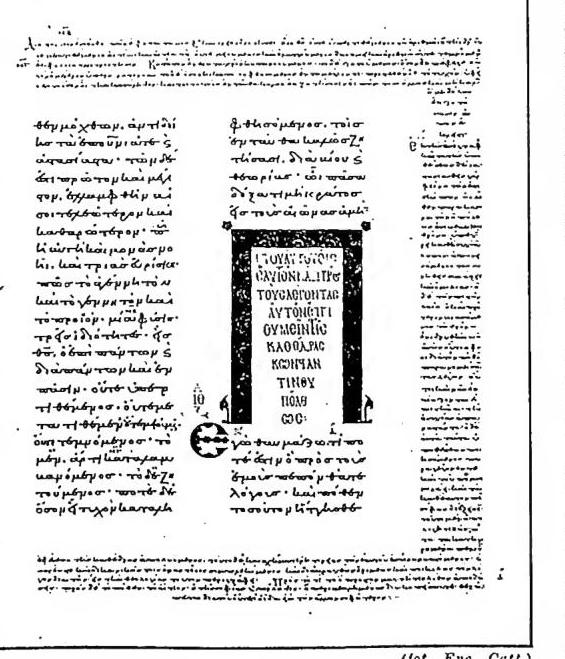
In the 8th century, minuscule script gradually arose and cursive script (v.). In its origins it is nothing other than contemporary cursive script written with greater care and greater elegance of form, due also to the writing material used: parchment. But in the 9th century it assumed the definitive form that it would preserve, more or less, in the following periods: in this century it replaced uncial script in literary use, which continued to be used only in liturgical manuscripts; and it is from the 9th century that the oldest dated document in m. s. originates, the Gospel known as that of Uspenskii (named after the bishop who discovered it in the Library of the Monastery of S. Saba in Jerusalem and purchased it), completed on 7 May 835 in the famous Monastery of Studio in Constantinople, according to the opinion of T. W. Allen, and now preserved in the Library of Leningrad (cod. no. 219).In the oldest documents, m. s. presents upright letters lacking flexibility, with small accents and angular-shaped breathings (⊥), ⊥, ⊥L), characteristic of uncial script. Subsequently, without losing its beauty and elegance of form, it acquired greater
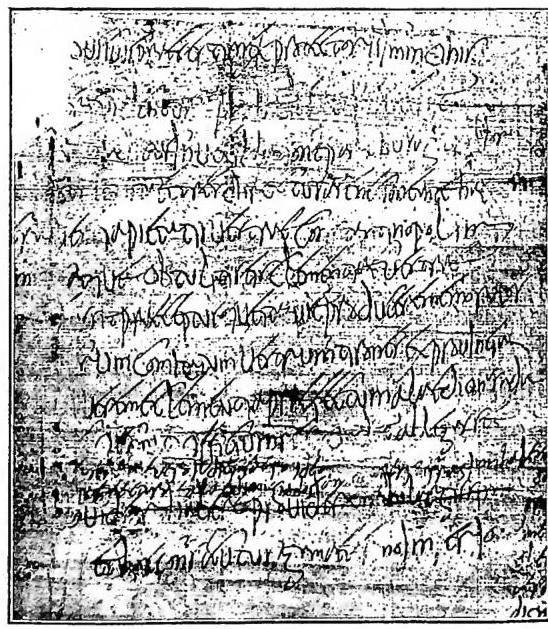
MINUSCOLA CORSIVA, SCRITTURA - Minuta di una petizione del praefectus alae delle truppe di Egitto, Flavio Abinno (ca. 346 d.C.). Londra, British Museum, P. 447.
libertà. Fino al principio del sec. x la s. m. è pura da qualunque forma onciale, ma, dalla metà di questo secolo in poi, non si conoscono manoscritti in m. pura. Dapprima si nota una tendenza ad includere lettere onciali soltanto in principio o in fine di riga, poi le lettere onciali s'incontrano sempre in maggior numero, finché prevalgono addirittura su quelle minuscole e le due forme si alternano senza una possibile distinzione; contemporaneamente alcune lettere si allargano sproporzionatamente, le legature diventano tanto capricciose da mutare a volte la forma primitiva delle lettere, accenti e spiriti s'ingrandiscono (questi ultimi vanno assumendo la moderna forma tonda) e si uniscono fra loro o con le lettere a cui si riferiscono. Da questo tipo di scrittura derivano i caratteri a stampa nella forma più antica.
Rispetto all'età, i manoscritti in s. m. si dividono in: codices vetustitizini, fino alla metà del sec. x; codices vetusti, fin verso la metà del sec. xiii; codices recentiores, fin verso la metà del sec. xv; infine codices novelli, quelli di epoca successiva.
2. Nella paleografia latina. - Nel campo della paleografia latina il termine m. viene usato prevalentemente per indicare la forma posata in opposizione a
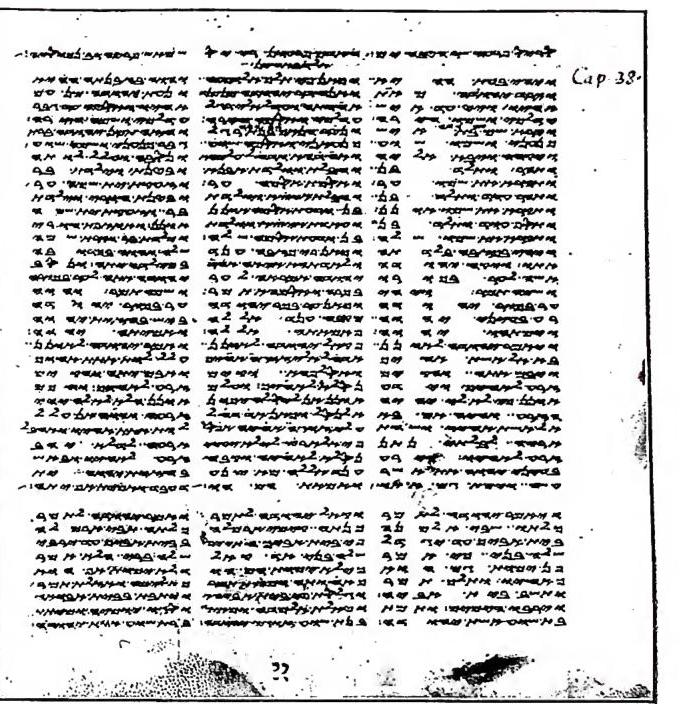
MINUTI, THÉOPHILE — Trilingual Pentateuch of the 12th century, discovered in Damascus and brought to Rome by Fr. Minuti — Vatican Library, cod. Barb. orientale 1, fol. 32a, containing chapter 38 of Genesis.