Machine translation of the 1948–1954 Italian original. The original text is authoritative.
NINFE. - In Greek religion, divine maidens (νόμφα), daughters of Zeus, animating every aspect and manifestation of nature with their invisible presence. They dwell in the mountains, meadows, trees, woods, and waters, and are therefore distinguished as: Oreads, Napaeae, Dryads and Hamadryads, Naiads, and Hyads. A separate group is formed by the n. of the seas: Nereids and Oceanids.
The n. also derive their name from the regions where they were venerated or from local cults, such as the Id eans from Crete, the Pel iads from Mount Pelion, the Nisiads, companions of Dionysus in his infancy, etc. Protectresses of hot springs (Pindar, Olymp., XII, 19; Diodorus, V, 3, 4), and as such venerated in Campania, especially at Pozzuoli and Ischia (Nitrodes or Nitrodiæ). The n. also chose caves as their dwelling places, a belief dating back to archaic cult and surviving into the Christian era; in various regions of Greece caves were built and dedicated to them, an interesting example of which remains at Vari, on the slopes of Hymettus (K. Weller, in American Journal
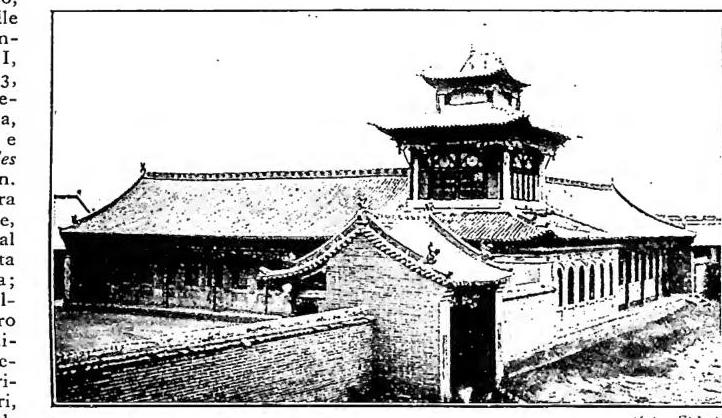
NINGSIA, DIOCESE of - The church of Liao-K'iao-pau.Archaeology, 7 [1903], p. 263 ff.). They form part of the retinue of major divinities such as Artemis, Dionysus, and Poseidon; they are often associated with the cult of minor rustic divinities, engaged in combat against the snares of the satyrs, and not infrequently seek the love of mortals, as in the case of Hyla and Daphnis. In Italic and Roman religion, under the name of Lymphae, Lumpae, Lumphiae (Diumpais in the Oscan inscription of Agnone), they dwell in and protect watercourses. In a later period special buildings were dedicated to them, of a character midway between the sacred and the profane, called «nymphaea». A prophetic ecstasy was attributed to the influence of the n.; those seized by it were called νυμφάληπτω (Lat. lymphati, or lymphatici). They also promoted the nuptial rites, and in funerary inscriptions dedicated to children they were entrusted with caring for their souls (CIG 997; 6201; 6293). Ancient literature soon appropriated their figures, surrounding them with an air of gentleness and graceful epithets. They appear benevolent toward mortals and compassionate helpers in their misfortunes (cf. the chorus of the Oceanids in Aeschylus’s Prometheus). Art depicts them in bas-reliefs, barefoot, with their hair blowing in the wind, smiling faces, and garments stirred by the movement of the dance (v. the description of the cave of the n. in Longo Sofista, I-IV).
BIBL.: L. Preller-C. Robert, Griechische Mythologie, I, 4th ed., Berlin 1894, pp. 718-25; O. Navarre, Nymphae, in Daremberg-Saglio, Diction., IV, pp. 124-28; G. Bloch, Nymphai, in Roscher, Lez. der griech. u. röm. Mythologie, III, pp. 500-67; Nymphai, in Pauly-Wissowa, XVII, cols. 1527-99; O. Kern, Die Religion der Griechen, I, Berlin 1926, pp. 79 ff., 87, passim; M. P. Nilson, Geschichte der griechischen Religion, I, Munich 1941, pp. 227-36. Lanfranco Fiore
Cite this article
“NINFE.” Enciclopedia Cattolica, vol. VIII (1952), p. 1108. Azione Romana digital edition, https://azioneromana.com/article/ninfe.