NUOVA LISBONA, DIOCESI DI

NEW LISABON, DIOCESE OF

City and diocese

Article illustration
(from Enc. Ital., XIV, tav. 6)

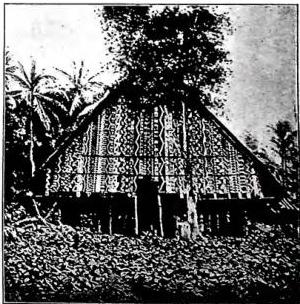
New Guinea, Dutch Apostolic Vicariate — Casa dei celebri — New Guinea, Dutch.

in Angola, Portuguese possession in West Africa.

With an area of 290,360 sq km, it has a population of 1,284,668 inhabitants, of whom 394,621 are Catholic. It has 39 parishes served by 13 secular priests and 100 regular clergy, and 3 seminaries.

NEW SEGOVIA — NEW YORK

All hopes of the Church in the English colonies seemed to vanish. The American Revolution, which was anti-Catholic, worsened the situation still further. However, through the efforts of the French consul H. Saint-Jean de Crèvecoeur, an act of “incorporation” for the Catholic Church was obtained on 10 June 1785, and on 5 October of the same year the construction of St Peter’s Church, the first permanent building, was begun. The church was inaugurated on 4 November 1786, and the first parish school in 1801. On 8 April 1808, with the papal bulls *Muneris* and *Ex debito pastorali officii*, Pius VII dismembered the diocese of Baltimore to form those of New York, Philadelphia, Boston and Bardstown. In a letter dated 8 November 1808, Fr Antonio Kohlmann, SJ, vicar general of the bishop of Baltimore, stated that the Catholic population consisted especially of Irish, a few hundred French and many Germans, with a total of about 14,000 souls.

Carroll (v.), bishop of Baltimore, learned that the Holy See wished to multiply dioceses in the United States, he proposed that New York should be placed under the jurisdiction of Boston until a suitable candidate could be found for the see. Following a presentation by Abp Troy of Dublin, the Pope appointed the Irish Dominican Richard Luke Concanen, prior of S. Clemente and librarian of the Minerva (Rome), noted for his learning, as the first bishop of New York. Consecrated in Rome on 24 April 1808, Abp Concanen died on 19 February 1810 before he could reach his see; he had already proposed to the Pope the appointment of Fr Ambrose Maréchal as his coadjutor. However, Abp Troy later proposed to the Pope the Dominican John Connolly, who was consecrated in Rome on 6 November 1814 and arrived in New York on 24 November of the following year. Everything had to be created anew; there were only four priests, and by 1822 the diocese had two churches in New York, one in Albany, one in Utica, one in Carthage, one in Auburn, and eight priests.

Catholicism nevertheless developed rapidly. Under Abp John Dubois, the third bishop (1826–42), Catholics numbered 150,000 among a Protestant population of three million. The bishop founded a Catholic newspaper, *The New York Weekly Register and Catholic Diary*, first printed on 5 October 1833. He also wished to build a major seminary, but was unable to complete the work. His successor, Abp John Hughes, coadjutor (1838) and then Apostolic Administrator (from 1839), became the first archbishop of New York on 19 July 1850. He resumed the plan to found a seminary and for this purpose chose the site of Rose Hill, Fordham; in 1842

Article illustration
## ARCHDIOCESE OF NEW YORK

Panorama of New York, view from the harbour

1595 as suffragan of Manila. In the mid-18th century the see was transferred to Vigan. Through successive dismemberments the territory was progressively reduced and today comprises the civil provinces of Ilocos Sur, Ilocos Norte and Luzon.

BIBL.: *Estado general del arzobispado de Manila y de los Obispados sufraganos de... Nueva Segovia*, Manila 1886, pp. 23-33.