(for the certero of the signa Luisa Cervelli)
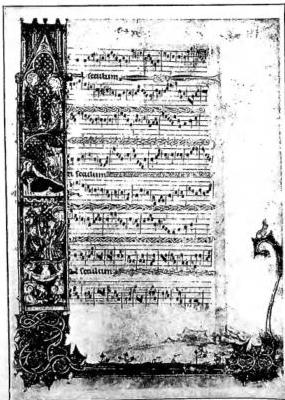
OCHETUS - Example of o. triplex (« In aseculum ») - Montpellier, Fac. de Médecine, ms. H. 196, f. 1117 (13th century).
\( ∴ m = frac{3}{11} \)
break the melodic line with brief and frequent pauses.
It was used preferably in motets and cacce, and was especially widespread in the area influenced by the French Ars novo; in Italy it found little application.
Because of its typically secular character, it was cited by Pope Giovanni XXII in his extravangant De vita et honestate clericorum (1322–23) among the most dangerous innovations, to be avoided in order to safeguard the dignity of sacred music. The O., still unknown in the 12th century, flourished in the 13th and reached its apogee in the 14th century, only to decline rapidly in the 15th, with the emergence of great polyphony.