Machine translation of the 1948–1954 Italian original. The original text is authoritative.
SAY, FAMIGLIA. – French economists, the best known of whom, JEAN-BAPTISTE, was born in Lyon on 5 January 1767 and died in Paris on 15 November 1832. At the fall of Napoleon, of whom he had first been a follower and then an opponent, he received various offices from the Bourbons, although he was not favorable to them; finally, in 1831, he was appointed by the government of Louis-Philippe to the first chair of political economy at the Collège de France.
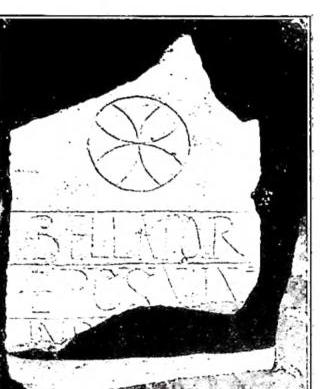
(from A. Martin, Forum et galice de Saletolae, Parosi B.2, loc. 30, fig. 3) SIBITLA — Epitaph of Bishop Bellator (5th century).His principal work is the Traité d'économie politique, first printed in 1803 and reprinted only in 1814, after Napoleon had had it confiscated because of its liberal spirit and opposition to any intervention by the State in economic activity. In this treatise, he not only expresses the principles of the doctrine of Adam Smith, of which he was a brilliant disseminator in France, but also develops, completes, and at times corrects some of his theories. Rejecting both the physiocratic and the Smithian concept of the natural and spontaneous order of economic activity and of science, understood as a normative science of human conduct, he demands that economic science be purely theoretical and descriptive, like the exact natural sciences. He also completes the concept of economic science by including non-material goods, the so-called personal services, which Smith considered unproductive. Above all, his “theory of outlets” is famous: in opposition to Malthus and Sismondi, who feared the damage caused by overproduction, he maintains that, since “products are exchanged for products,” “the more numerous the producers and the more production is multiplied, the easier, more varied, and more extensive the outlets become.” Thus the concerns of the mercantilists and, generally, of the protectionists regarding the balance of trade—that is, the danger of a nation’s impoverishment through excessive imports—also disappear. Because of this view of the economic organization of society, the French classical school, initiated by S., is called the “optimistic school.” This optimistic school would later find its most eloquent advocate in Federico Bastiat. Other works by S. include: Catéchisme d'économie politique (1815); Cours complet d'économie politique pratique (1828–29), etc.
The other members of the family are of lesser importance. His brother LOUIS-AUGUSTE (born in Lyon in 1774, died in Paris in 1840) wrote: Principales causes de la richesse ou de la misère des peuples et des particuliers (1808); Traité élémentaire de la richesse individuelle et de la richesse publique (1827); Etudes sur la richesse des nations (1836), etc. His son HORACE-EMILE (born in Noisy on 11 March 1794, died in Paris in August 1860) wrote: Histoire des relations commerciales entre la France et le Brésil (1830), etc.
BIBL.: V. Fallon, Principi di economia sociale, Italian translation by A. Cantano, Turin–Rome 1926, pp. 454–55; A. Razzanti, s. V. in Enc. Ital., XXX, p. 978. Michele Lecce
Cite this article
“SAY, FAMIGLIA.” Enciclopedia Cattolica, vol. X (1953), p. 1182. Azione Romana digital edition, https://azioneromana.com/article/say-famiglia.