
SCOTTON, BROTHERS. — All three were priests and controversialists who, from their residence in Breganze, waged for more than thirty years sensational polemics in defense of the rights of the Holy See against the errors of their time.
JACOPO, born in Bassano on 3 September 1834 and died in Venice on 17 January 1909. Ordained a priest in 1857, he was a celebrated preacher; he left the pulpit when, together with his brothers, he entered journalism (1890).
ANDREA, born in Bassano on 2 March 1838 and died in Breganze on 27 November 1915. He became a priest in 1860, and in 1863 began teaching religion at the secondary school in Vicenza. Subsequently, he too devoted himself to preaching. In 1881 he was elected archpriest of Breganze (Vicenza). He published around forty works, including four books on Apologetics.
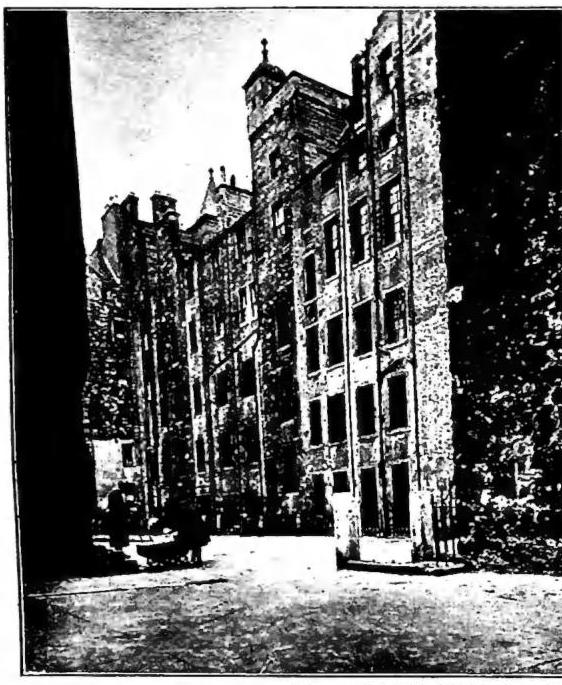
(courtesy of the British Council)
SCOTLAND — The “Court of St James,” one of the many that opened onto the High Street, the principal thoroughfare of the Old Town, Edinburgh.
In 1890 the three brothers began publishing the weekly La Riscossa per la Chiesa e per la patria, which commenced publication on 17 Aug. 1890 and ceased on 8 Jan. 1916. The thought of the S. brothers is collected and expounded in the booklet: Il sincero cristiano e i suoi doveri verso Gesù Cristo, la Chiesa e lo Stato, operetta dei fratelli sacerdoti Jacopo, Andrea, Gottardo S. (3rd ed., Breganze 1900). In their final years, in particular, they made themselves champions of an integralism that they opposed to the alleged episcopalism of some of their adversaries; they fought bitterly against what they presented as modernism, but which was often nothing more than a sound advance in scholarship and research method.