Machine translation of the 1948–1954 Italian original. The original text is authoritative.
SOLOVKI. - The name by which the celebrated Russian monastery, formerly “stauropegial,” in the Solovjeckij archipelago (White Sea, north of Archangelsk), is ordinarily known; it was founded in 1429 by the monks German and Savvatij. They were soon joined by the monk Zosima, who in time became, together with Savvatij, one of the most celebrated saints of the Russian Church. The monks gradually occupied all the islands and part of the mainland.
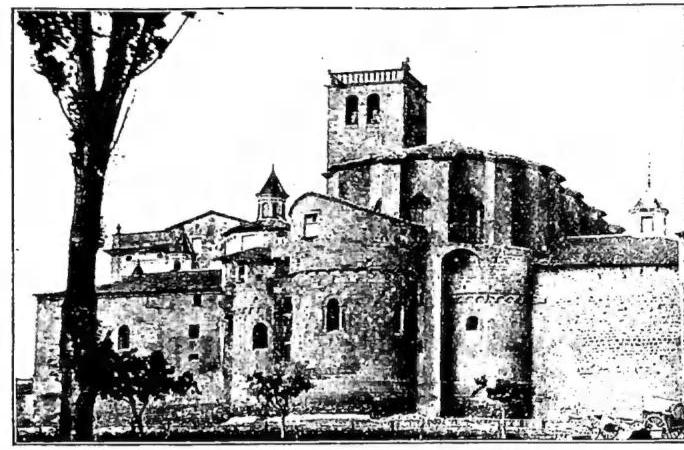
SOLSONA, DIOCESE OF - Apse of the Cathedral (12th century).The monastery was surrounded by walls in 1548 to protect it against enemy attacks. Monks of holy life flourished there, such as the igumen Irinarch (1613–26) and the anchorite Eleazar, who lived on the island of Anzer (mid-17th century). Nikon, later Patriarch of Moscow, also spent some time there. At the beginning of the schism of the Old Believers, S. rebelled against Nikon’s “innovations.” It was conquered only in 1676, after a siege lasting seven years. From that time onward, it increasingly became the destination of numerous pilgrimages during the summer.
After the Bolshevik Revolution, S. lost all its possessions; the island was transformed into a concentration camp, to which numerous Catholic priests were deported and condemned to forced labour in those forests. The monastery was not, however, officially suppressed; it is possible that even now (1953) some monks still reside there.
BIBL.: P. Pascal, Acvalum et les débuts du Raskol, Paris 1938; A. M. Ammann, Storia della Chiesa russa, Turin 1948, passim. Alberto Maria Ammann
Cite this article
“SOLOVKI.” Enciclopedia Cattolica, vol. XI (1953), p. 567. Azione Romana digital edition, https://azioneromana.com/article/solovki.